

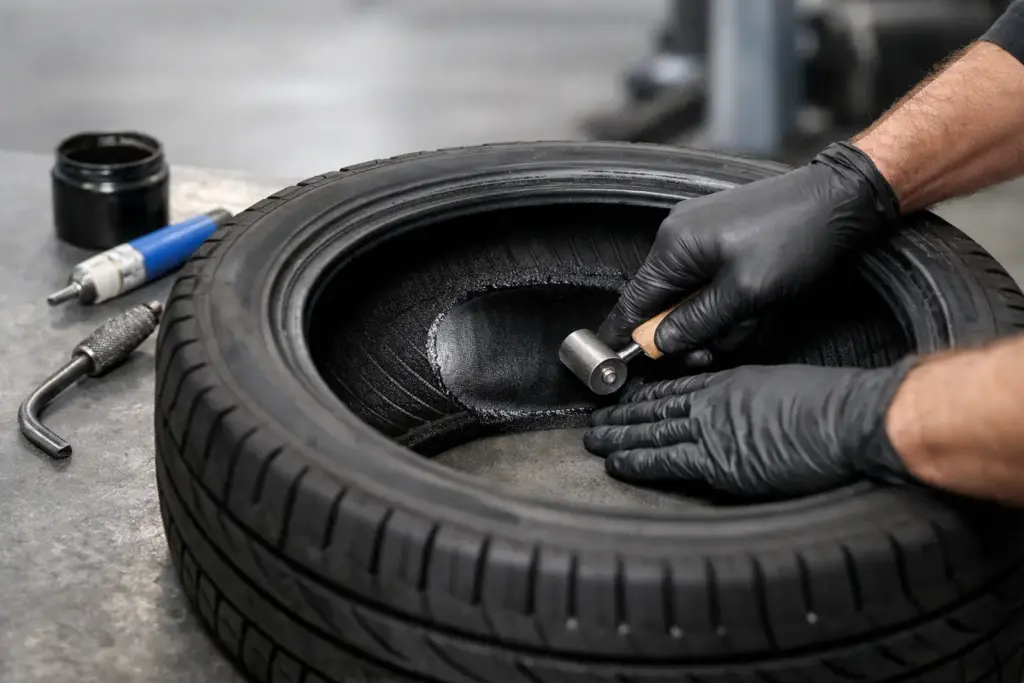
A screw in the center of your tread can look like a quick, inexpensive fix. But an inside tire patch repair example shows why the visible puncture is only part of the story. Before a tire goes back on your vehicle, the technician needs to know where the injury is, how large it is, whether the tire was driven low, and whether the internal structure is still safe.
At Joe’s All Tire, known locally as ALL TIRE, that inspection comes before a repair recommendation. A tire may hold air after a temporary-looking fix and still have hidden damage inside. Minnesota roads, summer rain, potholes, and months of snow and ice are hard enough on good tires. We won’t gamble with a questionable one.
What an Inside Tire Patch Repair Example Should Show
A proper repair starts after the wheel is removed and the tire is demounted from the rim. That gives the technician a clear view of the inner liner, the airtight rubber layer inside the tire. Looking only at the outside can miss scuffing, heat damage, or a puncture angle that changes whether the repair is appropriate.
In a typical repairable example, a small nail or screw has entered the main tread area, away from the shoulder and sidewall. The tire hasn’t been operated while badly underinflated, and the inner liner shows no wrinkles, abrasion, or exposed cords. Those details matter more than how neatly the object came out.
The repair area is then prepared from the inside. The injury channel is cleaned, the inner liner is buffed only where needed, and the surface is cleaned again before the repair unit is installed. The repair unit both fills the injury path and seals the prepared inner liner area. Finally, the tire is remounted, inflated, checked for leaks, balanced if needed, and returned to the vehicle with the work verified.
That may sound involved for one screw hole. It is. A tire is the only part of your vehicle that touches the road, and the repair has to preserve that job.
What a safe repair looks like from the inside
Picture a tire lying flat on the tire machine. On the inside, the repair should sit flat against a properly prepared section of liner. There shouldn’t be a loose edge, contamination, or a repair placed over damaged tire material. The repair needs to match the injury and the tire’s condition, not just cover the hole.
A clean inner liner is also a good sign. If the tire has a dark, powdery residue, deep circular scuff marks, cracked rubber, or damaged cords, that can point to operation with low air pressure. In that situation, the question changes from “Can we stop this leak?” to “Can this tire safely carry your family and your vehicle?”
When a Tire Can Be Repaired
Every tire needs an individual inspection, but repairable punctures usually share a few characteristics:
- The puncture is in the central tread area.
- The injury is small enough for an approved repair.
- The tire has no internal damage from low-pressure driving.
- The belts, cords, and sidewall are intact.
- The tire still has serviceable tread and is otherwise in sound condition.
Tread location is a major factor. The closer an injury gets to the tire’s shoulder, the more the tire flexes. That area carries different stresses than the center tread, so a puncture there may not be a safe repair candidate. Sidewall damage is even more serious because sidewalls flex constantly as the tire rolls.
This is one reason ALL TIRE talks with drivers about tire design when replacement is the safer answer. For cars and trucks around Elk River, open shoulder tire designs can be a smart choice. Those open channels help move water away in heavy summer rain and improve traction in slush and winter conditions. With roughly five months of snow and ice in Minnesota, that extra evacuation path can make a meaningful difference.
When Replacement Is the Honest Answer
Not every leaking tire should be repaired. A sidewall puncture, a shoulder-area injury, a large or irregular hole, separated belts, or internal damage from running low can take a tire out of service. So can a tire that is simply worn too close to the end of its usable life.
Sometimes the customer understandably asks, “Can’t you just fix it so I can get by?” We understand the budget concern. Still, saving money today doesn’t help if the tire fails in traffic, damages the vehicle, or leaves you stranded on a cold Minnesota evening.
At ALL TIRE, Joe works on-site and gives direct recommendations based on what the tire actually shows. If the tire can be repaired correctly, we’ll tell you. If it can’t, we’ll explain why in plain language and discuss the practical options. That kind of accountability is what local service should feel like.
If you’ve found a screw, noticed a slow leak, or your TPMS light has come on, getting it checked early gives you the best chance of protecting the tire. Mobile visitors can tap the blue call button in the lower left corner to ask questions or schedule an appointment – we’re just a call away.
Why Tire Repairs Need a Full Inspection
A tire leak doesn’t always come from a puncture. Corrosion at the wheel bead, a leaking valve stem, a cracked wheel, or a TPMS issue can create the same symptom: low pressure. Treating every low tire as a nail hole wastes time and can leave the actual problem unsolved.
A full inspection also catches related concerns. Uneven tread wear may point to alignment, suspension, or inflation issues. A vibration may come from a wheel balance problem, a bent wheel, or tire damage that isn’t visible from the vehicle’s exterior. A repair should solve the leak, but the visit is also a chance to make sure the tire is doing its job safely.
This Isn’t Walmart. That doesn’t mean every vehicle needs the most expensive option available. It means the work shouldn’t be rushed, the recommendation shouldn’t be a guess, and the person advising you should be accountable for what leaves the shop. Good service is about putting the right tire and repair decision in front of the customer, not forcing a sale.
How Drivers Can Protect a Repairable Tire
The best thing you can do is act quickly when you notice a pressure warning or a visibly low tire. Don’t keep driving on it for days and assume the tire is fine because it can be reinflated. Low-pressure operation can damage the inside before the outside gives you a clear warning.
Check tire pressures regularly, especially when temperatures swing. Cold weather lowers tire pressure, and Minnesota winter conditions can expose a slow leak fast. Also look at your tread when you wash the vehicle or stop for fuel. Catching a screw in the tread early can be the difference between a straightforward repair and a tire that needs replacement.
When it is time for tires, consider your real driving conditions, not just the price on a screen. A commuter who sees wet highways, gravel driveways, slush, and weekend errands needs traction and drainage that match those conditions. Open shoulder designs are worth discussing for many local cars and light trucks because they help clear water and snow where traction matters most.
FAQ
How long does an inside tire repair take?
Most straightforward tire repairs can be completed in a reasonable shop visit, but timing depends on the tire’s condition, the shop schedule, and whether other issues are found during inspection.
Can a tire be repaired if the screw is near the edge of the tread?
It depends on exactly where the injury is. Punctures close to the shoulder may not be safely repairable because that area flexes more and carries different stresses.
Why does my tire still lose air after a repair?
The leak may be coming from another source, such as the bead area, valve stem, TPMS seal, or wheel damage. A complete leak check identifies the real cause.
Is it safe to drive with a low tire to the shop?
If the tire is visibly low or your TPMS warning is on, avoid extended driving. Add air only if necessary to move the vehicle safely, then have it inspected as soon as possible.
Do I need to replace more than one tire if one can’t be repaired?
Not always. The answer depends on tread depth, tire size, drivetrain, and how closely the remaining tires match. ALL TIRE can measure the tires and give you an honest recommendation that fits your vehicle.
A puncture doesn’t automatically mean a new tire, and it doesn’t automatically mean a safe repair either. Let the condition inside the tire make the decision. That’s how you protect your budget without putting safety second.
