

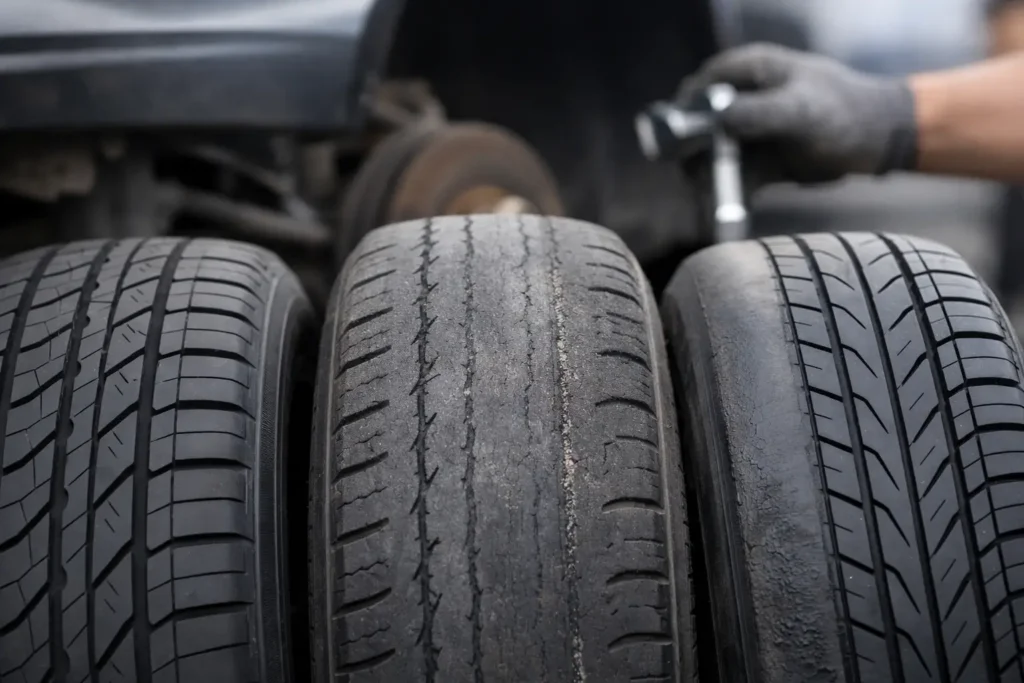
You usually do not notice uneven tire wear all at once. You hear a little more road noise, feel a shake at highway speed, or spot one edge of the tread going bald while the rest still looks usable. That is how most of the common reasons tires wear unevenly show up in real life – not as a dramatic failure, but as a small warning that something on the vehicle needs attention.
Uneven wear matters for two reasons. First, it shortens the life of a tire you already paid for. Second, it often points to a problem bigger than the tire itself, like alignment, inflation, balance, or worn steering and suspension parts. If you catch the pattern early, the fix is usually simpler and less expensive.
The most common reasons tires wear unevenly
In the shop, a worn tire tells a story. The tread pattern often gives away the cause before anyone touches a wrench. The trick is knowing whether the problem came from maintenance, road conditions, driving habits, or a mechanical issue.
Incorrect tire pressure
Air pressure is one of the biggest reasons tires wear unevenly, and it is also one of the easiest to overlook. An overinflated tire tends to wear faster in the center of the tread. An underinflated tire usually wears more on both outer edges because the middle of the tread is not carrying its share of the load.
Minnesota weather makes this more common than people think. Cold temperatures drop tire pressure, and that change can happen fast when the seasons shift. A tire that was fine in October can be low by the first real cold snap. If it stays that way, the shoulders scrub down early and traction suffers right when roads get slick.
Alignment problems
If one tire is wearing heavily on the inside edge or outside edge, alignment is a likely cause. Toe and camber settings affect how the tire meets the road. When those angles are off, the tire gets dragged slightly sideways instead of rolling straight and clean.
This can happen after hitting potholes, sliding into a curb, or just from normal wear in steering components over time. Some drivers expect alignment problems to feel dramatic, but many vehicles track only slightly off-center while quietly chewing through a set of tires.
Worn suspension or steering parts
Bad shocks, struts, ball joints, tie rods, or wheel bearings can all create uneven wear. Sometimes the tire develops cupping or scalloping, which looks like a series of dips around the tread. That pattern often comes with vibration or a humming sound that gets worse as speed increases.
This is where guessing can cost you money. A new set of tires will not stay nice for long if the real issue is looseness in the front end or poor damping from worn shocks. The tire is often the symptom, not the root problem.
Lack of tire rotation
Front and rear tires do different jobs. On many vehicles, the front tires carry more weight and handle steering duties, so they tend to wear faster. On front-wheel-drive vehicles, they also deal with most of the acceleration. Without regular rotation, one pair can wear down much sooner than the other, and the wear pattern may become too uneven to correct.
Rotation will not fix a bad alignment or a suspension issue, but it does help spread normal wear more evenly across the set. Skipping it is one of the simplest ways to lose tread life.
Tire balance issues
An out-of-balance tire does not always look obviously wrong at a glance, but over time it can create patchy wear. Usually the driver notices it first as a steering wheel shake or seat vibration at certain speeds. That repeated bouncing can beat the tread unevenly against the road.
Balance issues can come from lost wheel weights, uneven tire wear that has already started, or internal tire problems. Once a vibration starts, it is worth checking sooner rather than later.
What different wear patterns usually mean
Uneven tread is not random. Certain patterns point to certain problems, although there can be overlap.
Wear on both edges
This usually means underinflation. The tire is flexing too much and riding harder on the shoulders.
Wear in the center
This often points to overinflation. The center of the tread is carrying more load than the edges.
Wear on one inside or outside edge
That is commonly tied to alignment angles, especially camber or toe problems. It can also be related to worn parts that allow the wheel to sit incorrectly.
Cupping or scalloped spots
This pattern usually suggests worn shocks or struts, imbalance, or looseness in suspension or steering components.
Feathering across the tread
If the tread feels smooth one way and sharp the other when you run your hand across it, toe alignment may be off.
Knowing the pattern helps, but it is not a replacement for a proper inspection. Two different issues can happen at the same time, especially on higher-mileage vehicles.
Seasonal driving and tire design matter too
Not every uneven wear problem starts with a broken part. Tire choice matters, especially here in Minnesota, where snow and ice are part of life for a good stretch of the year. A tire that does not fit the vehicle, the driving conditions, or the season can wear poorly even if everything else is mostly in order.
That is one reason Joe at All Tire often recommends open shoulder tire designs for cars and trucks that have to deal with winter roads. Open shoulder tread helps clear slush and snow more effectively and improves winter traction when conditions turn ugly. It is not a magic fix for alignment or inflation problems, but the right tread design gives drivers a better chance at stable grip during our long cold season. If you want a clearer look at tread patterns and seasonal tire choices, the tire knowledge center at www.joesalltire.com/knowledge-center/ is a good place to start.
There is a trade-off, though. Some aggressive tread designs can create a little more road noise or wear differently depending on the vehicle and how it is used. That is why honest tire advice matters. The best tire is not just the one with the biggest name or the deepest tread. It is the one that fits the vehicle, the roads, and the way you actually drive.
When uneven tire wear means you should stop waiting
Some uneven wear can be corrected if it is caught early. Other times, the tire is too far gone and needs replacement even if the underlying issue gets fixed today. If cords are showing, the inside edge is nearly bald, or the vehicle pulls hard and vibrates, it is time to get it looked at now.
This matters even more in wet or winter conditions. A tire with uneven wear loses consistent contact with the road. Braking distances can increase, hydroplaning resistance gets worse, and snow traction drops off fast. A tire that looks passable at a glance may be far less safe than the tread depth number suggests if one section is doing all the work.
How to prevent uneven wear from coming back
The best approach is not complicated, but it does require consistency. Check tire pressure regularly, especially when temperatures swing. Rotate tires on schedule. Pay attention to vibrations, pulling, or changes in noise. If you hit a pothole hard or bump a curb, do not assume everything is fine just because the vehicle still drives.
It also helps to have the vehicle checked by someone who looks beyond the tire itself. A chain store may sell you replacement rubber and move on. A good inspection should answer the bigger question: why did this tire wear that way in the first place?
That is where local, hands-on service still matters. A careful shop will inspect tread patterns, verify inflation, look at alignment wear clues, check for play in steering and suspension parts, and tell you plainly whether the tire can be saved, rotated, or replaced. That kind of straight answer protects your wallet as much as your safety.
If your tread is wearing unevenly, the useful question is not just whether you need tires. It is what your tires have been trying to tell you for the last few thousand miles. Catch that message early, and you usually have better options.