

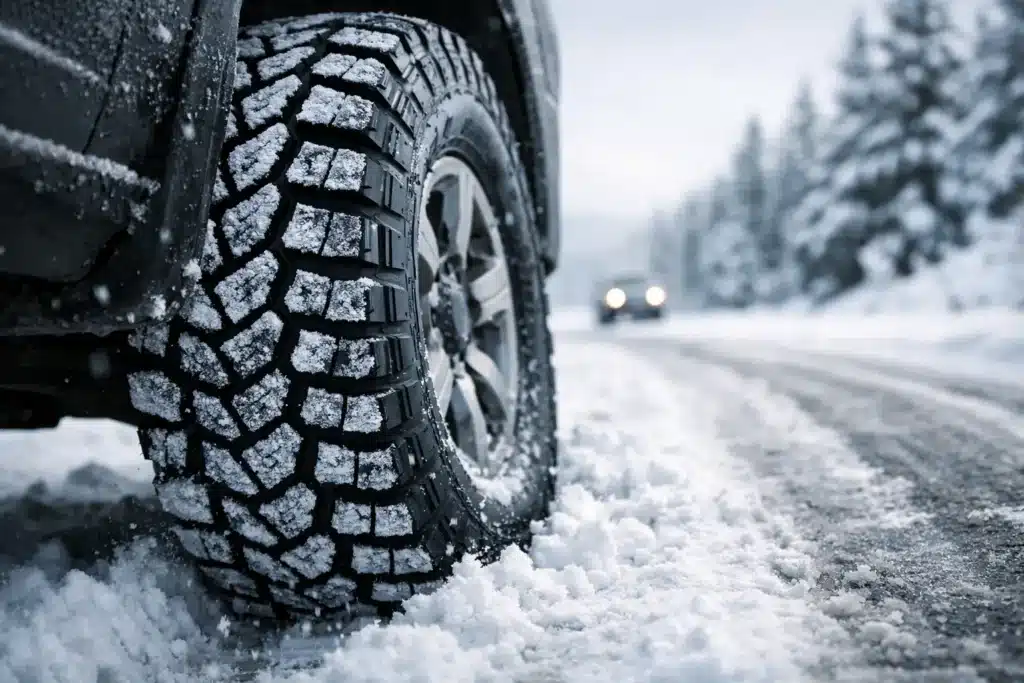
The difference between getting through a snowy Elk River intersection cleanly and spinning for a few seconds usually comes down to one thing – how well your tires clear out what they just picked up. That is a big part of how open shoulder tires improve winter traction. The more effectively a tire moves snow, slush, and water away from the tread, the better chance it has of keeping solid contact with the road.
A lot of drivers look at tread depth and stop there. Depth matters, but tread design matters too. At All Tire, this is one reason we strongly recommend open shoulder tire designs for cars and trucks when winter traction is a priority. In Minnesota, where snow, slush, and packed roads can stick around for months, the edges and channels on a tire are doing real work every day.
What open shoulder tires actually are
The shoulder of a tire is the outer edge of the tread, right near the sidewall. On an open shoulder design, that outer area has larger gaps and more open channels than a closed shoulder tire. Instead of a more continuous rib around the edge, the tread blocks are separated so snow, slush, and water have a clear path to escape.
That may sound like a small detail, but it changes how the tire behaves in messy conditions. Winter traction is not just about biting into snow. It is also about avoiding buildup. If tread packs up and cannot clear itself, grip drops fast.
How open shoulder tires improve winter traction on the road
Open shoulder tires help in winter because they evacuate slush and loose snow more effectively. As the tire rolls, those outer channels push material away from the contact patch instead of letting it stay trapped under the tread. That helps the rubber and tread edges keep touching the road surface or packed snow underneath.
This matters most during the conditions Minnesota drivers see all the time – fresh snow on top of pavement, slushy ruts, and wet roads that freeze overnight. In those situations, traction is often lost at the edge of the contact patch first. An open shoulder gives the tire more working edges and more room to shed material before it turns into wheelspin or a longer stop.
There is also a stability benefit. When the tire can clear slush at the shoulders, it is less likely to ride up on top of it. That helps maintain control during lane changes, turns, and braking. You still need to drive for conditions, of course, but the tire design gives you a better starting point.
Why shoulders matter so much in snow and slush
Think about what happens when you turn into a snowy corner or pull away from a stoplight. The center of the tread helps with forward movement, but the outer tread blocks do a lot of work during weight transfer. When the vehicle leans, brakes, or changes direction, those shoulders are heavily involved.
If the shoulders are too closed off, snow and slush can pack into that area. Once that happens, the tread loses some of its ability to bite and release. Open shoulder designs keep those edges more available. That means more consistent traction, especially when roads are not evenly covered.
This is one reason two tires with the same size and similar tread depth can behave very differently in winter. One may look aggressive enough at a glance, but if the shoulder area is too tight, it may not clean out nearly as well in real driving.
Open shoulder tires are not just for deep snow
A common mistake is assuming this tread feature only matters in heavy snow. In reality, open shoulder designs can be just as helpful in mixed winter conditions, which is where a lot of people do most of their driving. Packed snow, wet pavement, slush at intersections, and meltwater on cold roads all challenge traction in different ways.
That open outer tread helps reduce the chance of the tire getting overwhelmed by slush or standing water. It also helps maintain more predictable grip when one side of the vehicle is in a wetter or snowier part of the lane than the other. For commuters and families, that predictability matters as much as raw traction.
The same design can also help in heavy rain during warmer months, which is another reason we like it as a practical recommendation for year-round driving in this area.
The trade-offs are real
There is no perfect tire for every driver and every condition. Open shoulder tires have real advantages, but there are trade-offs.
Some designs may produce a little more road noise than a more closed, highway-focused tread. Depending on the tire, the steering feel on dry pavement can also be a bit different. And not every open shoulder tire is automatically a great winter tire. The rubber compound, siping, block design, and overall tread pattern still matter.
That is the part many big retailers skip over. They may sell by category or price point without explaining why one all-season tire performs better than another when the weather turns. A tire can have an open shoulder and still fall short if the rest of the design is not built for cold-weather grip.
Open shoulder all-season vs dedicated winter tires
If you want the shortest stopping distances and best cold-weather grip, a true winter tire is still the strongest choice. The rubber stays more flexible in low temperatures, and the tread is built specifically for snow and ice.
But many drivers want one set of tires year-round. In that case, an all-season or all-weather tire with a strong open shoulder design can be a smart middle ground. It will not perform like a dedicated winter tire on glare ice, but it can do a much better job in snow and slush than a tire with a more closed-off shoulder and weaker evacuation channels.
This is where honest advice matters. It depends on how you drive, what you drive, how far you commute, and whether you can switch tires seasonally. A pickup used every day before roads are fully cleared has different needs than a second vehicle that stays close to town.
What to look for besides the shoulder design
If you are shopping for better winter traction, shoulder design should be part of the conversation, not the whole conversation. You also want to consider tread depth, sipe density, rubber compound, load rating, and how the tire is actually wearing on your vehicle.
Uneven wear can take a good tread design and make it perform poorly. The same goes for bad alignment, low air pressure, or suspension issues. We see this often – drivers blame the tire model when the real issue is that the tire is worn unevenly or not making full contact with the road.
That is also why tire advice should come from someone looking at the whole vehicle, not just reading a size off the sidewall. If you want to learn more about tread design and seasonal tire choices, Joe’s All Tire covers more of those basics in the tire knowledge center at www.joesalltire.com/knowledge-center/.
Why this recommendation makes sense in Minnesota
In a place with long winters, tires need to handle more than one kind of bad road. It is not just deep snow after a storm. It is the slush on Highway 10, the packed snow in a neighborhood intersection, and the wet refreeze in a parking lot before sunrise.
That is why open shoulder tires keep coming up in our recommendations. They give drivers a practical advantage in the conditions they actually face most often. Better cleanout, more usable tread edges, and better slush evacuation all add up to a tire that works harder when roads are messy.
For everyday drivers, that can mean less wheelspin leaving a stop, more confidence during a lane change, and more control when braking on a sloppy road. It does not replace careful driving, but it gives you a tire design that is working with you instead of against you.
If your current tires feel sketchy in snow even though they still have some tread left, the shoulder design may be part of the reason. A good tire is not just one that fits the rim or meets the budget. It is one that matches the roads you actually drive. When winter sticks around for months, that choice shows up every time the weather gets ugly.
