

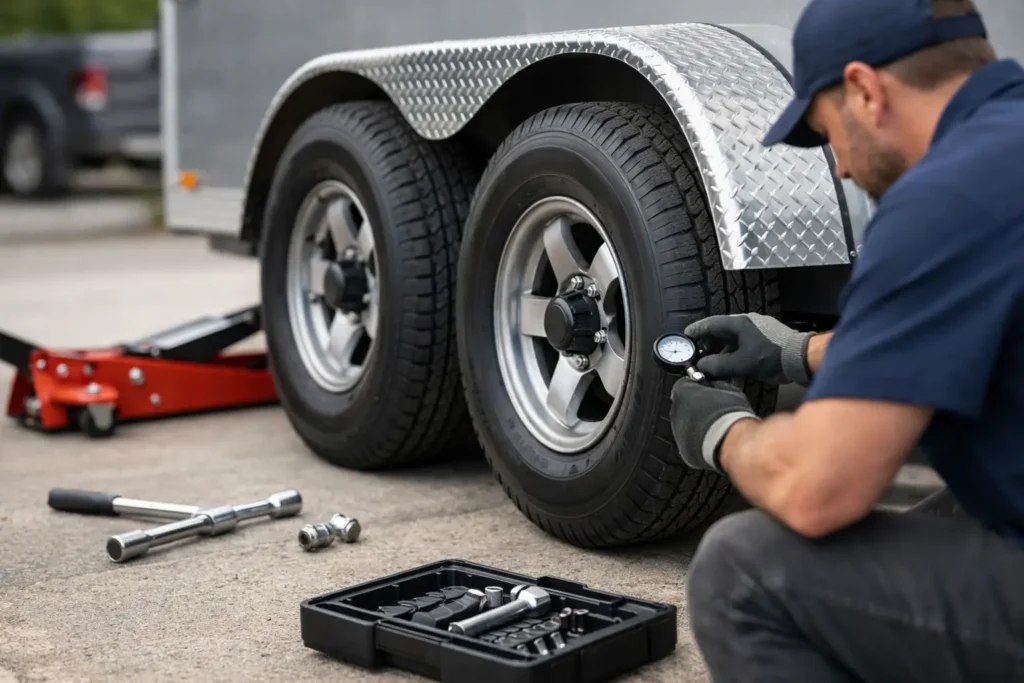
A trailer tire usually gives you warning before it fails. The problem is most owners do not know what they are looking at, or they check the tires after the damage is already done. That is really how trailer tire maintenance works – not as one big annual task, but as a series of small checks that catch heat, wear, age, and load problems before they turn into a roadside mess.
Trailer tires live a harder life than most people realize. They often sit for long stretches, then suddenly carry a full load at highway speed. They scrub sideways during tight turns, deal with long periods of sun exposure, and are easy to overlook because they are not doing the steering or braking work a vehicle tire does. That mix is exactly why they need a little steady attention.
How Trailer Tire Maintenance Works in Real Use
The simplest way to understand trailer tire care is to think about what destroys trailer tires. Most failures come back to five things: low air pressure, too much load, old rubber, uneven wear, or damage that went unnoticed. Maintenance is the process of checking for those conditions before you tow.
Air pressure matters more than a lot of people expect. A trailer tire that is even a little low builds extra heat fast, and heat is what shortens tire life and raises the chance of a blowout. Unlike a passenger vehicle, a trailer cannot always give you much feel through the steering wheel when something is wrong. You might not notice a soft tire until the tread is coming apart.
Load matters just as much. A trailer tire can be in good shape and still fail if the trailer is overloaded or loaded unevenly. One side can end up carrying more weight than the other, and one axle can be doing more work than it should. That is why proper maintenance includes looking beyond the tire itself and thinking about how the trailer is used.
Age is another big factor. Trailer tires often wear out by time before they wear out by tread depth. If a trailer sits through Minnesota weather, sun, moisture, and temperature swings all keep working on the rubber. A tire can look decent at a glance and still be too old or too cracked to trust on the highway.
Start With Tire Pressure Every Time
If you only do one thing before towing, check the pressure when the tires are cold. Not after you have driven a few miles. Not after the trailer has been baking in the sun all afternoon. Cold pressure gives you the true baseline.
Use the pressure listed for the trailer tire and application, not a guess and not the tow vehicle’s door sticker. Trailer tires are built to carry weight at a specific inflation range. Running them low increases sidewall flex, and that creates heat. Running them too high for the setup can also affect wear and ride, so this is one of those areas where exact numbers matter.
A good gauge helps. So does checking the spare. A spare that has been ignored for three years is not much of a backup. If you are towing a boat, utility trailer, camper, or enclosed trailer, the spare should be treated like part of the system, not an afterthought.
Tread Wear Tells a Story
Trailer tires do not always wear the way vehicle tires do, and that can confuse owners. If the center is wearing faster, pressure may be too high for the actual load and setup. If both shoulders are wearing faster, the tire may be underinflated. If one tire is wearing differently from the others, you may be looking at alignment trouble, suspension wear, or a bearing issue.
Cupping or patchy wear can point to a balance problem, suspension movement, or parts that are starting to loosen up. On a trailer, unusual wear is not just about replacing rubber. It is often your first clue that something else needs attention.
This is where a hands-on inspection matters. At All Tire, uneven trailer tire wear often leads to a closer look at wheel bearings, running gear, and vibration issues, because replacing a tire without correcting the cause just sends the customer back out with the same problem waiting to happen.
Damage Checks Need More Than a Quick Glance
A lot of owners look at tread depth and stop there. The sidewall deserves just as much attention. Cracking, bulges, cuts, exposed cords, or areas that look rubbed or bruised all matter. So do nails, screws, or punctures in the tread area.
Trailer tires also take abuse from curbs, potholes, gravel roads, and tight backing maneuvers. A hard impact can damage a tire internally even if the outside does not look dramatic. If you hit something hard and the trailer starts towing differently or vibrating, it is worth getting checked.
Dry rot is another common problem on trailers that sit outside. Fine surface weathering may not mean immediate replacement, but deeper cracking around the sidewall or tread area is a sign the tire is aging out. This is one of those judgment calls where honest advice matters, because some tires are still serviceable and some are simply not worth risking.
Load Rating and Balance Matter More Than People Think
Trailer tires need to match the real weight they are carrying. That means the tire size and load range need to fit the trailer, and the cargo needs to be distributed correctly. If all the heavy items are loaded to one side or too far forward or backward, the tires do not share the work evenly.
This is also why replacing just one trailer tire can be tricky. If the remaining tires are much older or worn differently, the whole set may no longer be working evenly. Sometimes one replacement is fine. Sometimes it creates a mismatch that leads to more trouble later. It depends on age, wear, size, and how the trailer is used.
If you are not sure what your tread design or tire construction is meant to do, the tire knowledge center at www.joesalltire.com/knowledge-center/ can help explain tire basics in plain language.
Rotation, Balancing, and Bearings
Not every trailer owner thinks about rotating tires, but on tandem-axle trailers it can make sense when wear patterns start to differ from axle to axle. Rotation is not automatic in every case. It depends on tire condition, axle setup, and whether the wear pattern says the tires are still healthy enough to move around.
Balancing also gets skipped more often on trailers than it should. A poorly balanced trailer tire can contribute to vibration, irregular wear, and extra stress on suspension components. You may not feel it in the steering wheel the way you would in a car, but the wear still happens.
Wheel bearings are part of the conversation too. A bearing that is loose, worn, or running hot can affect tire wear and create serious safety issues. If a trailer tire keeps wearing oddly or one hub feels hotter than the others after a trip, the tire may not be the root problem.
Storage Habits Change Tire Life
A trailer that sits for months needs maintenance even when it is not moving. Sunlight, moisture, and long-term parking on one spot all work against the tire. If possible, keep the trailer on a dry surface, move it occasionally, and protect the tires from direct sun exposure.
Before parking it for the season, make sure the tires are properly inflated. Underinflated tires that sit for months can develop flat spotting and sidewall stress. When spring comes around, do not assume they are ready just because the tread still looks deep.
Minnesota weather makes this even more important. Freeze-thaw cycles, wet roads, and long storage periods can be rough on trailers that only get occasional use. And while open shoulder tire designs are a smart recommendation for many cars and trucks here because they improve summer rain evacuation and winter traction, trailer tire selection is more application-specific. The right trailer tire has to match the load, speed, and use pattern first.
When to Repair and When to Replace
A proper trailer tire repair depends on where the damage is and how severe it is. Small punctures in the repairable tread area may be fixable if the tire has not been run flat or damaged internally. Sidewall damage, larger injuries, exposed cords, bulges, and age-related cracking usually mean replacement is the safer call.
This is where people get into trouble with cheap shortcuts. Plugs alone, guesswork, or trying to stretch one more season out of a questionable tire can get expensive fast when a shredded trailer tire tears up a fender, wiring, or trailer floor.
A good rule is simple: if you are questioning whether a trailer tire is safe for a highway trip, get it inspected before the trip, not after the blowout.
Trailer tire maintenance is not complicated, but it does reward consistency. Check pressure cold. Watch the wear pattern. Respect load limits. Pay attention to age. Store the trailer like the tires matter, because they do. A few minutes in the driveway beats dealing with a failed tire on the shoulder when the trailer is full and your day is already spoken for.