

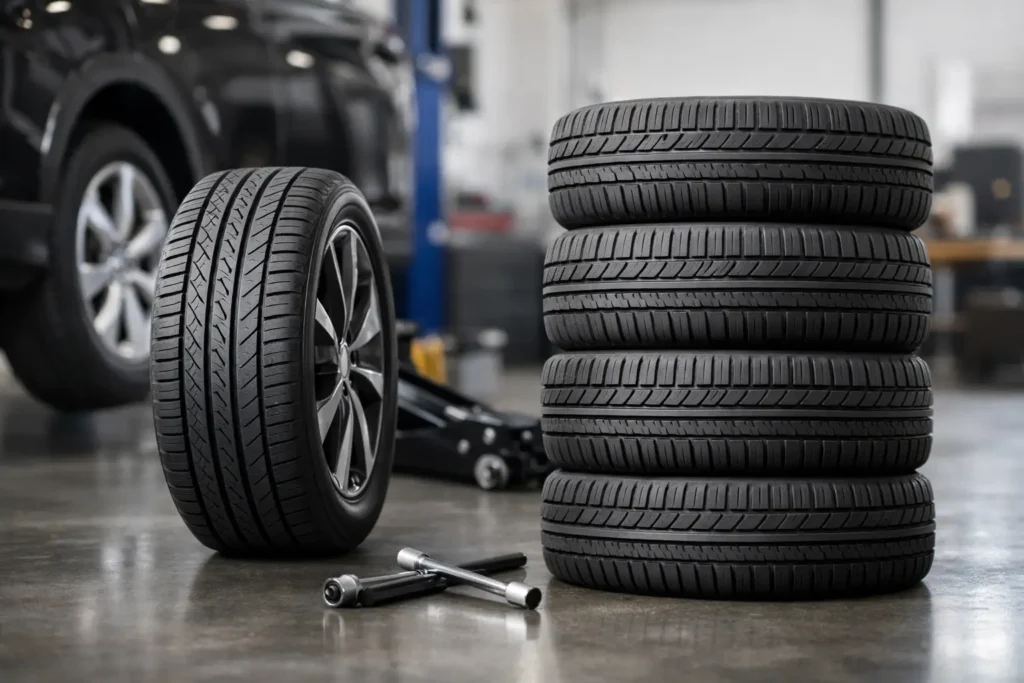
A flat or damaged tire always seems to happen at the worst time, and the first question most drivers ask is simple: should you replace one tire or four? The honest answer is that it depends on your tread depth, your drivetrain, and how the other tires are wearing. Sometimes replacing one tire is perfectly reasonable. Other times, it can create handling problems, extra drivetrain stress, or poor traction when you need it most.
At All Tire, this is one of those questions where honest advice matters more than a fast sale. A chain store might push a full set without much explanation, while a bargain seller might throw on a single replacement and send you down the road. The right call is the one that keeps your vehicle safe and driving properly.
When it makes sense to replace one tire
If your other three tires are still fairly new and the tread depth is close to the replacement tire, replacing one tire can be the right move. This usually works best when the damaged tire was lost early in the life of the set, not after years of wear.
For many front-wheel-drive and rear-wheel-drive vehicles, a single tire replacement is often acceptable if the remaining tires have enough tread and the difference in overall diameter is small. That said, the replacement tire should match the others as closely as possible in brand, model, size, and tread pattern. Mixing tire types can lead to uneven grip, odd handling, and faster wear.
There is also a difference between what is possible and what is smart. Even if one tire can technically be replaced, it still needs to be evaluated against the other three. If those tires are already halfway worn or showing irregular wear, buying one may only delay a larger issue.
When replacing four tires is the better call
If your current tires are well worn, replacing all four is often the safer and more cost-effective decision. This is especially true if tread depth is low enough that traction is already compromised in rain, slush, or snow.
Minnesota drivers know this better than most. We get long stretches of wet roads, ice, packed snow, and spring potholes. A vehicle with one fresh tire and three worn ones can feel unsettled when braking or cornering, and the difference becomes more noticeable as road conditions get worse.
Replacing all four tires also gives you a clean reset. You get even traction at every corner, predictable handling, and the ability to keep up with regular rotations from the start. In many cases, that means better tire life and fewer headaches over time.
Replace one tire or four on AWD vehicles
This is where the answer gets more strict. If you drive an all-wheel-drive vehicle, tread depth differences matter a lot more.
AWD systems rely on all four tires being very close in circumference. If one tire is significantly taller because it is brand new and the others are worn down, the system may constantly try to compensate for the mismatch. Over time, that can add stress to drivetrain components and lead to expensive repairs.
Some manufacturers allow only a small tread depth difference between tires on AWD vehicles. In certain cases, one tire can be replaced if the new tire is shaved to match the others, but that is not always practical or available. More often, if the remaining tires are worn beyond the allowed difference, replacing all four is the safer choice.
This is a good example of why quick answers from the internet only go so far. The right recommendation depends on your vehicle and the actual tread measurements, not a guess.
Tread depth matters more than age alone
A lot of drivers look at the age of the tires first, but tread depth is usually the bigger factor in deciding whether to replace one tire or four. If the remaining tires still have strong usable tread and are wearing evenly, one replacement may be enough.
If they are near the end of their useful life, four makes more sense. And if they are wearing unevenly, you may have another problem in the mix, such as alignment issues, suspension wear, improper inflation, or a balance problem.
This is also where tire design matters. For local drivers, we often recommend open shoulder tire designs on cars and trucks because they do a better job clearing water in heavy summer rain and give better traction in winter conditions. In a place with months of slick roads, that extra evacuation at the edges of the tread can make a real difference. If you are comparing replacement options, tread pattern should be part of the conversation, not just price. For more on tread design and seasonal tire choices, see our tire knowledge center at www.joesalltire.com/knowledge-center/.
Why matching tires matters
A tire is not just a rubber ring that fits the wheel. Its tread pattern, casing, compound, and overall construction all affect how your vehicle accelerates, brakes, corners, and rides.
If you replace one tire with a different model than the other three, the car may pull differently in wet weather or feel unstable during hard braking. Even if the size printed on the sidewall matches, the real-world performance may not.
That does not mean every single mismatch is dangerous, but it does mean you should not treat tires like interchangeable parts. A proper tire recommendation takes into account how the vehicle is used, what the other tires look like, and what kind of weather the driver deals with most.
The middle-ground option: replace two tires
Sometimes the real answer is not one or four. It is two.
If one tire is damaged and the matching tire on the same axle is also worn, replacing both tires can be the most sensible option. This is common on front-wheel-drive vehicles, where the front tires often wear faster, or on vehicles where the rear pair is more worn because rotations were missed.
When replacing two tires, placement matters. In most cases, the newer tires should go on the rear, even on front-wheel-drive cars. That surprises some people, but it helps reduce the risk of fishtailing on wet or slippery roads. The front tires may do the steering and much of the braking work, but loss of rear traction is harder for the average driver to control.
What can make a one-tire replacement a bad idea
There are a few red flags that usually point away from replacing just one tire. One is a large tread depth gap between the new tire and the others. Another is visible uneven wear, which suggests the remaining tires may not have much useful life left anyway.
Sidewall cracking, age-related hardening, frequent air loss, or a mismatched set already on the vehicle can also change the recommendation. If the current tires are noisy, rough riding, or causing vibration, replacing only the damaged one may leave you paying twice.
This is where a hands-on inspection matters. Good tire advice comes from measuring tread, checking wear patterns, and looking at the overall condition of the set. It should not come from a blanket rule.
The cost question drivers really mean to ask
Most people asking whether to replace one tire or four are also asking a money question. That is fair. Tires are not a small expense, and nobody wants to buy more than they need.
But the cheapest option on the day of the flat is not always the least expensive option over the next year. If one replacement leaves you with poor traction, premature wear, or drivetrain issues, you did not save money. You just moved the bill.
On the other hand, replacing four when the other three still have plenty of life left is not good advice either. The goal should be to spend what makes sense, based on the real condition of the tires and the vehicle.
That is the difference between a sales pitch and an actual recommendation.
So, should you replace one tire or four?
If the other three tires are nearly new, evenly worn, and closely matched, replacing one tire can be fine. If you have an AWD vehicle, heavily worn tires, or a noticeable tread depth difference, replacing four is often the safer call. And in plenty of cases, replacing two is the practical middle ground.
The key is not guessing. It is measuring tread depth, looking at wear patterns, and matching the recommendation to how the vehicle is built and how it is driven.
If you are standing in a parking lot trying to make the call after a blowout or sidewall damage, do not let anyone rush you into a one-size-fits-all answer. A good tire decision should hold up not just on dry pavement today, but on wet roads in July and icy mornings in January. That is when you find out whether the job was done right.