

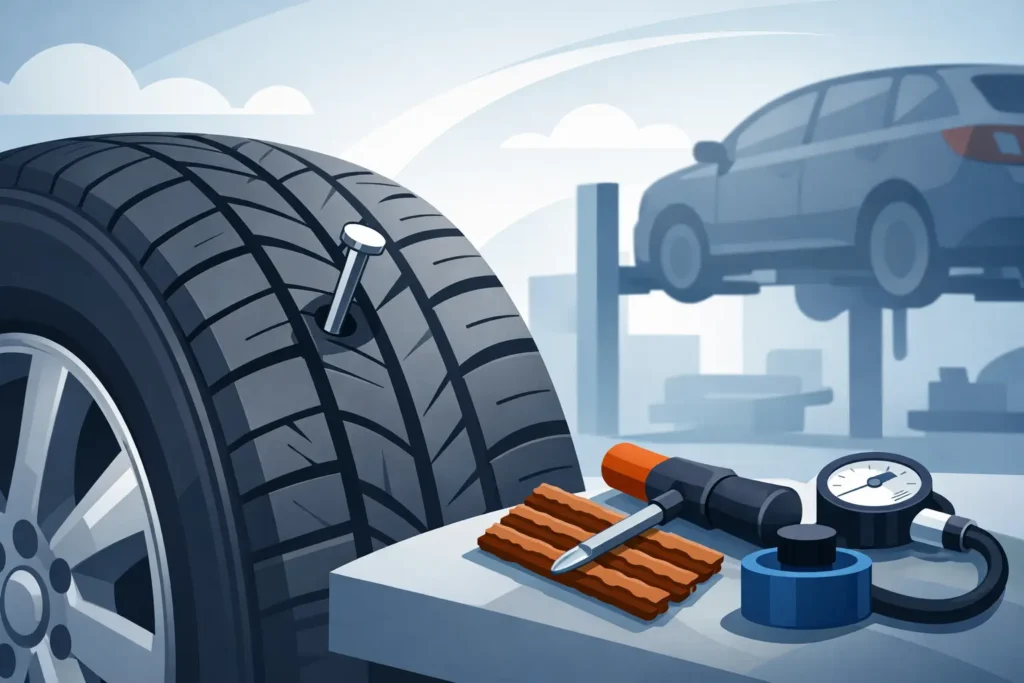
You walk out to your vehicle, notice a tire looks low, and there it is – a nail staring back at you from the tread. The first question most drivers ask is simple: can a nail in tire be repaired? Sometimes yes. Sometimes no. The difference comes down to where the nail is, how much damage was done, and whether the repair can be made the right way.
That is the part a lot of big stores skip over. A tire repair should not be a quick guess or a cheap shortcut. It needs to be inspected from the inside, checked for hidden damage, and repaired using the proper method. If that cannot be done safely, replacement is the better call.
Can a Nail in Tire Be Repaired or Not?
A nail puncture is often repairable if it is small, located in the main tread area, and the tire has not been driven too long while underinflated. That is the good-news version. The less convenient truth is that many punctures people assume are repairable really are not.
The safest repair zone is the center tread area, where the rubber is thickest and the structure of the tire can usually support a proper patch-plug repair. If the nail is in the shoulder or sidewall, the answer is usually no. Those areas flex too much when you drive, and a standard repair will not hold up the way it needs to.
Size matters too. A small puncture from a typical nail or screw may be fixable. A larger hole, a tear, or damage caused by driving on the tire while it was flat may put the tire beyond repair. Once the internal structure is compromised, no honest shop should try to sell you on a repair just to save a few dollars today.
Where the Nail Is Makes All the Difference
Most drivers focus on the object they can see, but the real concern is what happened around it. A nail in the middle of the tread is one thing. A nail near the outer edge is another.
Repairable punctures
In general, a repair is possible when the puncture is in the tread area and the injury is within industry repair limits. The tire also needs to have enough remaining tread and no signs of internal breakdown. If the nail went straight in and the tire did not run low for long, those are good signs.
Non-repairable punctures
Sidewall punctures are not considered safely repairable. The same goes for damage on or near the shoulder, which is the rounded transition between the tread and the sidewall. If there are multiple punctures too close together, previous bad repairs, cords showing, or cracking and age-related wear, repair is usually off the table.
A lot of drivers ask about plugging a tire from the outside and calling it good. That might seem cheaper and faster, but it is not the proper repair for a road tire you are counting on every day.
Why a Simple Plug Is Not the Same as a Proper Repair
This is where honest tire service matters. A plug pushed in from the outside may slow the leak, but it does not let the technician inspect the inside of the tire. That means hidden damage can go unnoticed.
A proper repair starts by removing the tire from the wheel. The inside is inspected for air-loss damage, torn inner liner material, or signs that the tire was driven while low. If it passes inspection, the puncture is repaired from the inside using a combination patch-plug or another approved internal repair method, then sealed correctly and put back into service.
That extra work is not about making things complicated. It is about making sure the tire is actually safe. When a repair is done right, you should be able to drive with confidence, not wonder if the tire will start leaking again next week.
What Happens If You Keep Driving on It?
This is where a repairable tire can turn into a replacement.
If the nail caused a slow leak and you drove on the tire while it was significantly underinflated, the sidewalls may have flexed too much and overheated. That kind of internal damage is not always visible from the outside. A tire can still look decent standing still and be unsafe once it is taken apart and inspected.
That is why it is smart to have a punctured tire checked as soon as you notice the problem. Topping it off with air every few days is not a fix. It only gives the damage more time to get worse.
If your TPMS warning light comes on, or you notice your vehicle pulling, riding rough, or sitting low on one corner, do not wait around hoping it goes away.
Can You Drive With a Nail in the Tire?
Maybe for a very short distance, but only with caution, and only if the tire still has enough air to support the vehicle safely. If the tire is going flat quickly, do not keep driving on it. That is how you turn a small puncture into sidewall damage, wheel damage, or a roadside problem.
If you are close to a trusted shop, driving a short distance at low speed may be reasonable. If the tire is losing air fast or looks visibly low, stop and put on the spare or have the vehicle towed. Safety has to come first.
There is no prize for squeezing a few more miles out of a damaged tire.
How a Tire Shop Decides if It Can Be Repaired
When a tire comes in with a nail, the decision should be based on inspection, not guesswork. A good shop will look at the puncture location, size, tread depth, overall tire condition, and signs of internal damage.
The tire will usually be checked for:
- Puncture location in the tread, shoulder, or sidewall
- Size of the hole
- Air-loss damage inside the tire
- Remaining tread depth and overall age of the tire
- Previous repairs or multiple punctures nearby
If the tire passes those checks, repair may make sense. If it does not, replacement is the safer answer, even if that is not what you wanted to hear.
That is one reason local drivers appreciate straightforward advice. At Joe’s All Tire, the goal is not to push a sale. It is to tell you what is safe, what is worth repairing, and what needs to be replaced so the job is done right the first time.
When Replacement Is the Better Value
A repair is cheaper upfront, but not every tire is worth repairing. If the tire is already worn down, aging out, or close to needing replacement anyway, putting money into a puncture repair may not be the smartest move.
This comes up a lot with older tires and with sets that are already unevenly worn. You may be able to repair one tire technically, but if the tread is near the end of its life, replacement can be the more practical choice. The same goes for punctures in tires that have already had multiple repairs.
For all-wheel-drive vehicles, tread depth differences can matter too. In some cases, replacing one tire is fine. In others, matching tread depth across the set becomes more important. That is another place where one-size-fits-all advice falls apart.
What You Should Do After Finding a Nail
If you spot a nail in your tire, resist the urge to pull it out in the driveway. If the object is still lodged in the tire, it may be slowing the air loss. Removing it before the tire is inspected can make the leak worse and make it harder to assess what happened.
Check the tire pressure if you can do so safely. If it is low, add air only enough to move the vehicle carefully to a shop, if appropriate. Then have the tire inspected as soon as possible.
It also helps to pay attention to the other tires. Sometimes one road hazard is just bad luck. Other times, low tread or aging tires make punctures more likely and safe repairs less likely.
The Right Answer Is the Safe One
So, can a nail in tire be repaired? Often, yes – if the puncture is in the right spot, the damage is limited, and the repair is done properly from the inside. But not every nail means a safe repair, and not every cheap fix is a real fix.
If you are not sure what you are looking at, have someone inspect it who will give you a straight answer. A good tire repair should buy you peace of mind, not just a few more days before the problem comes back.