

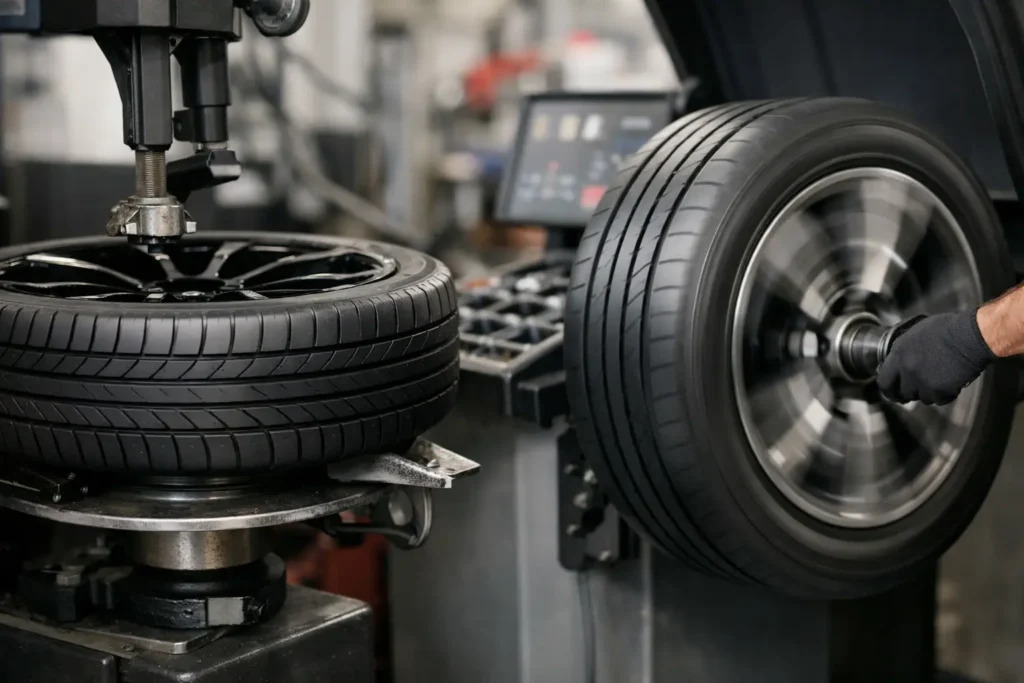
A tire can look brand new and still drive terribly if the mounting or balancing was done carelessly. That’s the part a lot of drivers don’t see. They notice the steering wheel shake at 62 mph, the uneven wear a few months later, or the annoying pull that makes a simple commute feel off. A good guide to tire mounting and balancing starts there – with the understanding that the tire itself is only part of the job.
At Joe’s All Tire, or just All Tire if you’re local, we’ve seen plenty of vehicles come in after a chain store install that was fast, but not exactly careful. This Isn’t Walmart. Mounting and balancing done right takes the right equipment, the right process, and somebody paying attention to the details that affect safety, ride quality, and tire life.
What tire mounting and balancing actually mean
Tire mounting is the process of installing the tire onto the wheel. That sounds simple, but there’s more to it than stretching rubber over metal. The technician has to inspect the wheel, check the tire size and condition, lubricate the bead properly, mount it without damaging the tire or rim, and make sure it seats correctly.
Balancing happens after that. Every wheel and tire assembly has slight weight differences. Balancing corrects those differences so the assembly spins evenly at road speed. When it’s off, you feel vibration in the steering wheel, seat, or floor. Over time, that vibration can wear tires faster and put extra stress on suspension parts.
The reason these services are paired together is simple. You can’t expect a smooth ride from a newly mounted tire if it hasn’t also been balanced correctly.
Why proper tire mounting and balancing matter
A lot of drivers only think about balancing when the vehicle starts shaking. But the better approach is to treat it as part of proper tire installation every time. A well-balanced set of tires helps the vehicle track more smoothly, reduces irregular tread wear, and makes the whole ride feel more controlled.
That matters even more here in Minnesota, where roads, potholes, seasonal temperature swings, and long stretches of snow and ice all work against your tires. If your tires are already dealing with rough conditions, a sloppy install only makes things worse.
There’s also a safety side to this. Improper mounting can lead to air leaks, bead damage, wheel damage, or tire failure. Poor balancing can mask other issues, too. What feels like a tire vibration isn’t always just a balance problem. Sometimes it points to a bent wheel, worn suspension part, wheel bearing issue, or brake problem. That’s why experience matters.
A practical guide to tire mounting and balancing
If you’re replacing tires, the first step is choosing the right tire for how and where you drive. That includes size, load rating, speed rating, tread design, and the kind of traction you need most. Around Elk River and the surrounding area, we often recommend open shoulder tire designs for cars and trucks because they do a better job clearing water in summer rain and giving extra bite in winter conditions. With roughly five months of snow and ice in Minnesota, that tread design can make a real difference.
If you’re not sure what fits your vehicle and your driving habits, we can help you sort it out quickly. Just tap the blue phone call button in the lower left corner – we’re just a call away.
Once the correct tire is selected, the old tire comes off and the wheel gets inspected. This is one of those steps that shouldn’t be rushed. Corrosion on the bead seat, a bent rim, cracks, old valve stems, or TPMS issues can all affect how the new tire performs after installation.
Next comes mounting. Proper lubrication is used so the tire bead slides into place without damage. The technician also needs to handle the wheel carefully, especially on alloy wheels where cosmetic damage is common if the machine is used carelessly. On many vehicles, replacing the valve stem or servicing the TPMS hardware during installation is just part of doing the job right.
Then the tire is inflated and seated. If something doesn’t look right at this stage, that’s when it should be corrected – not ignored. A tire that doesn’t seat evenly can create vibration or air loss later.
After mounting, the assembly goes on the balancing machine. The machine identifies where weight needs to be added so the tire spins evenly. A good technician doesn’t just slap weights on and move on. They verify the reading, place the weights correctly, and check the final result. On some assemblies, road force variation or wheel condition may need a closer look if vibration is still present.
What can go wrong with a bad install
When mounting and balancing are rushed, the problems usually show up pretty quickly. You might notice vibration at highway speed, uneven tread wear, slow leaks, a crooked steering feel, or noise that wasn’t there before. Sometimes customers assume they bought a bad tire, when the real problem was the installation.
There are trade-offs here. A bargain install might save a few dollars upfront, but if it leads to premature wear or a second appointment to fix vibration, that savings disappears fast. Tire service is one of those jobs where precision matters more than speed.
That’s especially true with light trucks, trailers, and work vehicles. Load matters. Usage matters. Tire design matters. The right balance setup for a passenger car may not tell the whole story on a heavier vehicle that spends time towing or carrying equipment.
How to tell if your tires need balancing
The most obvious sign is vibration that shows up at certain speeds, often between 50 and 70 mph. If the steering wheel shakes, that usually points to the front tires or wheels. If you feel it more through the seat or floor, the rear tires may be involved.
But there are less obvious clues too. Cupping, scalloped tread wear, or a tire that seems to wear out too soon can all point to a balance issue. So can a vibration that starts after hitting a pothole. Sometimes a wheel weight gets knocked off. Sometimes the impact bends a wheel. It depends on the hit and the vehicle.
Balancing should also be checked when new tires are installed, when a tire is repaired, and when vibration starts for any reason. It’s not a one-time thing for the life of the tire.
Why the shop matters as much as the equipment
Balancing machines and tire machines help, but they don’t replace judgment. Two shops can use similar equipment and get very different results depending on how carefully the work is done.
That’s one reason people come to a local shop instead of a volume-driven chain. When Joe’s on-site and the work is being looked at by someone who actually cares whether it leaves right the first time, the process tends to be more thorough. That’s what people mean when they say they want honest advice and workmanship, not a sales pitch.
And when there’s a vibration concern, the answer isn’t always “you need four new tires.” Sometimes it’s a balance correction. Sometimes it’s a bent wheel. Sometimes it’s brakes, bearings, or suspension. Getting the real answer saves money and frustration.
Tire design still plays a role after installation
Even perfectly mounted and balanced tires won’t perform the same if the tread design isn’t a good match for your driving. That’s worth mentioning because drivers often focus on size and price, but ignore how the tire is built.
Open shoulder tires are a good example. We recommend them often because they help evacuate water more effectively and improve traction in the conditions Minnesota drivers actually deal with. They’re not the answer for every single vehicle, but for many cars and trucks here, they’re a smart choice. The tread can only do its job, though, if the tire is mounted and balanced correctly in the first place.
When to come in
If you’ve got a new set of tires going on, a steering wheel shake at highway speed, uneven wear, or a tire that never seems to hold air quite right, it’s worth having it checked by someone who looks past the obvious. Mounting and balancing aren’t glamorous services, but they affect how your vehicle rides every day.
That’s why a careful install matters. A tire should leave the shop ready to run smooth, wear evenly, and do its job in rain, snow, and everything in between. When the work is done right, you usually don’t think about it again – and that’s exactly how it should be.
If you want a second opinion before replacing tires or chasing a vibration, that’s a good place to start. The right answer is usually simpler when someone takes the time to look closely.