

You feel it first in the steering wheel. At 55 to 70 mph, the car starts to buzz, the seat picks up a shake, and a normal drive suddenly feels rougher than it should. That is where wheel balancing for smooth ride matters. A small weight difference in one tire and wheel assembly can turn into constant vibration, faster tire wear, and a vehicle that just does not feel right.
A lot of drivers assume any shake means they need new tires. Sometimes that is true. Sometimes it is alignment. Sometimes it is a bent wheel, a wheel bearing issue, or a suspension part starting to wear out. But very often, the problem starts with balance. Getting the cause right matters, because the fix for a vibration problem should be based on what the vehicle is actually doing, not guesswork.
If your vehicle has started shaking and you are not sure whether it is balance, a bad tire, or something deeper, it helps to talk it through before spending money in the wrong place. Just tap the blue phone call button in the lower left corner – we’re just a call away.
What wheel balancing actually does
Wheel balancing corrects uneven weight distribution around the tire and wheel assembly. Even a brand-new tire is not perfectly uniform all the way around. The wheel is not either. When those slight heavy spots line up, the assembly can spin unevenly at road speed.
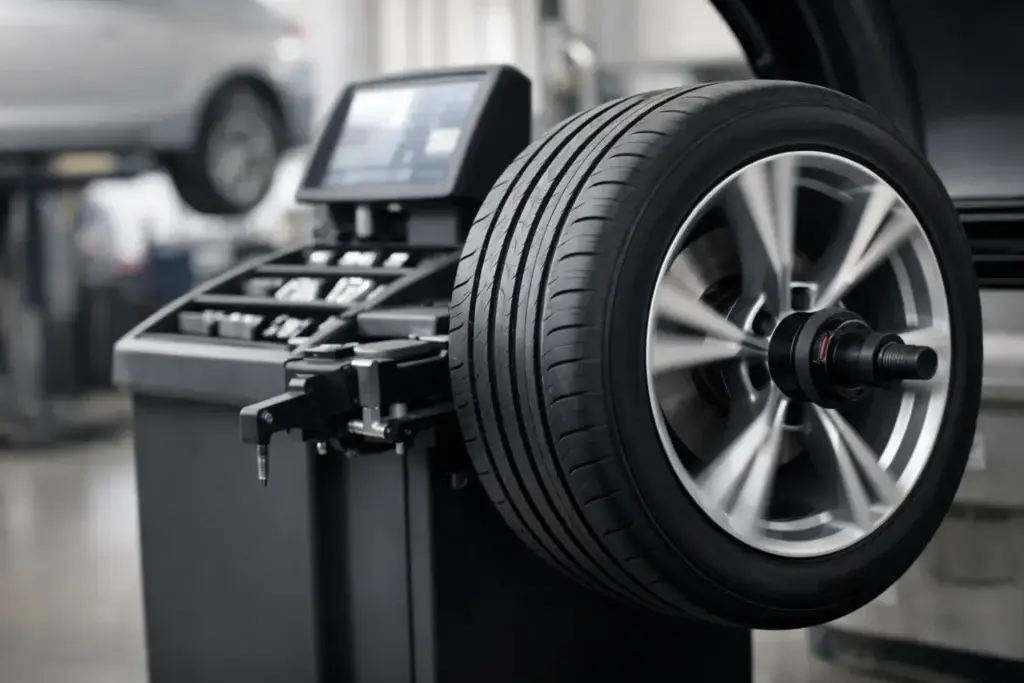
A balancing machine measures where the imbalance is and how much correction is needed. A technician then adds small weights in the right spots so the assembly rotates more evenly. When the balance is right, the tire rolls smoother, the steering feels steadier, and the vehicle is not fighting that repeated up-and-down or side-to-side motion.
This is not the same thing as alignment. Alignment sets the angles of the wheels relative to the vehicle and the road. Balancing deals with weight distribution in the spinning assembly itself. Both matter, but they solve different problems.
Signs you may need wheel balancing for smooth ride
The most common clue is vibration that gets worse as speed increases. Many drivers notice it most on the highway. If the steering wheel shakes, the issue is often in the front. If the vibration feels more like it is in the seat or floor, it may be coming from the rear. That is not a rule every time, but it is a useful starting point.
Uneven tire wear can also point to a balance issue. Instead of wearing smoothly across the tread, a tire may start to cup or develop irregular patches. Once that wear pattern gets established, balancing may stop the cause, but it will not always erase the noise or roughness already worn into the tire.
You may also notice the vehicle feels fine on one road and rough on another. That is where diagnosis takes a little judgment. Minnesota roads can be hard on tires and wheels after a long winter, and pothole damage can show up as a vibration that feels like a simple balance issue at first.
Why balance problems happen
The most straightforward reason is normal tire service. Any time tires are installed on wheels, rotated, repaired, or replaced, balance should be checked. Weights can also fall off over time. It does not take much to create a noticeable shake.
Road impact is another big one. A pothole, curb hit, or rough stretch of broken pavement can knock things out of balance or damage a wheel. In this part of Minnesota, that is not rare. Five months of snow and ice usually mean months of freeze-thaw cycles, and that does a number on roads.
Mud, packed snow, or ice buildup inside the wheel can create a temporary imbalance too. Truck and SUV owners see this more often in winter. If a vibration suddenly appears after driving through slush or deep snow, sometimes the wheel just needs to be cleaned out. If it stays after that, it is time for a closer look.
When balancing is enough, and when it is not
This is where honest diagnosis matters. A lot of vibration complaints are solved with balancing. But not all of them.
If a tire has an internal defect, balancing may reduce the shake but not eliminate it. If a wheel is bent, the machine may show a problem that is not really about missing weight. If the tread is badly worn, chopped, or out-of-round, adding weights will not restore a smooth ride. And if the real issue is a loose suspension part, worn bearing, or brake problem, balancing the tires is not the full answer.
That is why a good shop does more than just spin the wheel and stick on weights. They pay attention to tread condition, wheel runout, previous wear patterns, and how the customer describes the vibration. A vehicle that shakes only when braking points in a different direction than one that shakes steadily at highway speed.
Why tire condition still matters
Balancing helps a good tire perform the way it should. It cannot make a poor tire act like a quality one. That matters if you are trying to keep a vehicle comfortable and predictable through both summer rain and winter weather.
At Joe’s All Tire, locals also know us as All Tire, and one thing we strongly recommend when tire replacement is part of the discussion is an open shoulder design for many cars and trucks. That kind of tread layout can do a better job clearing water in summer and finding traction in snow and slush during our long Minnesota season. You can read more about tire design and seasonal traction in our tire knowledge center at www.joesalltire.com/knowledge-center/.
The key point is this: balance and tire choice work together. A properly balanced tire with the right tread design gives you a better shot at a quiet, controlled ride than a worn or poorly matched set ever will.
How often should wheels be balanced?
There is no single number that fits every driver, but there are a few common times when balancing makes sense. New tire installation is one. Tire rotation is another good opportunity, especially if the vehicle has started to feel slightly different since the last service. Any new vibration should be checked instead of ignored.
If you hit a pothole hard enough to make you wince, it is also smart to have the wheels and tires inspected. Sometimes the tire looks fine from the outside, but the balance has changed or the wheel has taken a hit. Catching that early can save a tire from wearing out ahead of time.
For drivers who spend a lot of time on highways, small balance problems tend to show up sooner because the vehicle stays in the speed range where vibration is most noticeable. For around-town driving, the symptoms may be easier to miss until the wear gets worse.
What a proper balance service should include
A balance service should not feel rushed. The technician should inspect the tire and wheel before assuming weights are the only issue. That means looking for uneven wear, checking for damage, and making sure the wheel mounts correctly.
Clean mounting surfaces matter. Proper weight placement matters. So does using the right method for the wheel type. On some vehicles, a road force style diagnosis can add useful information when a standard balance does not fully solve the problem. It depends on the tire, the wheel, and the complaint.
This is one of those jobs where doing it correctly the first time saves frustration. If a vibration comes back right away, either the original issue was missed, or there is more going on than balance alone.
A smooth ride is really about protecting the whole vehicle
Drivers usually come in because the shake is annoying. That is fair. But the bigger issue is what constant vibration does over time. It can shorten tire life, add stress to suspension parts, and make long drives more tiring than they need to be.
A vehicle in good shape should feel settled on the road. Not floaty, not twitchy, not buzzing through the wheel. If it has changed, there is a reason. Sometimes the fix is simple. Sometimes it takes a closer diagnosis. Either way, the goal is the same – get the vehicle driving the way it should, without selling parts that do not need to be sold.
If your car, truck, or trailer has started to vibrate and you want a straight answer, get it checked before the wear gets more expensive. A smooth ride usually starts with small details handled the right way.
