

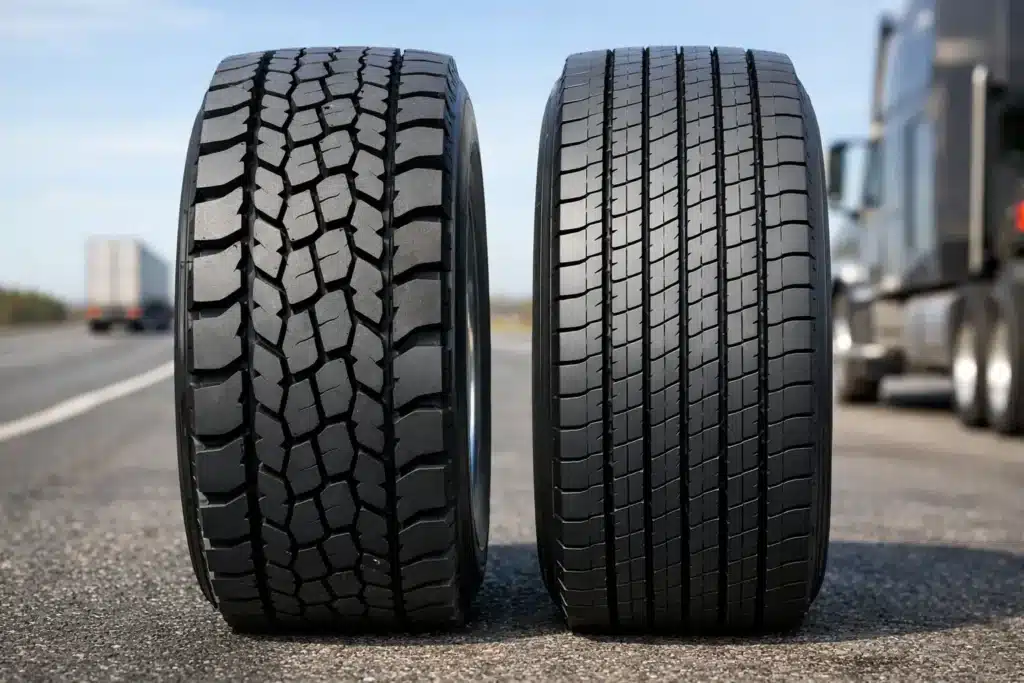
You usually do not notice shoulder design until your tires start struggling in heavy rain, slushy streets, or loose gravel. That is when the difference in open shoulder tires vs closed shoulder becomes easy to feel from behind the wheel. If you have a question or are ready to schedule, just tap the blue button in the lower left corner – we’re just a call away.
At Joe’s All Tire, or just All Tire as many locals call us, this is one of those details we pay attention to because it changes how a vehicle behaves in real Minnesota driving. For most cars, SUVs, and light trucks around here, we often recommend open shoulder tread designs because they tend to do a better job clearing water and biting through snow. That does not mean closed shoulder tires are bad. It means the right answer depends on what you drive, how you drive, and what you expect from the tire.
What open shoulder tires vs closed shoulder really means
The shoulder is the outer edge of the tread, where the tire transitions from the top tread face to the sidewall. On an open shoulder tire, that outer area has larger channels or gaps that connect outward from the main grooves. On a closed shoulder tire, the outer edge is more continuous, with fewer open voids and more solid rubber across the shoulder.
That design changes how the tire handles water, snow, heat, road noise, and wear. Open shoulders give water and slush more escape routes. Closed shoulders create a more stable tread block at the edge, which can help with dry-road feel, steering response, and in some cases quieter operation.
This is why two tires with the same size and even a similar tread pattern can behave differently once the weather turns or the road gets rough.
Why shoulder design matters on Minnesota roads
If you live where roads stay mostly dry and clean year-round, the difference may feel less dramatic. In Minnesota, drivers deal with standing water in summer, slush in shoulder seasons, and packed snow or ice for a long stretch of the year. That makes tread evacuation and edge grip a much bigger deal.
An open shoulder design helps push water and slush out from under the tire instead of trapping it. That can reduce hydroplaning risk and improve traction when road conditions are messy. It also gives the tire more biting edges, which matters when you are pulling away from a stop sign on snow-covered pavement or trying to stay planted on a slick curve.
That is a big reason we lean toward open shoulder tires for many local drivers. They are often the more practical choice for real-world weather, not just ideal test-track conditions.
Open shoulder tires: where they shine
The biggest advantage of open shoulder tires is evacuation. Water, slush, and light mud have more room to move out of the tread. That helps the tire stay in contact with the road instead of riding on top of a film of water.
In winter conditions, open shoulders can also improve traction because the tread has more void area and more edges to grab loose snow. For trucks and SUVs, that can make a noticeable difference on side streets, driveways, and unplowed roads. For passenger cars, it can mean more confidence during braking and cornering when surfaces are inconsistent.
Open shoulder designs are also common on all-terrain and more aggressive all-weather tires because they work better when the road surface is not clean and dry. If you want to learn more about how tread design affects traction and seasonal performance, our knowledge center covers these topics in plain language at www.joesalltire.com/knowledge-center/.
The trade-off is that more open tread can sometimes create a little more road noise, and depending on the tire model, a very aggressive open shoulder design may not feel as crisp on smooth dry pavement as a more closed design. That does not make it worse overall. It just means the tire is prioritizing traction and evacuation over refinement.
Closed shoulder tires: where they make sense
Closed shoulder tires have a more connected outer tread edge. That extra rubber can improve tread stability, especially in dry conditions. On some vehicles, that translates to more precise steering feel and more even wear during long highway use.
They can also run a bit quieter, particularly in touring-type applications where comfort matters more than loose-surface traction. If your vehicle spends most of its life on clean pavement, mostly highway miles, and you value low noise and a smooth ride, a closed shoulder tire may be a good fit.
Some closed shoulder designs also resist tread squirm better, which can help the tire feel more settled in warm, dry conditions. That is one reason performance-oriented street tires often use more closed shoulders.
But there is always a trade-off. A more closed shoulder can limit how quickly water or slush escapes, especially compared with a well-designed open shoulder tire. In a state with long winters and frequent wet roads, that matters.
Open shoulder tires vs closed shoulder in rain and snow
This is where the difference is most useful for everyday drivers.
In heavy rain, open shoulder tires usually have the edge because they can channel water outward more effectively. That can improve wet braking and reduce that light, uneasy feeling you get when the car starts to float at highway speed.
In snow, open shoulders also tend to perform better because they create more places for snow to pack and release. Snow traction is not just about softness of the rubber. It is also about tread shape and the number of edges working against the surface.
Closed shoulder tires can still do fine in light rain or mild winter conditions, especially if the overall tread compound and siping are strong. But if you regularly drive through standing water, slush, or deeper snow, the advantage often shifts toward open shoulder designs.
That is why we strongly recommend open shoulder tires for many cars and trucks here. For our climate, they are often the smarter safety choice.
Noise, wear, and ride comfort
A lot of tire buying comes down to what annoys you most. Some drivers hate road noise. Some want the best wet grip they can get. Some are watching tread life because they rack up miles fast.
Closed shoulder tires often have an advantage in ride quietness because the tread edge is more continuous. That can reduce pattern noise on smooth pavement. They may also wear very evenly in steady highway service if inflation and alignment are kept in check.
Open shoulder tires can still wear well, but they depend more on proper rotation, alignment, and pressure maintenance. If the tire is aggressive and the vehicle has suspension or alignment issues, the more open outer tread blocks may show wear faster. That is not a shoulder-design problem alone. It is usually a maintenance and application issue.
For most everyday drivers, the question is not which design wears forever. It is which design gives the best mix of safety, control, and value for the roads you actually drive.
How to choose the right shoulder design
Start with your driving conditions, not just the price tag or the look of the tread. If your commute includes wet highways, rural roads, winter weather, or frequent slush, open shoulder tires usually make more sense. If your vehicle is mostly a fair-weather commuter and you care most about quiet highway comfort, a closed shoulder touring tire may be worth considering.
Vehicle type matters too. A pickup, SUV, or crossover that sees year-round use in mixed conditions often benefits from an open shoulder design. A sedan used mainly for dry freeway miles may be fine with a more closed shoulder, provided the tire still has solid wet traction ratings.
This is also where honest advice matters. A lot of chain stores push what they have in stock or what fits a sales program. A good recommendation should match the vehicle, the mileage, the season, and the driver.
The better question is not open or closed – it is what problem are you solving?
If your current tires feel nervous in rain, struggle in slush, or lose grip too easily in winter, shoulder design should be part of the conversation. If your complaint is mostly noise or ride harshness on dry pavement, then a closed shoulder option may be worth a look.
Tire design is always about balance. More traction in bad conditions can mean a little more noise. A quieter, more solid tread edge can mean less evacuation in ugly weather. Neither design wins every category.
For many Minnesota drivers, though, the roads make the decision simpler. When weather changes fast and road conditions stay unpredictable for months, open shoulder tires often give you a better safety margin where it counts.
If you are not sure what your current tires have or whether they are the right fit for how you drive, bring the vehicle in and have them looked at by someone who will tell you the truth. The best tire choice is the one that keeps your vehicle planted, predictable, and ready for the next storm instead of just looking good in the parking lot.
