

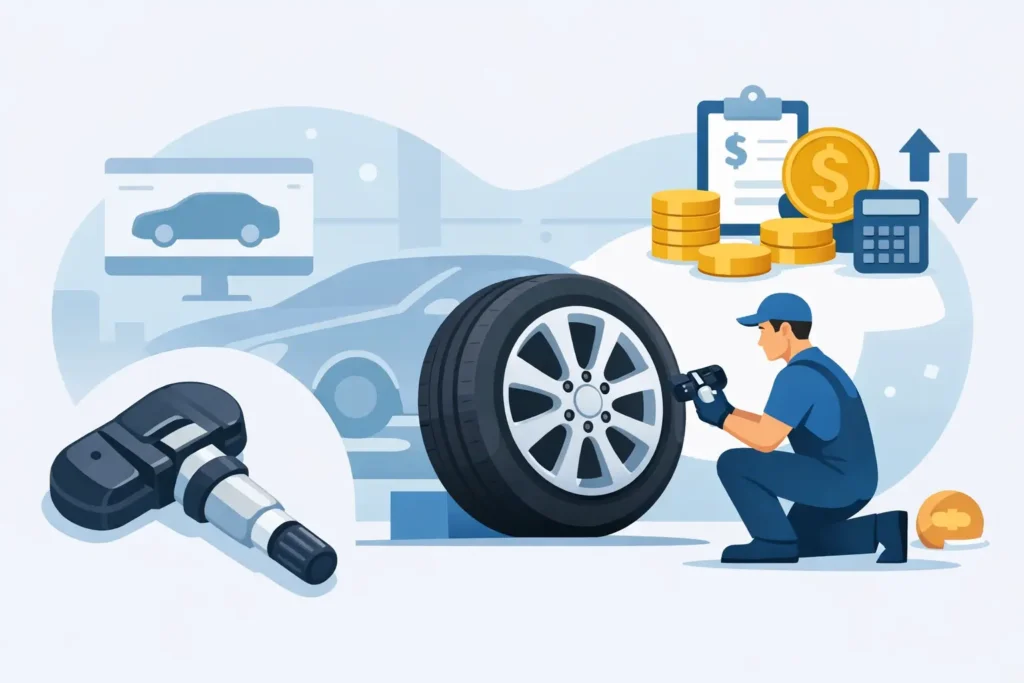
That tire pressure warning light always seems to show up at the worst time – on the way to work, before a road trip, or right after the weather changes. When it stays on, one of the first questions drivers ask is about TPMS sensor replacement cost. The honest answer is that it depends on your vehicle, the type of sensor it uses, and whether the problem is the sensor itself or something simpler.
For most drivers, replacing a TPMS sensor is not the most expensive repair on the car, but it is one you want handled correctly. A warning light that gets ignored can leave you driving on underinflated tires without realizing it, and that affects tire wear, fuel economy, handling, and braking.
What TPMS sensor replacement cost usually includes
In most cases, TPMS sensor replacement cost includes the sensor, labor to remove the tire from the wheel, installation of the new sensor, and programming or relearning so the vehicle recognizes it. Some vehicles make that process quick. Others take more time, especially if the system needs a scan tool or a specific relearn procedure.
A typical range for one sensor replacement often lands somewhere around $60 to $150 per wheel. On some vehicles it can be lower, and on others it can climb higher, especially if the vehicle uses original equipment sensors with more involved programming. If more than one sensor has failed, the total can add up fast, which is why a proper diagnosis matters before anyone starts replacing parts.
That range also assumes the wheel and tire come apart normally and there are no surprises like damaged valve stems, corrosion around the sensor mount, or wheels that need extra cleanup to seal properly. At a good shop, you should be told about those issues before the work moves ahead.
Why the price can vary so much
TPMS systems are simple in theory but not always simple in practice. Each wheel sensor sends pressure data to the vehicle, and every manufacturer handles that setup a little differently. That is a big reason one driver gets a modest bill while another pays more.
Sensor type and vehicle make
Some vehicles can use a quality aftermarket programmable sensor. Others do better with a direct-fit replacement or an original equipment part. The sensor itself may cost far more on certain import models, trucks, or vehicles with less common systems.
Labor and tire removal
You do not usually swap a TPMS sensor from the outside like a valve cap. The tire has to come off the wheel to replace the sensor. That means the shop is doing some of the same work involved in tire service, and labor reflects that.
Programming and relearn procedures
Some systems relearn automatically after driving. Others need a scan tool and a step-by-step reset process. If programming takes extra shop time, that affects TPMS sensor replacement cost too.
One sensor or a full set
If one sensor battery has died and the sensors are all the same age, the others may not be far behind. That does not mean every vehicle needs all four sensors at once, but it is a fair conversation to have. Replacing one now may solve the immediate problem. Replacing a full set may save repeat visits if the sensors are near the end of their service life.
When replacement makes sense and when it doesn’t
Not every TPMS warning means you need a new sensor. Sometimes the tire pressure is actually low. Sometimes a temperature swing triggers the light. In winter especially, a pressure drop from cold weather can fool drivers into thinking something has failed when the system is doing exactly what it should.
A dead sensor battery is a common reason for replacement. Most factory TPMS sensors have sealed batteries that are not replaceable, and many start failing somewhere around the 5 to 10 year mark. Physical damage during tire service, corrosion, leaking valve stems, or a sensor that stops communicating can also mean replacement is the right call.
But a trustworthy shop should verify the issue first. If the problem is low pressure, damaged tire tread, or a relearn issue after another repair, replacing the sensor will not fix the real problem. This is where honest diagnosis matters more than the part itself.
TPMS sensor replacement cost vs. ignoring the warning light
A lot of drivers put this repair off because the car still seems to drive fine. That is understandable. The problem is that the TPMS system is there to warn you before a low tire turns into a more expensive issue.
Driving on a low tire can wear the edges faster, reduce fuel economy, and make the vehicle less stable in wet or emergency conditions. If a tire gets severely underinflated, it can overheat and fail. Compared with the cost of premature tire replacement or the safety risk of a blowout, TPMS sensor replacement cost is usually the smaller problem.
There is also the day-to-day frustration factor. When the warning light is already on because of a bad sensor, you lose your early warning system for a real low-pressure event. That means one problem can hide another.
Is it better to replace one sensor or all four?
This depends on the age of the sensors, your budget, and how long you plan to keep the vehicle. If one sensor failed after road damage or corrosion and the others are still working well, replacing just one may be the sensible choice.
If the sensors are original and the vehicle is several years old, replacing all four can be more cost-effective over time. The batteries tend to age together. Doing them during one visit can reduce repeated labor charges and save you from chasing warning lights one wheel at a time.
There is no one-size-fits-all answer here. A good shop will tell you what they found, explain whether the remaining sensors still look reliable, and let you decide based on clear information rather than pressure.
The best time to replace a TPMS sensor
If you know a sensor is weak or failing, replacing it during new tire installation often makes the most sense. Since the tire is already coming off the wheel, you avoid duplicating labor later. The same idea applies during certain tire repairs or when a leaking valve stem assembly is found.
This is one of those repairs where timing can affect cost. Waiting until long after a tire install may mean paying again for labor that could have been combined with work already being done.
Choosing a shop for TPMS service
TPMS work is not just about installing a part. The sensor needs to fit properly, seal correctly, and communicate with the vehicle. A rushed installation can create slow leaks, broken components, or a warning light that comes right back.
That is why it helps to use a shop that handles tire and wheel service every day. Shops with strong TPMS experience know how to diagnose whether the issue is pressure-related, sensor-related, or communication-related. They also know when an aftermarket option is perfectly fine and when the vehicle is better served by a specific sensor type.
At a local shop like Joe’s All Tire, that usually means you get a straight answer instead of a script. If the sensor needs replacement, you should be told why. If it does not, you should hear that too.
A realistic way to budget for TPMS sensor replacement cost
If you are planning ahead, assume that replacing one TPMS sensor will likely cost less than a major brake repair but more than a basic tire rotation. For many everyday vehicles, that means budgeting somewhere in the broad $60 to $150 range per sensor, with total cost shaped by labor, programming, and parts choice.
The key is not chasing the cheapest number. The lowest quote is not always the best value if it leaves out programming, uses a poor-quality sensor, or does not address a leaking stem or wheel sealing issue. Done right is cheaper than doing it twice.
If your TPMS light is on, the best next step is simple – have it checked before the problem gets lumped together with tire wear, poor handling, or another warning light. A clear diagnosis gives you real numbers, real options, and one less thing to second-guess every time you start the car.