

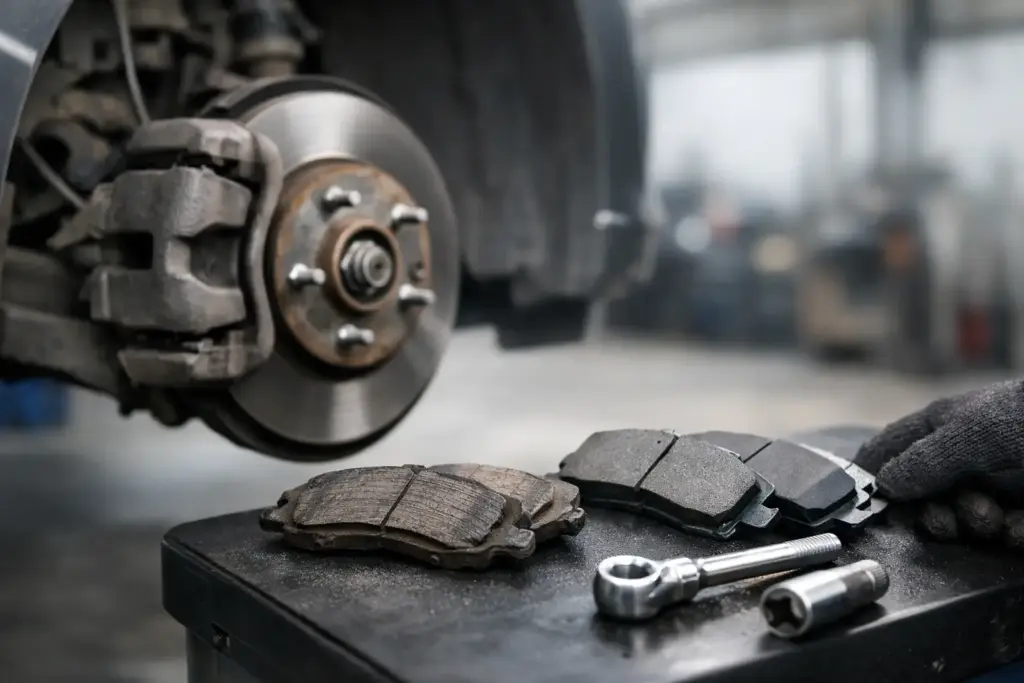
A brake pedal that suddenly feels different can get your attention fast. Brake pads wear gradually, so many drivers don’t notice the change until they hear a squeal, feel a vibration, or need more room to stop. That’s when it’s time to quit guessing and have the brake system checked.
At Joe’s ALL TIRE, we see plenty of vehicles that could’ve avoided rotor damage and higher repair costs with an earlier inspection. A brake check doesn’t need to be complicated. The goal is to find what’s worn, explain what’s causing the concern, and fix only what your vehicle actually needs.
How Brake Pads Work
Brake pads create friction against the brake rotors when you press the pedal. That friction slows the wheels, which slows your vehicle. Every stop removes a tiny amount of pad material. Normal driving, traffic, steep hills, towing, road salt, and stop-and-go commuting all affect how quickly that material wears away.
Most brake pads are built with a metal backing plate and friction material. Once the friction material gets too thin, the pad can no longer do its job safely or quietly. Letting it wear down to metal can damage the rotor, reduce braking performance, and turn a basic pad replacement into a more involved brake job.
There isn’t one mileage number that fits every vehicle. Some drivers need pads around 30,000 miles, while others may get 60,000 miles or more. The better question is how the pads look, how the rotors are wearing, and what the vehicle is telling you on the road.
Signs Your Brake Pads Need Attention
A little brake noise doesn’t always mean the pads are worn out. Minnesota weather can leave surface rust on rotors after a damp night or a snowy week, and that light scraping may clear up after a few normal stops. Persistent noise or a noticeable change in braking is different.
Watch for these common warning signs:
- A high-pitched squeal that happens regularly when braking
- Grinding, scraping, or a harsh metal-on-metal sound
- A brake pedal that feels soft, low, or requires more pressure
- Vibration or pulsing in the pedal or steering wheel during braking
- The vehicle pulling to one side when you apply the brakes
- Longer stopping distances or a brake warning light
Grinding deserves quick attention. It may mean the friction material is gone and metal is contacting the rotor. Continuing to drive can quickly cut into the rotor surface and increase the cost of the repair.
If your vehicle is making noise, pulling, or shaking when you stop, it’s worth getting answers before the issue grows. Joe at ALL TIRE can inspect the brakes, show you what’s going on, and give you a straight recommendation. Mobile visitors can tap the blue call button in the lower left corner to ask questions or schedule an appointment.
Pads, Rotors, Calipers: Why the Whole System Matters
Brake pads don’t work alone. The rotor needs to be in good condition, the caliper needs to apply pressure evenly, and the brake hardware needs to move freely. Replacing pads without paying attention to the rest of the system can lead to noise, uneven wear, pulling, or a short-lived repair.
Rotors are often replaced with pads when they are too thin, deeply grooved, warped, rust-pitted, or heat-damaged. In some cases, a rotor can be reused if it meets the vehicle manufacturer’s specifications and has a clean, even surface. That decision should come from measurement and inspection, not a one-size-fits-all sales pitch.
Calipers and slide pins matter too. A sticking caliper can keep a pad pressed against the rotor, causing one side to wear much faster than the other. You may notice a burning smell, a hot wheel, pulling while driving, or uneven pad wear. Replacing pads alone won’t solve that problem.
This is why a proper brake service includes more than installing new parts. At ALL TIRE, the work starts with checking the condition of the components around the pads so the repair is done right the first time.
Don’t Wait for the Brake Light
The brake warning light can mean several things, including low brake fluid, a parking brake issue, or a hydraulic problem. It doesn’t always come on just because your pads are worn. Waiting for a dashboard light can mean waiting too long.
Your senses are often the first warning system. Pay attention to new sounds, changes in pedal feel, vibration, and how the vehicle behaves under braking. If you tow a trailer, carry heavy loads, or spend a lot of time in city traffic, be especially proactive. Those conditions put more heat and stress into the brakes.
A seasonal tire change is also a smart time to have the brakes looked at. With the wheels off, it’s easier to inspect pad thickness, rotor condition, and signs of uneven wear. For Elk River drivers dealing with snow, slush, road salt, and wet spring roads, that extra look can help catch issues before they become urgent.
What Good Brake Service Should Include
A trustworthy brake repair begins with a clear inspection and a plain-language explanation. You should know whether the pads are low, whether the rotors need attention, and whether a caliper, hose, or hardware issue is contributing to the problem.
Quality matters, but expensive doesn’t automatically mean right for every vehicle. The correct brake pads depend on your vehicle, driving habits, towing needs, and budget. A family SUV, a work pickup, and a commuter car may need different pad materials and service approaches.
The important part is avoiding shortcuts. Cheap brake work can mean poor-fitting parts, ignored hardware, contaminated surfaces, or a rushed inspection. “This Isn’t Walmart” is more than a line when it comes to safety work. It means your brakes deserve careful diagnosis, proper parts, and workmanship that doesn’t leave you wondering whether the noise will come back next week.
FAQ
How often should brake pads be replaced?
It depends on the vehicle and how you drive. Many pads last between 30,000 and 60,000 miles, but an inspection is more reliable than mileage alone.
Can I drive with squeaky brake pads?
A brief squeak from moisture or surface rust may be normal, especially after wet weather. Ongoing squealing should be inspected because it can indicate worn pads or brake hardware problems.
What does grinding when braking mean?
Grinding may mean the brake pads have worn down to the metal backing plate. Stop driving as soon as it’s safe and arrange an inspection to prevent further rotor damage.
Do rotors always need to be replaced with brake pads?
No. Rotors should be measured and inspected. If they are within specification and in good condition, they may not need replacement. If they are worn, damaged, or below safe thickness, replacement is the right call.
Why does my steering wheel shake when I brake?
Steering wheel vibration during braking often points to uneven rotor surfaces, though suspension or wheel issues can also contribute. A full inspection can identify the real cause.
Brakes don’t need sales theatrics or confusing explanations. If something feels off, get it checked while the repair is still straightforward, and get back on the road knowing your vehicle will stop the way it should.
