
A vehicle can feel “mostly fine” and still have a brake problem that gets expensive fast. That is often how brake caliper issues show up. One wheel starts running hotter than the others, the car pulls a little when braking, or you notice a burning smell after a short drive. If you are looking for brake caliper repair service, the main question is not just what is broken. It is whether the caliper can be repaired properly or whether replacement is the smarter and safer move.
At a local shop, that decision should come down to condition, not sales pressure. A good brake inspection looks at the whole system – pads, rotors, hoses, slide pins, hardware, piston movement, and brake fluid condition – because a caliper problem rarely affects only one part.
What a brake caliper actually does
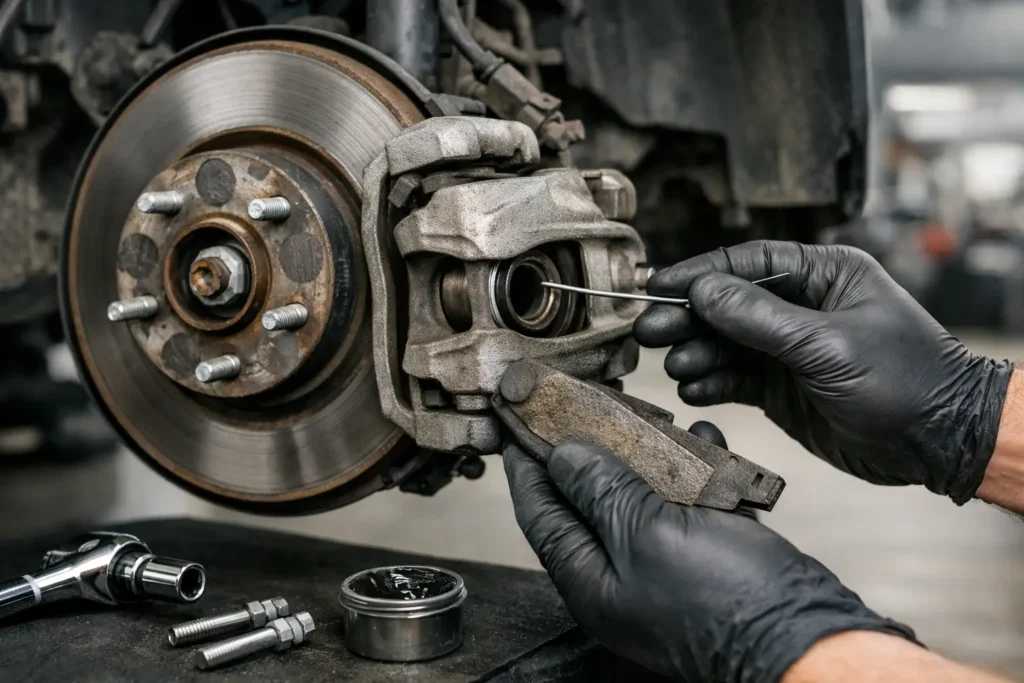
Your brake caliper is the part that squeezes the brake pads against the rotor when you press the brake pedal. That clamping force is what slows the vehicle. On most daily drivers, the caliper has either one or more pistons that move with hydraulic pressure, plus slide pins or guide pins that let the caliper move evenly.
When everything is working right, the caliper applies pressure smoothly and releases cleanly. When something sticks, corrodes, or leaks, braking performance changes. Sometimes the difference is obvious. Sometimes it starts small and gets ignored until the pads wear unevenly or the rotor gets damaged.
Signs you may need brake caliper repair service
A sticking or failing caliper usually leaves clues. The most common one is a pull to one side during braking. If one caliper is not applying or releasing the same as the other side, the vehicle will not stop evenly.
Another common sign is uneven brake pad wear. One pad may be much thinner than the other on the same wheel, or one side of the vehicle may wear out faster than the other. That often points to frozen slide pins, a seized piston, or hardware that is no longer moving the way it should.
You might also notice a hot wheel, a sharp burnt odor, reduced fuel economy, or a feeling that the vehicle is dragging slightly. In more advanced cases, you may see brake fluid leaking near the wheel, hear grinding from worn-out pads caused by a stuck caliper, or feel shaking because the rotor has overheated.
These symptoms can overlap with other brake problems, which is why proper diagnosis matters. A bad hose can mimic a bad caliper. Worn hardware can create similar pad wear patterns. That is also why guessing and replacing parts one at a time can end up costing more.
When a caliper can be repaired
Not every caliper issue means the whole unit needs to be replaced. In some cases, brake caliper repair service can be the right fix. If the main problem is seized slide pins, damaged hardware, or contamination that can be cleaned and corrected, a repair may restore proper operation.
A repair can make sense when the caliper body is still in good shape and the piston bore is not badly corroded. Some calipers can also be serviced with new seals or rebuilt components, but that depends on the design, the level of rust, and the availability of quality parts.
This is where experience matters. On paper, rebuilding can look cheaper. In practice, it depends on whether the repaired caliper will be dependable long term. In Minnesota, road salt and winter moisture are hard on brake components. Corrosion is often the deciding factor. A caliper that can technically be repaired but has heavy rust inside or around critical areas may not be worth gambling on.
When replacement is the better choice
Sometimes replacement is simply the safer and more cost-effective route. If the piston is seized, the housing is heavily corroded, the bleeder screw is damaged, or there is brake fluid leakage from the caliper itself, replacement is often the better answer.
The reason is simple. Brakes are not the place for half-measures. If a caliper has enough wear or corrosion that its reliability is questionable, saving a little money today can lead to uneven braking, repeat repairs, new rotor damage, or a comeback visit you should not have needed.
In many cases, replacing the caliper also saves labor compared with trying to free up and rebuild a badly compromised unit. That does not mean replacement is always required. It means the repair should match the condition of the part, not an ideal scenario.
Why caliper problems often damage other brake parts
A bad caliper rarely fails in isolation. If it sticks and keeps the pad in contact with the rotor, heat builds quickly. That extra heat can glaze pads, warp or hard-spot rotors, cook grease out of nearby components, and shorten the life of the rest of the brake system.
That is why a brake job tied to a caliper issue often includes more than one part. New pads may be needed because the old ones wore unevenly or overheated. Rotors may need replacement if they have been scored, cracked, or heat-damaged. Hardware should be inspected closely, and brake fluid condition should not be ignored.
If one front caliper is bad, there is also the question of whether the caliper on the other side is in similar condition. Sometimes replacing in pairs makes the most sense for balanced braking and reliability. Sometimes one side is clearly the only failed part. It depends on age, mileage, corrosion, and inspection results.
What happens during a proper brake caliper inspection
A real inspection should go beyond a quick glance through the wheel. The technician should check pad thickness and wear pattern, rotor condition, caliper movement, slide pin function, piston operation, hose condition, and any signs of leaking fluid.
Brake temperature differences from side to side can also tell a story after a road test. So can the way the wheel spins when lifted. If a hose has internally collapsed, it may trap pressure and make the caliper look bad even though the hose is the root cause. That is exactly why proper diagnosis matters.
At an owner-led shop, the value is not just the repair. It is getting a straight answer about what actually failed, what can be safely reused, and what should be replaced now to avoid doing the job twice.
Cost matters, but so does doing it right
Most drivers want the same thing. Fix the problem, keep the cost fair, and do not sell extra parts that are not needed. That is reasonable. But with brake caliper repair service, the cheapest path is not always the least expensive over time.
A repaired caliper with marginal corrosion may come back. A worn rotor left in service with a new caliper may create noise or poor pad contact. Low-cost parts can sometimes create fitment issues or short service life. None of that helps the customer.
The better approach is honest advice based on what the brake system actually needs. Sometimes that means a targeted repair. Sometimes that means replacing the caliper, pads, and rotors together because that is the cleanest and most dependable fix. The right call depends on current condition, not a canned package.
Why local drivers should not wait on caliper symptoms
Brake issues do not usually fix themselves. They get hotter, noisier, and more expensive. A sticking caliper can wear out a nearly new set of pads in a short time. It can also affect stopping distance and control, especially in wet conditions or during sudden braking.
For drivers around Elk River and the surrounding area, winter road treatment adds another layer to the problem. Salt speeds up corrosion, and brake hardware sees a lot of abuse through freeze-thaw cycles. If your vehicle has started pulling, dragging, or wearing pads unevenly, waiting until the next oil change is not a great plan.
Joe’s All Tire works with a lot of everyday drivers who just want clear answers and a repair done right the first time. That matters with brake work, because confidence in your vehicle should not depend on whether a chain store happened to assign your car to the right technician that day.
The right brake caliper repair service is about judgment
Brake work is not complicated in theory. In real life, what separates a dependable repair from a frustrating one is judgment. Knowing when a caliper can be serviced, when it needs replacement, and what related parts should be addressed at the same time is what protects both safety and your wallet.
If your brakes feel off, sound different, or leave you wondering whether one wheel is getting too hot, trust that instinct and get it checked. A small brake issue is much easier to deal with before it turns into rotor damage, uneven braking, or a vehicle that no longer feels safe to drive.