

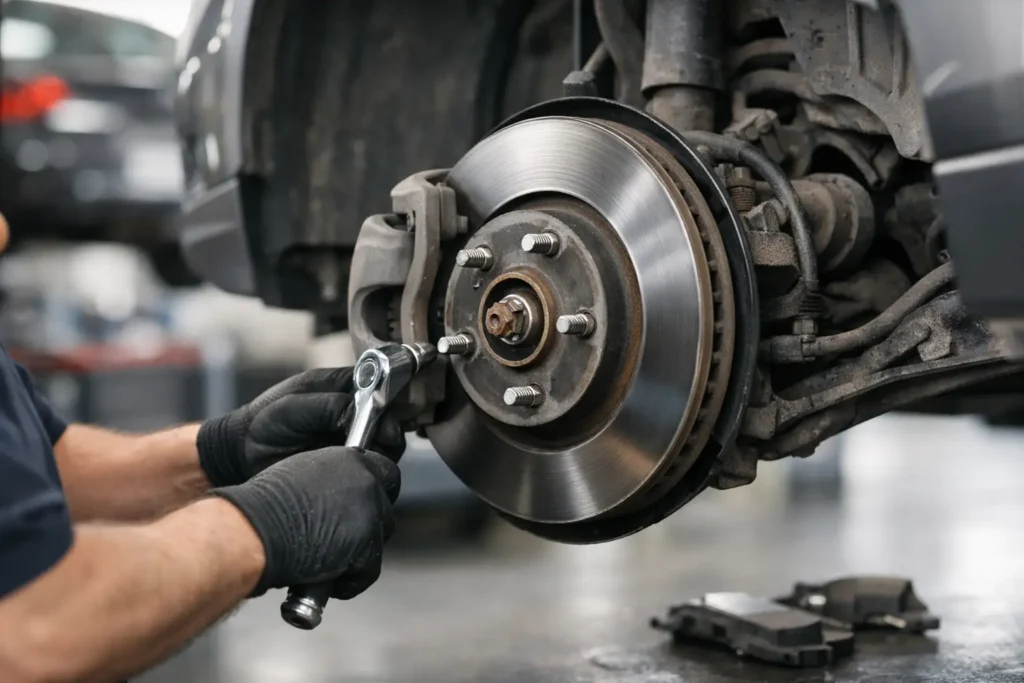
Brake problems rarely start with a dramatic failure. More often, they begin with a little extra stopping distance, a light squeak in the morning, or a soft pedal you notice once and then ignore for a few weeks. That is exactly why a practical guide to brake service intervals matters. Waiting until the brakes feel obviously bad usually means more parts are worn, the repair is bigger, and your vehicle has been less safe than it should have been.
A lot of drivers want one simple number, like every 30,000 miles or every 50,000 miles. Real life is not that neat. Brake service intervals depend on how you drive, what you drive, the quality of the parts on the vehicle, road conditions, and whether small issues were caught early. Around Minnesota, where moisture, road salt, temperature swings, and long winter seasons all work against brake hardware, time matters almost as much as mileage.
If your brakes are making noise, pulling, or just do not feel right, it helps to get a straight answer before a small issue turns into rotor damage or a caliper problem. If you want help figuring out what your vehicle actually needs, just tap the blue phone call button in the lower left corner – we’re just a call away.
What brake service intervals really mean
When people hear brake service intervals, they often think only about replacing brake pads. In practice, brake service covers more than that. It can mean an inspection, pad replacement, rotor replacement or machining when appropriate, hardware service, caliper evaluation, brake fluid service, and checking for uneven wear or sticking components.
That matters because brakes do not all wear at the same rate. Front brakes usually wear faster than rear brakes, but not always. Some vehicles use rear brakes more aggressively than older systems did. Trucks, SUVs, and vehicles used for towing can also go through brakes differently than a commuter sedan used mostly on open roads.
A good interval is less about chasing a universal mileage number and more about checking the system before wear turns into damage. That is how you avoid paying for parts that could have lasted longer, while also avoiding the opposite mistake of waiting too long.
A realistic guide to brake service intervals for most drivers
For most everyday drivers, a brake inspection at least once a year is a smart baseline. If you drive a lot, deal with stop-and-go traffic, tow, carry heavier loads, or spend a lot of time on short trips, every 6 months makes more sense.
Brake pads often last anywhere from 25,000 to 70,000 miles, which is a wide range for a reason. Driving habits make a huge difference. Someone who coasts, leaves room, and brakes smoothly may get far more life than someone who drives aggressively or spends every weekday in traffic.
Rotors may last through more than one set of pads, but that depends on thickness, heat damage, rust, and wear pattern. In Minnesota, rust on rotors and hardware can shorten service life even if pad material still looks decent on paper. Brake fluid is another area many drivers miss. A lot of manufacturers recommend fluid service around every 2 to 3 years, but the exact timing depends on the vehicle and fluid condition.
The safest approach is simple: inspect regularly, replace pads before they wear down too far, and do not assume that because one set lasted a long time, the next set will too.
Mileage matters, but time matters too
A low-mileage vehicle is not automatically in the clear. We see vehicles that do not drive many miles but still develop brake issues because they sit outside, take short trips, or go long stretches without inspection. Rusted slide pins, seized calipers, and stuck hardware can wear out pads unevenly long before a driver expects it.
That is why brake service intervals should be based on both mileage and calendar time. A car with 18,000 miles in three years can still need brake attention. A pickup with 60,000 highway miles may have less wear than a commuter vehicle with half that mileage and constant stop-and-go use.
What changes your brake service interval
Driving style is one of the biggest factors. Hard braking, late braking, and fast acceleration followed by quick stops all create more heat and more wear. If your daily route includes traffic lights, school pickup lines, or heavy suburban traffic, your brakes are working harder than the odometer alone suggests.
Vehicle type also matters. A light sedan and a half-ton truck do not treat brake components the same way. Add passengers, cargo, or trailer use, and the system has more work to do. That does not always mean something is wrong. It just means your service interval may need to be shorter.
Then there is climate. In our area, winter conditions bring more than slick roads. Salt, slush, and repeated freeze-thaw cycles can affect calipers, brackets, rotors, and brake lines. A brake system can have usable pad thickness but still need service because the hardware is not moving correctly.
Part quality plays a role too. Not all brake pads and rotors wear the same way. Cheaper parts can seem like a bargain up front, but they may create more noise, dust, uneven wear, or shorter service life. Done right the first time usually costs less than doing the same repair twice.
Signs your brakes should be checked now
You do not need to wait for a scheduled interval if the vehicle is already telling you something. Squeaking can be minor, or it can be an early warning. Grinding usually means you waited too long. A steering wheel shake while braking can point to rotor issues, but it can also involve suspension or tire concerns, so proper diagnosis matters.
A brake pedal that feels soft, low, or inconsistent needs attention. So does a vehicle that pulls to one side when braking. If one wheel is much dirtier than the others, or one brake runs hotter, that can point to a sticking caliper or uneven pad contact.
Warning lights matter too, especially if they come on with changes in pedal feel or braking performance. The biggest mistake drivers make is trying to guess from one symptom alone. Brakes are a safety system. The right move is inspection, not wishful thinking.
Why regular inspections save money
This is the part many drivers learn the hard way. Replacing brake pads at the right time is routine maintenance. Waiting until the pads are metal-to-metal can destroy rotors, overheat hardware, and increase the chance of caliper damage. That turns a smaller repair into a much more expensive one.
The same logic applies to fluid and hardware. A simple service done on time can prevent corrosion-related problems that lead to uneven wear or dragging brakes. If the system is checked regularly, there is a better chance of catching a small issue before it affects the rest of the brake assembly.
That is one reason local drivers prefer a shop that gives direct recommendations instead of pushing a one-size-fits-all sales script. At Joe’s All Tire, known by many locals as All Tire, brake work is approached the way it should be – inspect carefully, explain clearly, and fix what actually needs fixing. For drivers who want more detail on brake repair and service, see the brake shop elk river page at www.joesalltire.com/brake-shop-elk-river/.
How to follow a brake service schedule without overdoing it
The goal is not to replace brake parts early just to feel safe. The goal is to inspect them often enough that you can make good decisions at the right time. A yearly inspection is a strong minimum for many drivers. Twice a year is even better if you drive hard, tow, commute daily, or want peace of mind going into winter.
It also helps to pair brake inspections with other regular service visits. Tire rotations are a natural checkpoint because wheel-off access makes it easier to see what is happening with pads, rotors, and hardware. That kind of routine attention is often what keeps a normal brake job from becoming a larger repair.
If you have had brake work done recently, ask what was replaced and what was measured. Honest service should include clear information about pad thickness, rotor condition, and whether the wear pattern was even. That way, your next interval is based on the actual condition of the vehicle, not a guess.
The smart rule for brake service intervals
If you want one rule to remember, use this: inspect brakes regularly, act on symptoms early, and do not base everything on mileage alone. Brake wear is one of those areas where small delays often get expensive fast.
A good shop will not tell every driver the same number. They will look at how the vehicle is used, what condition the parts are in, and whether local conditions are likely to shorten service life. That is the difference between real advice and generic advice.
When your brakes are quiet and working well, it is easy to forget about them. That is exactly when staying ahead of service pays off most.
