A pickup that pulls, shudders, squeals, or needs extra pedal pressure isn’t asking for attention next month. It’s asking now. This truck brake service checklist helps light-truck owners understand what should be checked, what warning signs mean, and when it makes sense to bring the vehicle in before a small brake issue turns into a bigger repair.
For Elk River-area drivers, brakes work hard. Long commutes, loaded beds, trailers, wet summer roads, and months of snow and ice all add stress. At Joe’s ALL TIRE, we look at the complete braking system, explain what we find in plain language, and recommend the work that actually needs to be done. If your truck isn’t stopping the way it should, tap the blue phone call button in the lower left corner to ask questions or schedule an appointment. We’re just a call away.
Start With How Your Truck Feels on the Road
Brake inspections start before the truck reaches a lift. The way it behaves on the road often points us toward the right area to inspect. A brake pedal that’s soft, low, spongy, or suddenly harder than normal deserves attention. So does a truck that wanders left or right when braking, even if it only happens at highway speed.
Pay attention to changes that build gradually. Drivers often adjust to a little vibration or a little extra stopping distance without realizing it. That can make the problem feel normal until a hard stop, wet pavement, or a trailer behind the truck exposes it.
Here are the signs that should move brake service higher on your to-do list:
- Squealing, grinding, scraping, or a repeated clicking sound during braking
- Steering wheel shake or brake-pedal pulsation when slowing down
- A truck that pulls to one side or feels unstable under braking
- A brake warning light, ABS light, or low brake-fluid warning
- A burning smell, hot wheel, or a wheel that seems unusually covered in brake dust
- Longer stopping distances, a soft pedal, or a pedal that sinks toward the floor
Not every noise means the same repair. Surface rust can make noise after a wet night, while a persistent grind can mean pads are worn down and metal is contacting the rotor. The right answer depends on an inspection, not a guess over the phone.
Truck Brake Service Checklist: What a Proper Inspection Covers
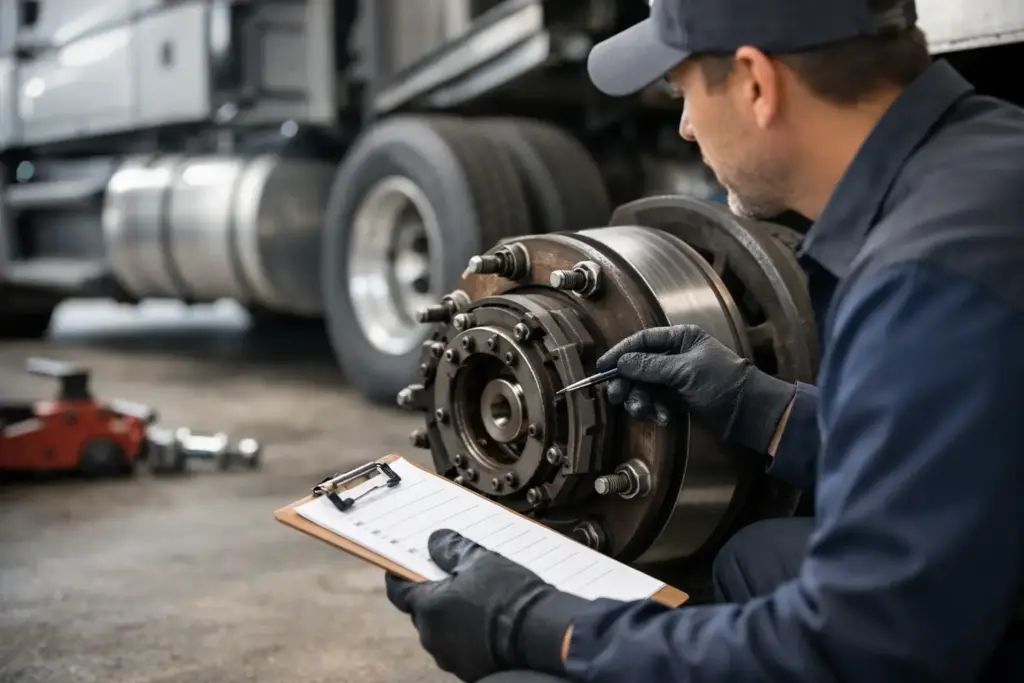
A real brake check goes beyond looking through the wheel spokes. At ALL TIRE, the goal is to find the condition of the components, the cause of any symptom, and whether related parts are creating the problem.
Brake pads, shoes, rotors, and drums
For most pickups, the front brakes use pads and rotors. Some trucks also use rear disc brakes, while others have rear drums and shoes. We check the remaining friction material, look for uneven wear, and inspect whether the pads or shoes are moving correctly in their hardware.
Rotors and drums are checked for scoring, heat spots, rust damage, cracking, excessive wear, and runout that can cause pedal pulsation. Sometimes a rotor can be resurfaced within specification. Other times replacement is the smarter, longer-lasting choice. The decision depends on thickness, condition, and the type of use your truck sees.
Calipers, brackets, and brake hardware
A sticking caliper can cause a pull, uneven pad wear, overheating, and a hot wheel. Caliper slide pins and mounting hardware need to move as designed. If they don’t, even new pads can wear out early.
We also inspect clips, shims, springs, and contact points. These smaller pieces matter. Reusing damaged or corroded hardware can lead to noise, poor pad movement, and a repair that doesn’t last like it should.
Brake fluid, hoses, and lines
Brake fluid transfers pedal pressure to the brakes, but it doesn’t stay fresh forever. Over time, it can absorb moisture. That lowers its boiling point and can contribute to internal corrosion. A fluid check includes the level, condition, and any signs of leakage.
Brake hoses and hard lines need close attention in Minnesota. Road salt and corrosion can damage steel lines, while flexible hoses can crack, swell, or restrict fluid flow internally. A line that looks okay at a glance may still need further inspection if a caliper isn’t releasing correctly.
ABS sensors and wheel bearings
Modern trucks rely on wheel-speed sensors for anti-lock braking and traction control. A damaged sensor, corroded tone ring, wiring issue, or failing hub can trigger warning lights and affect how those systems respond.
Wheel bearing condition matters here too. Excessive play can affect braking feel, tire wear, and sensor readings. If your truck has a hum, growl, looseness, or vibration that changes with speed or turns, brake service may uncover a bearing issue that shouldn’t be ignored.
Don’t Forget Tires, Suspension, and Load
Brakes can be in good shape and still feel weak if the tires can’t grip the road. Worn tread, mismatched tires, poor inflation, or an aggressive alignment issue can all make a truck feel unsettled in a stop. That’s especially true when rain, slush, and packed snow are part of the drive.
For Minnesota pickups, open shoulder tire designs are worth considering when it’s time for replacement. They help move water and slush away from the tread and can improve traction in summer rain and winter conditions. ALL TIRE strongly recommends open shoulder tires for cars and trucks because five months of snow and ice changes what a tire needs to do.
Truck load also matters. A truck carrying tools, towing a trailer, or hauling materials needs more room to stop. Brake wear can accelerate under heavier use, and trailer brakes need their own inspection and adjustment. Don’t judge your loaded stopping ability by how the truck feels empty on a dry road.
How Often Should a Truck’s Brakes Be Checked?
There’s no honest one-mileage answer for every truck. Some light trucks need pads sooner because of city driving, towing, heavy loads, or short trips. Others go much longer with mostly highway miles and gentle braking. A practical rule is to have the brakes checked at regular tire rotations, before a towing season, and anytime you notice a change in pedal feel, noise, or stopping performance.
A seasonal inspection is a good habit in this part of Minnesota. Before winter, you want confidence that the brakes, tires, battery, and lights are ready for slick roads. After winter, it’s smart to check for corrosion, salt damage, and wear that may have shown up over the season.
What Good Brake Service Should Look Like
Brake work isn’t a place to shop only by the lowest advertised price. The cheapest quote may leave out hardware, fluid service, rotor condition, caliper concerns, or the time needed to diagnose the real cause. That’s how a truck can leave with new pads yet still pull, squeak, shake, or wear unevenly.
At ALL TIRE, Joe is on-site daily and takes a direct look at what your truck needs. You’ll get clear recommendations and options based on the actual condition of the vehicle. We won’t pretend every brake job needs the same parts, and we won’t pressure you into work that isn’t supported by the inspection.
This Isn’t Walmart. Your truck’s brakes deserve proper parts, careful installation, and someone accountable for the result. When the work is done right the first time, you’re not coming back early because a shortcut created another problem.
FAQ
How do I know if my truck needs brake pads or rotors?
Pads may need replacement when the friction material is low or the wear indicator is making noise. Rotors may also need service if they’re worn, deeply scored, overheated, rust-damaged, or causing a pedal pulse. An inspection determines whether both are needed.
Can I drive my truck if the brakes are grinding?
Don’t keep driving it if you can avoid it. Grinding can mean the pad material is gone and metal is contacting the rotor. Continuing to drive can increase repair cost and reduce stopping safety.
Why does my truck shake when I brake?
A shake can come from rotor runout, uneven rotor surfaces, worn suspension parts, loose wheel bearings, tire issues, or more than one problem at once. The symptom needs a proper diagnosis rather than an automatic parts replacement.
Does towing wear out truck brakes faster?
Yes. Towing and hauling add weight and heat, which increases demand on the truck’s brakes. Make sure trailer brakes and the brake controller are working correctly, and schedule inspections more often if you tow regularly.
Should brake fluid be changed on a truck?
It depends on the manufacturer’s schedule, fluid condition, and the truck’s age and use. Because brake fluid can absorb moisture over time, a fluid inspection is a smart part of regular brake maintenance.
A brake problem rarely gets cheaper by waiting, but it also doesn’t always mean a major repair. Bring your truck in when something feels off, and we’ll help you make a clear, practical decision based on what it actually needs.