
A 28-degree morning can be enough to turn a quiet commute into a dashboard warning light. That is how tire pressure changes in climates like Minnesota usually show up – not as a dramatic failure, but as a small shift that affects traction, wear, fuel economy, and how your vehicle feels on the road.
Around here, that matters more than people think. We get long winters, sudden temperature swings, slushy afternoons followed by freezing nights, and hot summer pavement. Tires react to every bit of it. If you have ever wondered why your TPMS light comes on after the first cold snap, or why your tires felt different after a warmup in March, the answer is usually pressure.
Why tire pressure changes in climates like Minnesota
Air contracts when it gets cold and expands when it gets warm. Inside your tires, that means pressure drops as temperatures fall and rises as temperatures climb. A common rule of thumb is about 1 PSI for every 10 degrees of temperature change, though real-world results can vary a little depending on the tire, the vehicle, and when the pressure was last set.
That sounds minor until Minnesota weather does what Minnesota weather does. A 70-degree day in early fall can turn into a 30-degree morning not long after. If your tires were set during warmer weather, they may suddenly be several PSI low. Then spring comes, and the reverse happens. Drivers top off on a cold day and later find the pressure has crept up once the weather turns warm.
This is one reason pressure should be checked with the seasons, not only when a tire looks low. By the time a tire visibly sags, it is usually well under where it should be.
If you are not sure whether your pressure issue is just weather or something that needs repair, getting a straight answer early saves time and tire wear. Just tap the blue phone call button in the lower left corner – we’re just a call away.
What low pressure actually does to your vehicle
A few pounds low may not seem like a big deal, but it changes how the tire carries the weight of the vehicle. More of the tread shoulder can contact the road, heat builds faster, and the tire flexes more than it should. That can wear the tire unevenly and shorten its life.
In winter, underinflation can also make steering feel slower and less precise. Some drivers assume a softer tire will automatically help in snow. Sometimes a small pressure adjustment matters in specialized off-road situations, but for normal road driving, running below the vehicle’s recommended pressure is not the safe shortcut people hope it is. It usually means less stability, less predictable handling, and more wear.
In summer, low pressure creates extra heat. On long highway drives, that is hard on the tire. Add a loaded SUV, a half-ton pickup, or a trailer, and proper inflation matters even more.
Why your TPMS light comes on during cold weather
Most of the time, a TPMS warning after a cold front does not mean the sensor is bad. It means the tire pressure dropped enough for the system to notice. That is exactly what the system is supposed to do.
The mistake is assuming the light will take care of itself. Sometimes it goes off later in the day as the temperature rises and the air inside the tire warms up. But if the tire started the morning underinflated, you still drove on a low tire. Repeatedly doing that can wear the tire faster and affect braking and control.
That said, not every warning is seasonal. If one tire keeps losing pressure while the others stay steady, that points more toward a puncture, bead leak, valve issue, or a failing sensor. This is where honest diagnosis matters. A chain store may jump straight to replacement. A good shop checks the actual cause first.
Pressure checks need to be done cold
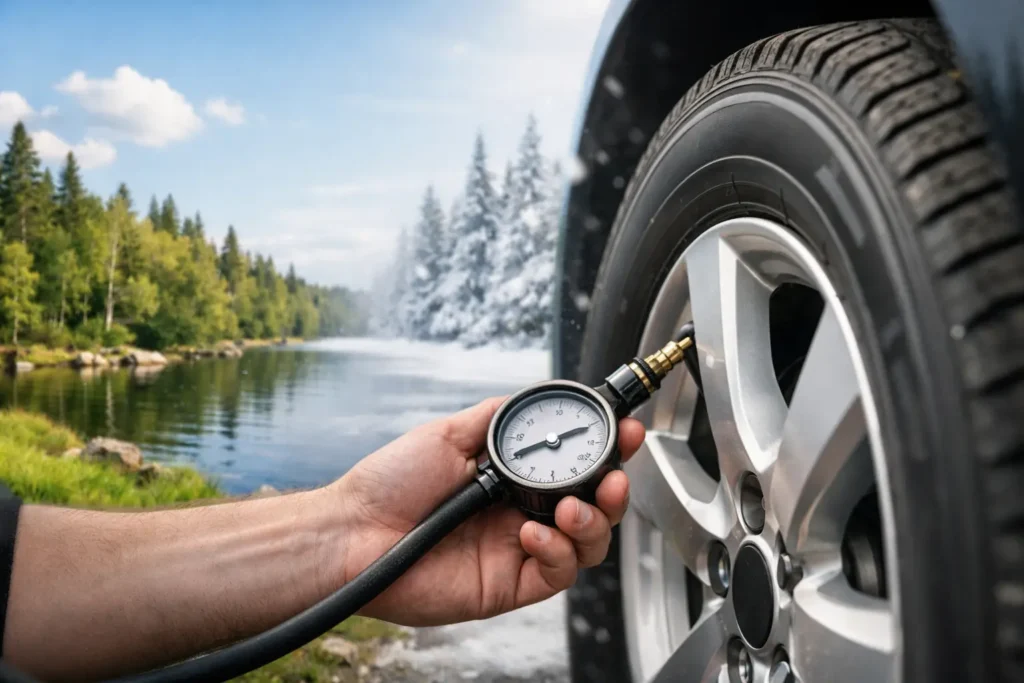
The best time to check tire pressure is before driving, when the tires are cold. Once you have been on the road, heat builds and the pressure rises naturally. If you check after driving and air down to match the sticker number, you can end up underinflated by the next morning.
Use the pressure listed on the driver’s door placard, not the number molded on the tire sidewall. The sidewall figure is the maximum pressure for that tire, not the correct day-to-day setting for your vehicle.
For many everyday drivers, this is where confusion starts. They see a number on the tire, compare it to a different number from a gauge, and assume something is wrong. Usually, the right answer is on the vehicle sticker.
Winter driving, tread design, and why pressure is only part of the picture
Pressure is a big part of traction, but it is not the only part. In Minnesota, tread design matters a lot. At Joe’s All Tire, we strongly recommend open shoulder tire designs for many cars and trucks because they do a better job clearing water, slush, and loose snow than more closed-off patterns.
That matters in both summer rain and winter driving. A tire can be set to the correct pressure and still underperform if the tread design is a poor fit for local conditions. Open shoulder designs give the tire more ability to evacuate what is under the tread instead of riding on top of it. If you want to understand more about how tread patterns affect real-world traction, our tire knowledge center covers that in plain language at www.joesalltire.com/knowledge-center/.
There is a trade-off, though. Some tires that excel in wet and winter conditions may ride a little differently or wear differently depending on your driving habits. That is why tire choice should match the vehicle and how you use it, not just what is cheapest or what happened to be in stock.
Seasonal swings can hide slow leaks
One thing we see fairly often is a tire that seems fine most of the year, then suddenly starts needing air every cold spell. The weather did not create the leak. It exposed it.
Cold temperatures can make a weak valve stem, minor bead corrosion, or a small puncture more obvious. Aluminum wheels and road salt do not always get along, and Minnesota roads give both plenty to deal with. If you keep adding air to the same tire, do not ignore it just because the tire looks okay.
A proper repair matters here too. Not every puncture can be safely repaired, and not every quick plug is the right fix. Done right means inspecting the tire internally and using the correct repair method when the damage is in a repairable area.
What drivers should do as the weather changes
You do not need to overcomplicate this. Check pressure regularly, especially when the seasons shift or a major cold snap rolls in. Once a month is a good baseline, and more often is smart during late fall and early winter when temperatures swing fast.
If you rotate tires seasonally or switch between all-season and winter sets, that is also the right time to verify pressures and inspect tread. Pressure should match the vehicle’s recommendation unless there is a specific reason to do otherwise. If you drive a pickup with changing loads, the best setting can depend on whether the truck is empty most of the time or regularly carrying weight, so this is one of those situations where the right answer depends on the vehicle’s actual use.
It also helps to own a decent gauge instead of guessing from a gas station hose. A reliable reading makes it easier to spot a real problem before it turns into a ruined tire.
When it is time to have a shop look at it
If your TPMS light keeps returning, one tire is always lower than the others, or the vehicle feels different after you add air, it is worth having someone inspect it. Pressure problems are not always just pressure problems. Uneven wear, vibration, bent wheels, bead leaks, and suspension issues can all show up through the tires first.
That is where a local shop has an advantage. At All Tire, the approach is simple – find the actual cause, explain it clearly, and fix it correctly. No guessing, no pushing a full set when a real repair is possible, and no brushing off a warning light just because it happens a lot in winter.
Minnesota weather is hard on tires, but it is also predictable in one important way: your tires will respond every time the temperature moves. Staying ahead of that with regular pressure checks, the right tread design, and timely repairs is one of the easiest ways to keep your vehicle safer and your tires lasting longer. A few minutes in the driveway can prevent a lot of trouble on the road.