

A screw in the tread at 7:15 on a cold Minnesota morning can turn a normal day into a guessing game fast. The real question is not just how to stop the leak – it’s whether a tire plug versus patch repair is the right fix, or whether the tire should come off the road entirely.
That answer depends on where the damage is, how the tire was driven after it lost air, and whether the repair can be done to industry standards. At a good shop, this is not a sales pitch. It is a safety call.
Tire plug versus patch repair – what’s the difference?
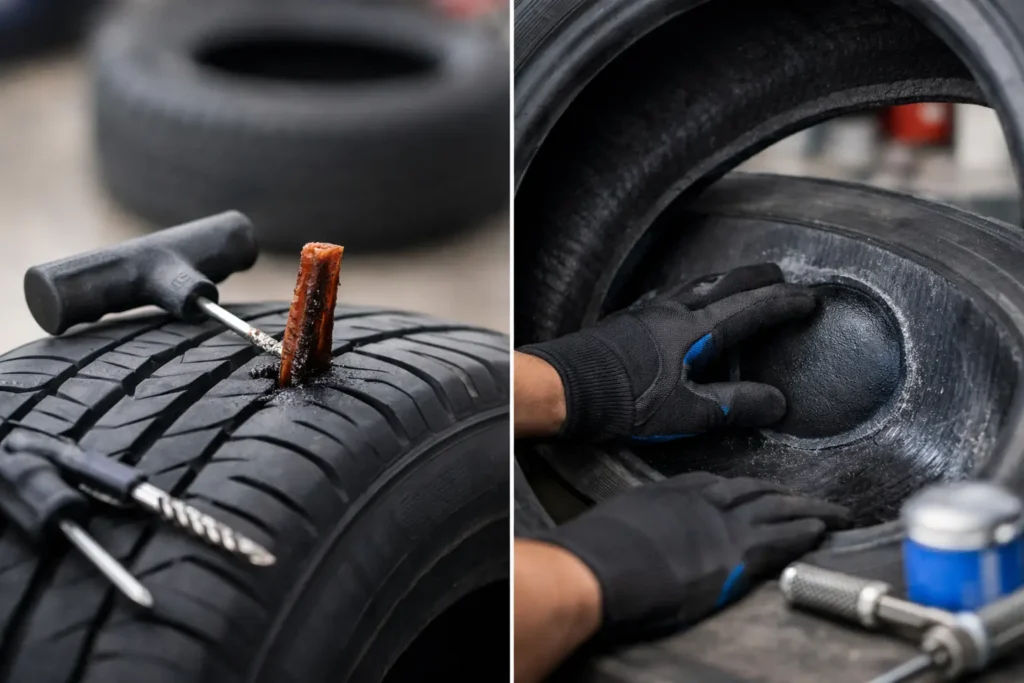
A tire plug is inserted from the outside of the tire to fill the puncture channel. It is commonly used for small punctures in the tread area, usually caused by a nail or screw. The point of a plug is to help seal the hole and stop air from escaping………temporarily
A patch is applied to the inside of the tire after the tire is removed from the wheel and inspected. The patch seals the inner liner, which matters because modern tires are built to hold air through that inner liner. If it has been compromised, a proper repair needs to address it directly.
There is also a third option that matters here: a combination repair unit, often called a patch-plug. This is what some professional shops do when the puncture is repairable. It fills the injury path and seals the inside of the tire at the same time. In plain English, it does more than a quick outside fix.
Why a simple plug is rarely enough
A basic plug can work as a temporary repair, and sometimes it holds for a long time. That is why plenty of drivers have used one and never had another issue. But that does not make it the best repair in every case.
The problem is that a plug installed from the outside does not let anyone inspect the inside of the tire first. If the tire was driven while low on air, the sidewall may have been damaged internally. That kind of damage is not always visible from the outside, and no plug can fix it.
A plug also does not seal the inner liner the same way an internal repair does. On a vehicle that sees highway speeds, potholes, heavy loads, or winter roads, that difference matters. Around here, tires deal with cold mornings, sharp debris, slush, and months of snow and ice. A repair needs to be dependable, not just convenient.
A patch repair makes more sense
A patch repair makes more sense when the puncture is in the repairable area of the tread and the tire needs to be inspected properly before a decision is made. The tire has to be dismounted, checked inside and out, and repaired only if the casing is still sound.
That inspection is the whole point. If there is rubber dust inside the tire, wrinkling in the sidewall, or signs the structure has been compromised, the right answer may be replacement, not repair. Honest advice sometimes means saying no.
When the tire is repairable, an internal patch or patch-plug repair is generally the more complete method. It addresses the injury from inside the tire where the air seal matters most. That is the kind of done-right approach drivers usually want when they are carrying kids, commuting daily, or heading onto the highway in January.
Where a tire can be repaired – and where it cannot
Location matters just as much as size. Most repairable punctures are in the center tread area. If the damage is too close to the shoulder or in the sidewall, the tire sometimes should not be repaired.
That shoulder area flexes more, runs hotter, and takes more stress than the center tread. A repair there is much less reliable. Sidewall punctures are even more serious because the sidewall is constantly bending as the tire rolls.
This is also where tread design comes into the conversation. Open shoulder tires are a strong choice for Minnesota drivers because they help clear slush, snow, and loose material better than more closed-off designs. We strongly recommend open shoulder tires for many cars and trucks around here because winter traction matters for a good chunk of the year. But that same shoulder area still cannot be treated casually when it is damaged. If the puncture is in or near that zone, replacement is often the safer move. If you want to learn more about tread patterns and winter-ready tire design, our tire knowledge center is a good place to start.
The hidden issue – driving on a flat or low tire
A lot of bad repair decisions start with one detail drivers do not always think to mention: how far they drove after the tire lost pressure.
If a tire was nearly flat and the vehicle kept moving, the sidewall may have been pinched and weakened between the wheel and the road. Even if the original puncture is small, the internal damage may make the whole tire unsafe. From the outside, it can still look repairable.
That is why a proper inspection matters more than the object in the tread. The nail or screw is only part of the story. How the tire was used afterward is often what decides whether a repair is responsible.
Is a tire plug ever okay?
There is an honest answer here: yes, sometimes. A plug can be useful as a short-term fix, especially in an emergency when you need to get off the roadside safely or get to a shop. For some drivers, that is the difference between being stranded and making it home.
But short-term and best practice are not the same thing. If the goal is to keep the tire in service with confidence, especially for highway driving or winter use, a full inspection and professional internal repair is the smarter route.
Think of it this way. A plug is often about getting air to stay in the tire. A proper patch or patch-plug repair is about making sure the tire is still worth repairing in the first place, and sealing it permanently.
When replacement is the better call
There are times when comparing tire plug versus patch repair misses the bigger issue. The tire may simply be beyond safe repair.
That is sometimes the case if the puncture is in the sidewall or shoulder, the hole is too large, the tire has multiple punctures too close together, the internal structure is damaged, or the tread is already worn out. It also matters if the tire is older and close to the point where replacement made sense anyway.
This is where local, owner-led service matters. A good shop should explain why the tire can be repaired or why it cannot, without turning the conversation into an upsell. The right answer is the one that keeps you safe and avoids doing the same job twice.
What to expect from a proper repair
A proper repair should start with removing the tire from the wheel, locating the injury, and inspecting the inside. If the puncture is in the repairable tread area and the casing is sound, the technician should use an approved repair method and then remount and rebalance the tire.
Rebalancing matters more than some people realize. A tire that is repaired but not balanced properly can lead to vibration, uneven wear, and a ride that never feels quite right. Good workmanship is not just about sealing the hole. It is about sending the vehicle back out ready to drive normally.
If you are told a tire can be fixed without dismounting it or checking the inside, it is fair to ask questions. A trustworthy shop should have no problem explaining the method and the reason behind it.
The practical bottom line for everyday drivers
If you picked up a nail in the center tread and the tire was not driven flat, there is a good chance it can be repaired. In most cases, an internal patch or patch-plug repair is the better long-term choice over a simple outside plug.
If the puncture is near the shoulder, in the sidewall, or the tire was driven low, do not assume a repair is safe just because air can be put back in it. That is exactly when a professional inspection matters.
For most drivers, the best move is simple: do not gamble on a quick fix when the tire is the only part of the vehicle touching the road. Get the tire inspected, get a straight answer, and make the decision based on condition, not convenience.
When a repair is truly safe, it should be done right the first time. When it is not, replacing the tire is not bad news – it is the kind of honest call that keeps small problems from turning into roadside ones later.