

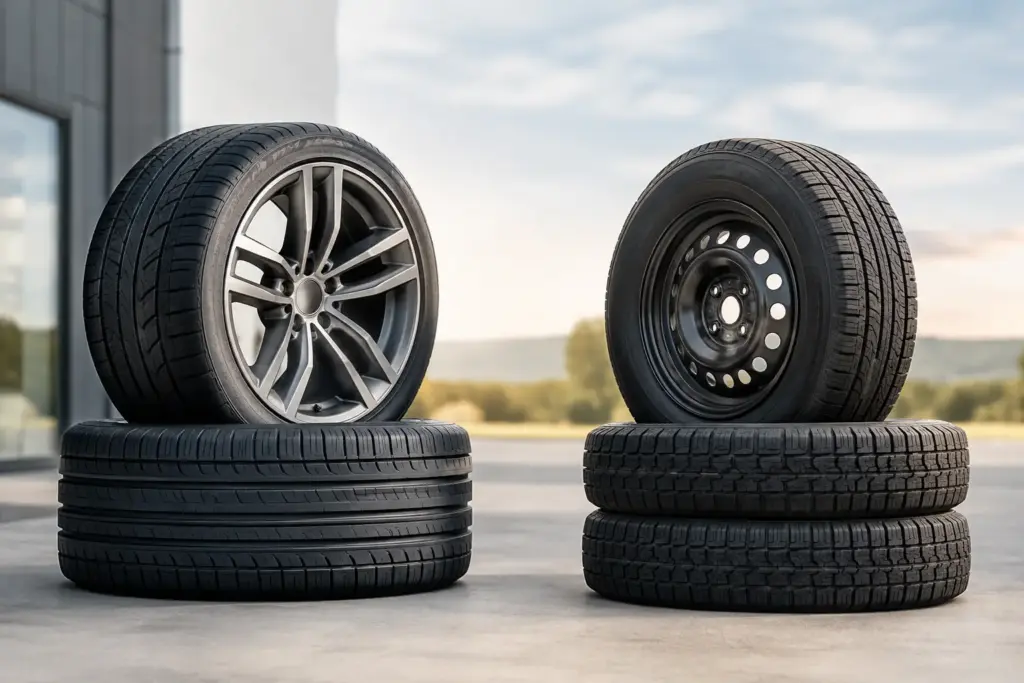
A tire that saves $40 at the counter can cost far more if it slips in freezing rain, wears out early, or leaves your vehicle vibrating down Highway 10. The real question with premium versus budget tires isn’t whether expensive always means better. It’s whether the tire matches your vehicle, driving habits, and the Minnesota weather you face for months at a time.
For drivers in Elk River, the Twin Cities, and up toward St. Cloud, tires have to handle summer downpours, rough pavement, potholes, slush, snow, and ice. That’s why Joe’s ALL TIRE looks beyond a price tag. A well-chosen Michelin, General Altimax, or another trusted top-tier tire can bring real value, but there are situations where a less expensive option makes sense, too.
Premium Versus Budget Tires: Where the Difference Shows
Premium tires are usually built with more advanced rubber compounds, better casing construction, and tread designs developed through extensive testing. Those details can improve wet braking, ride quality, tread life, fuel efficiency, and predictable handling as the tire wears.
Budget tires aren’t automatically unsafe or useless. Some are a reasonable fit for a vehicle that sees low annual mileage, a short-term ownership situation, or a carefully selected used tire need. The concern is that lower-cost tires can be inconsistent. Two tires may look similar in photos, yet one may use a harder compound that loses wet grip sooner, a weaker internal structure, or a tread pattern that doesn’t clear water and slush as well.
That difference matters most when the road is at its worst. In Minnesota, a tire isn’t just a round piece of rubber. It’s the part of your vehicle doing the work when you brake at a wet intersection, steer around a deer, or travel home on packed snow.
Why Open Shoulder Tread Design Matters Here
At ALL TIRE, we strongly recommend open shoulder tire designs for many cars and trucks driven year-round in this area. Open shoulders use wider channels near the outside of the tread to move water, slush, and loose snow away from the contact patch. That can improve traction in heavy summer rain and help a tire keep clearing itself during winter driving.
An open shoulder design alone doesn’t make a tire right for every vehicle. The rubber compound, siping, tread depth, and tire size still matter. But it is a smart feature to look for when you’re comparing all-season and M&S tires for everyday Minnesota use.
A premium tire often gives engineers more room to balance those features. It may have deep circumferential grooves for water evacuation, stable tread blocks for responsive handling, and enough biting edges to remain useful when temperatures drop. Budget tires can copy the general look of a premium tread pattern, but the compound and internal construction are often where the meaningful differences show up.
What You’re Actually Paying For
When comparing prices, don’t stop at the cost of one tire. Think about the full ownership picture:
- Wet and winter traction, especially during rain, slush, and early-season snow
- Tread life and whether the tire wears evenly over time
- Ride comfort, road noise, and resistance to vibration
- Manufacturer warranty support and consistent quality control
- Stronger construction for potholes, gravel roads, pickups, and heavier loads
A premium tire may cost more upfront but deliver more usable miles and better control throughout its life. On the other hand, buying the most expensive tire available isn’t automatically the honest recommendation. If you drive a few thousand miles a year around Zimmerman or Big Lake, park the vehicle during storms, and plan to sell it soon, a mid-priced tire could be the practical answer.
If you’re unsure where your driving falls on that scale, ALL TIRE can help narrow it down quickly. On mobile, tap the blue call button in the lower left corner to ask questions or schedule an appointment. We’ll talk through your vehicle, tire size, mileage, and road conditions instead of pushing a one-size-fits-all answer.
When Premium Tires Are Worth It
Premium tires tend to make the most sense for commuters, families, newer vehicles, and drivers who put serious miles on their cars or light trucks. They are also worth considering when you regularly drive between Elk River and Minneapolis or St. Cloud, where highway speeds make braking distance and hydroplaning resistance more noticeable.
They can be a particularly good investment if you want a quieter ride, drive a vehicle sensitive to tire noise, or need dependable performance in changing weather. A quality tire from brands such as Michelin or General can offer a more refined balance of long wear, comfort, and traction than a bargain alternative.
Truck owners should also consider load rating and sidewall strength. A lower-priced tire may look aggressive enough for a pickup, but it may not be the right fit for towing, hauling, gravel travel, or repeated pothole impacts. The right load range and construction matter more than appearance.
When a Lower-Cost Tire Can Be Sensible
A lower-cost tire isn’t always the wrong choice. It can be sensible when the vehicle is older, lightly driven, or used locally at lower speeds. It can also help in an unexpected situation where you need one replacement tire and the available option is appropriate for the axle, size, and condition of the other tires.
The key is avoiding false savings. An ultra-cheap tire that wears quickly, rides poorly, or gives up traction in the rain isn’t a bargain. Neither is paying for an installation without proper balancing, torque, and attention to a vibration or TPMS issue that should be addressed at the same time.
This Isn’t Walmart. Tire service should be more than getting four tires onto four wheels as fast as possible. At ALL TIRE, Joe is on-site daily, and the recommendation starts with what your vehicle actually needs. Sometimes that’s a premium tire. Sometimes it’s a solid value-focused option. Either way, the goal is to get the job done right the first time.
Don’t Compare Tires by Price Alone
Before choosing, compare the tire’s treadwear rating, traction and temperature grades, warranty, load index, speed rating, and intended use. Then consider what you drive through each week. A dry-weather commuter in town has different needs than a family vehicle making early-morning school runs in snow or a work truck traveling rural roads.
It also helps to inspect the tires you’re replacing. Uneven wear can point to an alignment concern, worn suspension parts, a wheel bearing issue, or incorrect inflation. Replacing tires without addressing the cause can shorten the life of the new set, whether it’s premium or budget.
A good tire choice is also only as good as the installation. Correct mounting, balancing, and TPMS service protect the investment and help prevent the steering wheel shake, uneven wear, and warning lights that make driving frustrating.
Frequently Asked Questions
Are premium tires safer than budget tires?
Often, premium tires provide more consistent wet braking, handling, construction quality, and tread life. But safety still depends on selecting the correct tire for your vehicle, maintaining proper air pressure, and replacing tires before tread becomes too low.
Do I need open shoulder tires in Minnesota?
For many Minnesota drivers, open shoulder tires are a strong year-round choice because they help move water, slush, and snow out of the tread. They are especially helpful for drivers who regularly travel in rain, winter weather, or on roads that aren’t cleared immediately.
Are M&S tires enough for winter driving?
M&S tires are designed for a range of conditions and can work well for many daily drivers, particularly with an open shoulder tread design. If you travel frequently on packed snow or ice, a dedicated winter tire may offer stronger cold-weather grip.
Will premium tires last longer?
They often can, thanks to better compounds and construction, but tire life depends heavily on alignment, inflation, rotation intervals, vehicle condition, and driving habits. Even a high-quality tire can wear early if there’s an unresolved mechanical issue.
How do I know which tire is right for my vehicle?
Start with your vehicle’s required size, load rating, and speed rating, then weigh your mileage, typical roads, budget, and winter driving needs. The right choice should give you confidence every time the forecast turns ugly, not just look good on the invoice.