

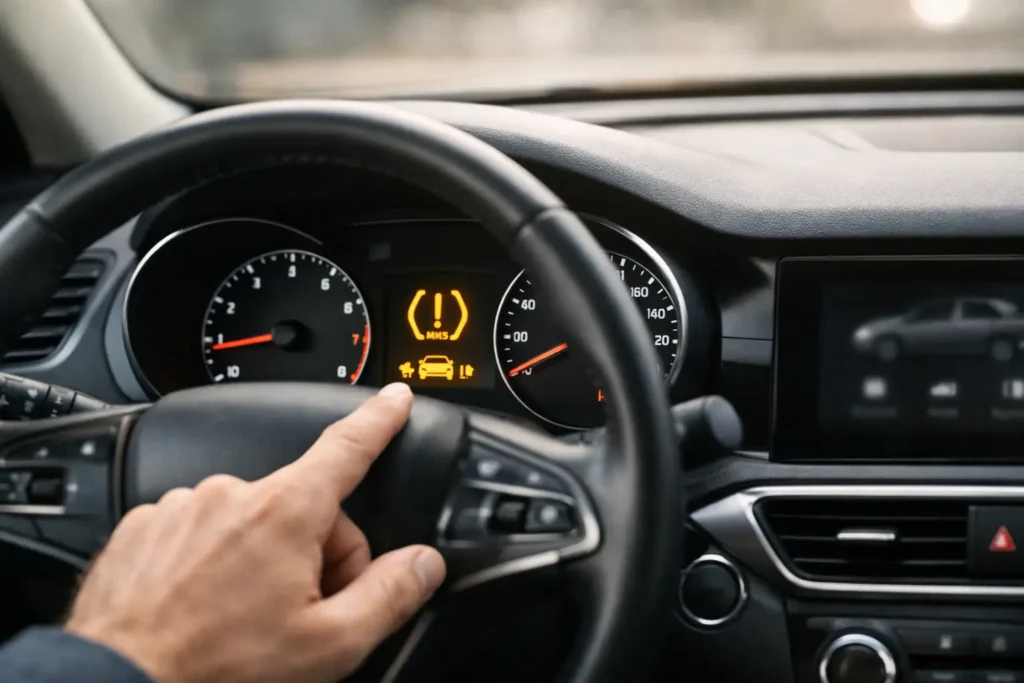
That little tire light on your dash always seems to show up at the worst time – on a cold Minnesota morning, before work, or right before a weekend drive. If you are wondering how to read TPMS warning signals correctly, the good news is that the light is usually telling you something pretty specific. The key is knowing whether it is warning about low air pressure, a sensor problem, or a bigger issue that should not wait.
TPMS stands for Tire Pressure Monitoring System. Its job is simple: alert you when one or more tires are running below the recommended pressure, or when the system itself cannot read correctly. That sounds minor, but tire pressure affects braking, handling, tire wear, and fuel economy. In snow, slush, and heavy rain, it matters even more.
What the TPMS warning light is actually telling you
Most vehicles use one of two basic TPMS warnings. A solid light usually means one or more tires are low. A flashing light that stays on after blinking usually points to a sensor, communication, or system fault.
The symbol is typically shaped like a horseshoe with an exclamation point in the middle. Some vehicles also show a message on the dash with the actual pressure of each tire. Others give you nothing more than the symbol and leave the rest up to you.
That is where drivers get tripped up. The same icon can mean different things depending on whether it is solid or flashing, how long it stays on, and whether the weather just changed overnight.
Solid TPMS light
A solid TPMS light usually means at least one tire is underinflated. In many cases, the tire may only be a few pounds low, but that can still trigger the warning. Temperature swings are a common reason. As the air gets colder, tire pressure drops. That is why the light often appears with the first cold snap.
If the light comes on solid and the vehicle still feels normal, check all four tires as soon as you can. Do not just kick the tire and guess. Use a tire pressure gauge and compare the reading to the sticker inside the driver door jamb, not the number molded into the tire sidewall.
Flashing TPMS light
If the TPMS light flashes for about a minute and then stays on, that usually means the system cannot read one or more sensors properly. This is often a sensor battery issue, damage from corrosion, a failed sensor, or a programming problem after tire service.
In that case, your tire pressures still might be fine, but the system itself needs attention. You should still check the pressure manually, because once the system stops reading correctly, it cannot warn you about a real low tire.
How to read TPMS warning when conditions change fast
A lot of drivers assume a warning light always means a flat tire. Sometimes it does. Sometimes it does not. The better approach is to read the situation along with the light.
If the weather turned sharply colder and the light came on during startup, low pressure is very likely. If the light appeared right after hitting a pothole, curb, or road debris, you could be dealing with a tire leak, wheel damage, or a sensor issue. If it started after tire replacement or rotation, the problem may be sensor relearn or programming.
That is why context matters. TPMS is a helpful system, but it is not a full diagnosis by itself.
Check pressure before you assume the sensor is bad
Before replacing parts, start with the basics. Measure all four tires when they are cold, meaning the vehicle has been parked for a few hours or driven very little. Add air to match the vehicle placard specification. Then drive a few miles and see if the light goes out.
If one tire is much lower than the others, do not ignore it just because the light eventually turns off after filling it. A repeated pressure loss usually means there is a puncture, bead leak, valve problem, or wheel issue that should be repaired correctly.
If you are not sure whether you are dealing with a simple air adjustment or a real repair, that is worth getting checked before it turns into a roadside problem. Just tap the blue phone call button in the lower left corner – we’re just a call away.
Do not use the tire sidewall number
This is one of the most common mistakes. The PSI number printed on the tire sidewall is not your recommended operating pressure. It is the maximum pressure for that tire under specific load conditions. Your vehicle’s correct pressure is listed on the driver door sticker.
Overinflating to the sidewall number can hurt ride quality, change tread wear, and reduce traction. Underinflating can cause heat buildup, poor handling, and faster wear on the shoulders.
Why TPMS matters more than people think
A TPMS warning is not just about saving gas or avoiding a dashboard light. Low tire pressure changes how your vehicle responds in everyday driving. Braking distances can increase. Steering can feel vague. Tire wear gets uneven. In wet conditions, the vehicle may be more likely to hydroplane.
Around here, that matters for more than just January. Minnesota gets plenty of snow and ice, but summer rain can be just as demanding on tires. Good pressure helps any tire do its job, and tread design matters too. For many local drivers, especially on cars, SUVs, and light trucks that see mixed highway and town driving, open shoulder tire designs are a smart choice because they help with water evacuation in heavy rain and give better winter traction as conditions change.
When the warning means stop soon
Some TPMS warnings can wait until you reach a gas station or get home. Some should change your plans right away.
If the light comes on and the vehicle suddenly pulls to one side, feels unstable, or one tire looks visibly low, pull over as soon as it is safe. The same goes for any thumping, vibration, or harsh handling that starts at the same time as the warning. TPMS may be the first clue, but the tire itself is the real concern.
A nail, sidewall damage, bent wheel, or rapid leak should not be brushed off. Driving on a low tire can damage the tire internally even if it looks repairable from the outside.
Why the light comes back after you added air
This is another point of confusion. You fill the tires, but the warning stays on. That does not always mean something is broken.
Some systems need a few minutes of driving before they update. Some vehicles require a reset through the dash menu. Others need exact pressure in all four tires before the light clears. And if one tire has a slow leak, the light may come back the next morning.
A flashing light that returns after inflation usually points back to the sensor system, not the air pressure itself. Older sensors often fail because their internal batteries wear out over time. Those batteries are built into the sensor, so the whole sensor gets replaced.
How to read TPMS warning after tire service
If your warning light shows up right after new tires, rotation, seasonal swap, or flat repair, there are a few possibilities. A sensor may have been damaged, especially on older vehicles with corroded stems or worn service kits. The system may also need a relearn so the vehicle knows which sensor is at each wheel position.
This is one reason proper tire work matters. TPMS service is not just about snapping on a tire and sending the car out the door. The system should be checked, sensors handled carefully, and warnings verified before the job is considered done right.
At Joe’s All Tire, or All Tire as many locals call us, that kind of detail matters because a warning light you cannot trust is not much help when the weather turns bad.
A warning light is useful, but it is not a substitute for regular checks
TPMS is a backup, not a maintenance plan. It does not replace looking at your tires, checking tread, or measuring air pressure once in a while. Many systems only alert after pressure has already dropped below the target range. By then, the tire may already be wearing poorly or handling differently.
That is especially true if your tires are already unevenly worn or nearing replacement. A vehicle with marginal tread and low pressure is working with two strikes against it. If you are replacing tires, it is worth thinking beyond just price. The right tread design, including open shoulder patterns where appropriate, can make a real difference in rain and winter driving.
If your TPMS light has become a regular problem, the best move is not to keep guessing. Get the pressures checked accurately, have the system scanned, and find out whether you have a leak, a bad sensor, or both. A small warning on the dashboard is easy to ignore until it turns into a tire failure, uneven wear, or a vehicle that does not stop and track the way it should. Catching it early is cheaper, safer, and a whole lot less frustrating.
