

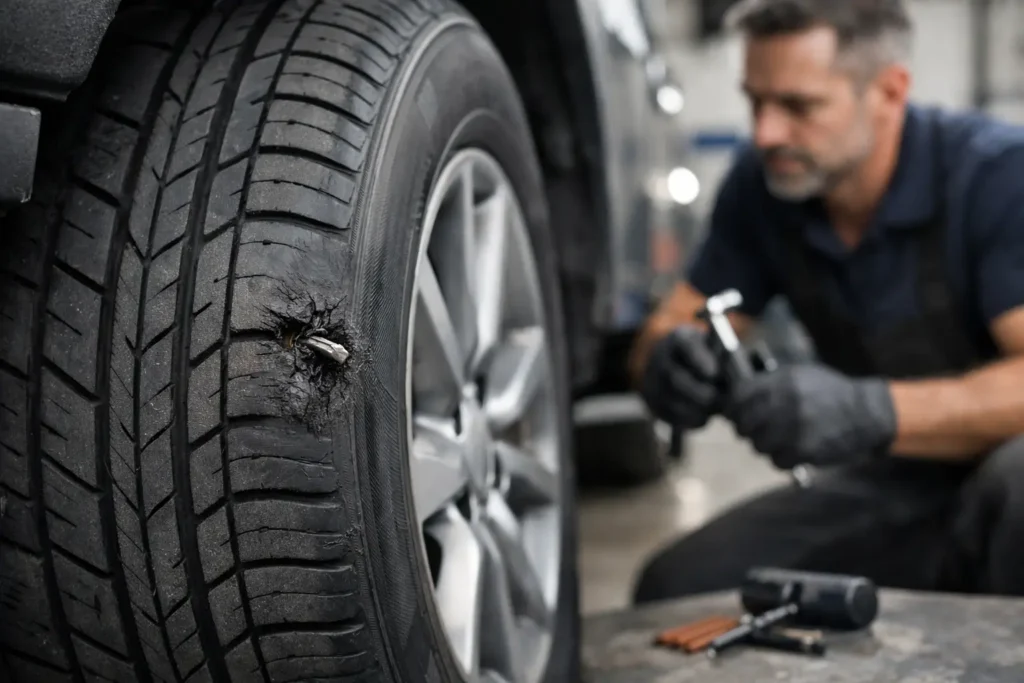
A screw in the tread is one thing. A hole or cut in the sidewall is a very different problem, and that is where a lot of drivers get bad advice. If you’re asking, can you repair a sidewall puncture, the honest answer is usually no. In most cases, a sidewall puncture cannot be repaired safely, and any shop that takes safety seriously will tell you the same thing.
That answer can feel frustrating, especially if the tire looks nearly new or the damage seems small. But sidewall damage is not judged by how dramatic it looks from the outside. It is judged by what part of the tire was compromised and how that part of the tire works when you’re driving.
Why sidewall damage is different
The tread area and the sidewall do two different jobs. The tread is the thick contact patch that meets the road. It is built to handle wear, and in some cases it can be repaired properly if the puncture is in the repairable area and the internal structure has not been damaged.
The sidewall is more flexible. Every time you drive, it bends and flexes constantly as the tire rolls, corners, and absorbs impacts. That flex is exactly why a sidewall puncture is such a problem. A patch or plug in that area does not just need to hold air. It would also need to survive repeated flexing, heat, load, and road stress. That is not a reliable setup for a safe repair.
This is also why tire manufacturers and industry repair standards do not approve sidewall repairs for normal passenger and light truck use. A sidewall failure at highway speed is not a minor inconvenience. It can become a serious safety issue fast.
Can you repair a sidewall puncture if it’s small?
This is the question people usually ask next, and it is fair. If the hole is tiny, maybe from a nail or a sharp screw, doesn’t that make it repairable?
Usually, no. Size matters in some tire damage situations, but location matters more here. Even a small puncture in the sidewall is still in the wrong part of the tire. The problem is not just the opening itself. The problem is the structural cords and the flex zone around it.
If those cords are cut or weakened, the tire may develop a bulge, lose strength, or fail later even if it seems to hold air for now. That delayed failure is one reason honest tire shops do not gamble with sidewall repairs.
There are a few products on the market that claim to fix almost anything. Emergency sealants, plugs, and roadside repair kits may get somebody off the shoulder in a pinch, but they are not the same as a safe long-term repair. At best, they are temporary measures to move the vehicle a short distance. At worst, they give a driver false confidence.
When a tire can be repaired instead
A tire is usually only repairable when the puncture is in the tread area, not too large, and not too close to the shoulder or sidewall. The tire also needs to be inspected from the inside. That matters because driving on a low tire, even for a short distance, can damage the internal structure enough to make the tire unsafe even if the outside looks fine.
Proper repair is not just sticking something in the hole from the outside. Done right, it involves removing the tire, inspecting the inside, and using an approved repair method in the correct area. That is the difference between a repair that is meant to last and a quick fix that creates more risk.
The shoulder area causes confusion
This is where a lot of people get mixed up. The shoulder is the area where the tread transitions toward the sidewall. Some drivers call anything near the edge a sidewall puncture, even when it is technically in the tread. Others assume if the hole is close to the edge, it should still be fine.
That edge area is tricky because it carries extra stress. Even if the damage is not fully in the sidewall, it may still be outside the safe repair zone. This is why the tire has to be inspected by someone who knows what they are looking at. Guessing based on a photo or a quick glance in a parking lot is not enough.
For drivers in Minnesota, this matters even more because tires here work in tougher conditions. We see months of snow, ice, slush, potholes, and summer rain. The shoulder area plays a big role in water evacuation and winter grip, especially on open shoulder tire designs. That outer part of the tread helps the tire clear water and slush and maintain traction when conditions get ugly. If damage is close to that zone, it is not something to take lightly. For more about tread design and seasonal tire performance, see our tire knowledge center at www.joesalltire.com/knowledge-center/.
What happens if you try to repair it anyway?
Sometimes a sidewall plug appears to work for a while. The tire holds air. The car drives normally. That short-term result is what makes bad repairs tempting.
The problem is what happens later. The sidewall flexes thousands of times on even a short drive. Heat builds up. Load shifts during turns and braking. The damaged area can weaken further, and the repair can let go without much warning. You might notice a slow leak, a bubble in the sidewall, or sudden air loss. None of those are worth the gamble.
There is also the issue of liability. Reputable shops do not repair sidewalls because they know the repair is not considered safe. If a place is willing to do it anyway, that should tell you something.
What you should do after a sidewall puncture
First, avoid driving on it any more than necessary. If the tire is losing air, driving on it can damage the inside of the tire and possibly the wheel as well. If you have a spare, install it. If not, it is usually smarter to have the vehicle towed than to keep rolling on a compromised tire.
Next, have the tire inspected in person. In some cases, what looks like a sidewall puncture is actually damage in the outer tread area, and a technician can tell the difference. In many cases, though, the recommendation will be replacement.
If replacement is needed, the next question is whether you replace one tire, a pair, or a full set. That depends on tread depth, drivetrain, and how much wear is on the other tires. On some vehicles, especially all-wheel drive models, a big mismatch in tire diameter can create problems. This is where straight answers matter more than sales talk.
Choosing the replacement tire matters too
If you are replacing a damaged tire, it is worth thinking beyond just price. The right tread design makes a real difference in daily driving, especially here where roads can go from dry pavement to standing water to packed snow in the same year.
At All Tire, open shoulder tires are often the right recommendation for cars and trucks because they do a better job managing summer rain and winter traction. That open outer tread helps move water and slush away and gives the tire more bite when conditions are slick. It is not the only factor in choosing a tire, but it is one that gets overlooked when people buy based on brand name alone.
A good replacement decision also depends on how you use the vehicle. A commuter sedan, a half-ton pickup, and a trailer do not all need the same thing. Honest tire advice should match the vehicle, the season, and the way you actually drive.
The bottom line on sidewall puncture repair
So, can you repair a sidewall puncture? In real-world shop terms, no – not if you want the tire to be safe and dependable. Sidewall damage affects a critical flex area of the tire, and that is why proper shops replace rather than patch.
Nobody likes replacing a tire sooner than expected. But this is one of those cases where the cheaper option can become the expensive one fast. A tire that fails on the road can cost far more than the tire itself.
If you’re ever unsure whether the damage is in the tread, shoulder, or sidewall, get it looked at before you trust it. A clear answer now is a lot better than dealing with a blowout later.
