

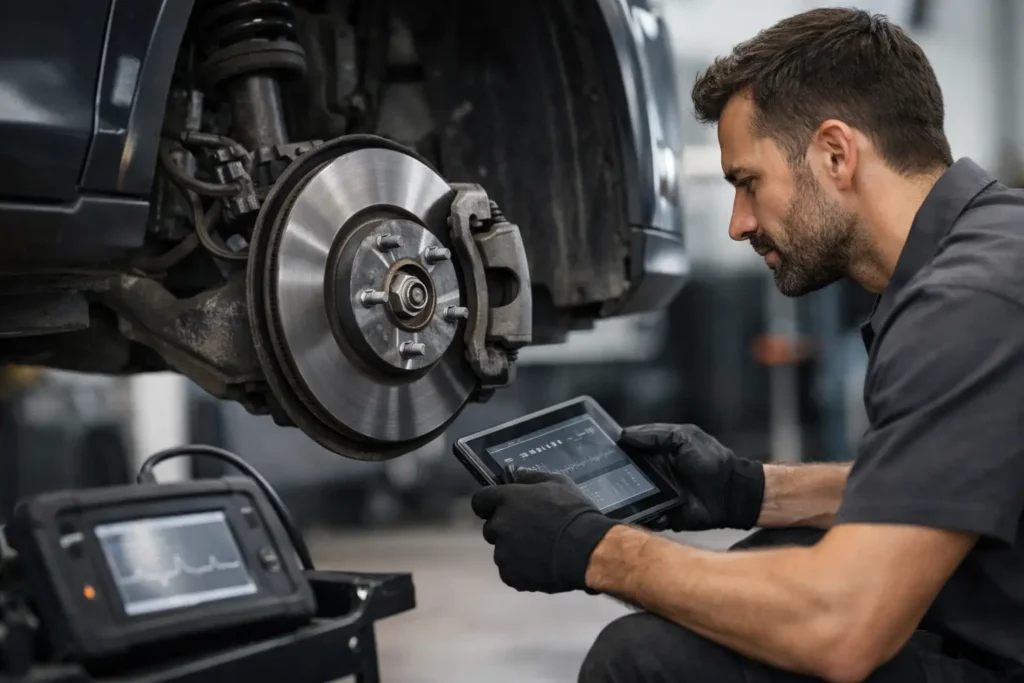
You’re slowing down for a stoplight, the steering wheel starts shaking, and the brake pedal feels like it’s talking back. That’s usually when people start searching for a brake vibration diagnosis example, because they want a straight answer before buying parts they may not need. Fair enough – brake vibration can come from the brakes, but it can also come from tires, hubs, suspension parts, or a wheel bearing that’s starting to complain.
Here’s a real-world way to think through it.
A brake vibration diagnosis example from the shop
Let’s say a customer comes in with a common complaint: “The car drives fine at highway speed, but when I brake from about 50 mph, the steering wheel shakes and the front end feels rough.” A lot of chain shops jump right to rotors and pads. Sometimes they’re right. Sometimes they’re not.
At All Tire, the first step is to narrow down when the vibration happens. If the vibration is only there during braking, that points us one direction. If it’s there all the time and just gets worse when braking, that points us somewhere else. That difference matters because the fix can be very different.
If you’re dealing with that kind of shake and you want a clear answer before spending money, we can help sort it out. Just tap the blue phone call button in the lower left corner – we’re just a call away.
In this example, the vehicle is smooth while cruising. No seat vibration, no steering shake at 60 mph, no obvious tire balance issue. But under medium braking, the steering wheel shudders and the brake pedal pulses lightly. That already suggests the issue is likely in the front brake system or in a rotating part that shows itself when braking load transfers forward.
What we check first in a brake vibration diagnosis example
A good diagnosis starts before any parts come off. A road test tells you a lot if you pay attention.
We want to know whether the vibration is in the steering wheel, the seat, the brake pedal, or the whole vehicle. Steering wheel shake often points toward the front axle. A pulse in the pedal can suggest rotor thickness variation or uneven braking force. A vibration in the seat can sometimes lean more toward the rear brakes or rear tire-related issues. Not always, but often enough that it helps.
Then we check the obvious basics. Are the lug nuts torqued correctly? Is there visible rust scale between the wheel and hub? Are the tires worn unevenly? In Minnesota, especially after months of snow, slush, and road salt, rust buildup on the hub face is more common than people think. That little layer of corrosion can keep a rotor or wheel from sitting perfectly flush, and that can create a vibration complaint that feels exactly like a “warped rotor.”
That’s why proper repair method matters. This Isn’t Walmart. If the mounting surfaces aren’t cleaned and the hardware isn’t handled correctly, you can replace parts and still have the same problem.
The rotor isn’t always the villain
Now let’s continue the example. We pull the front wheels and inspect the brake pads and rotors. The pads still have usable material left, but the inner and outer pad wear is uneven on one side. That raises suspicion about caliper slide movement or a sticking brake component.
Next, we measure rotor lateral runout and thickness variation. This is where the guesswork should stop. A rotor can look decent and still have enough runout to cause a steering wheel shake under braking. On the other hand, a rotor can be blamed unfairly when the real issue is hub runout, a poor-quality previous installation, or a wheel bearing allowing movement.
In this example, the rotor on the driver’s side shows too much runout. But before calling for rotors, we check the hub itself. Why? Because if the hub face is rusty or the bearing has play, installing a new rotor alone may not fix anything for long.
Sure enough, there’s rust scale on the hub mounting surface, and the wheel bearing has the slightest roughness when rotated by hand. Not enough to roar loudly on the road yet, but enough to deserve a closer look. That’s the kind of thing a quick pad slap misses.
Why brake vibration can fool people
Brake vibration is one of those complaints that sounds simple but isn’t. Drivers often say “my brakes are warped,” but the vehicle doesn’t actually know that phrase. It only knows that something rotating is no longer staying true under load.
That can come from rotor thickness variation, excessive runout, seized caliper slides, uneven pad deposits, a loose suspension part, wheel bearing play, or even a tire issue that becomes more noticeable when the front end dives during braking. If the vibration started right after a brake job somewhere else, installation error moves higher up the list. If it started gradually over months, wear or corrosion becomes more likely.
This is also why cheap parts can muddy the picture. Some lower-quality rotors are more sensitive to poor mounting surfaces or uneven lug torque. The part gets blamed, but the real problem was in the setup.
The actual repair in this example
So what gets done?
In this case, the correct repair isn’t just “pads and rotors.” The front brake components need service, yes, but the hub surface also needs to be cleaned properly, the brake hardware needs inspection, and the bearing issue has to be addressed if it’s contributing to rotor movement. If you skip that step, the vibration can return and everybody’s frustrated.
A proper repair might include new front rotors and pads, cleaning and preparing the hub mating surfaces, servicing or replacing hardware as needed, checking caliper slides for free movement, and replacing the wheel bearing if the play or roughness is confirmed beyond spec. Then the wheels need to be torqued correctly and the vehicle road-tested again.
That’s the difference between replacing parts and actually diagnosing the problem.
When it’s not the brakes at all
Here’s the other side of a brake vibration diagnosis example. Sometimes a driver comes in convinced the brakes are bad, but the main issue is a tire or front-end problem.
If the vehicle already has a vibration at 60 to 70 mph before the brake pedal is touched, the brakes may be innocent. A separated tire, bent wheel, worn suspension joint, or balance issue can feel worse during braking because weight shifts forward and loads the problem area. On trucks and SUVs, that can be especially noticeable.
That’s one reason vibration work and brake work often overlap. A good shop has to be willing to say, “Your brakes aren’t the first problem here,” even if that’s not the answer the customer expected. Honest advice saves money.
What drivers should watch for
If your steering wheel shakes only when braking, don’t wait too long. What starts as a nuisance can become a longer stopping distance issue, uneven pad wear problem, or more expensive repair if heat and wear keep building.
Pay attention to patterns. Does it happen only at higher speeds? Only after the vehicle has been driven a while? Only on light braking, or mostly on firm stops? Does the brake pedal pulse, or is it more of a front-end shimmy? Those details help narrow things down fast.
It also helps to mention any recent work. New brakes, recent tire replacement, a pothole hit, wheel work, or even seasonal wheel swaps can all be relevant. Around here, those seasonal changes matter. Vehicles go through snow, ice, slush, road salt, and spring potholes, and all of that can affect hubs, bearings, brake components, and ride quality.
Why a careful local diagnosis matters
A lot of people aren’t looking for the cheapest possible brake job. They’re looking for the job that fixes the problem the first time. That’s especially true when the symptom isn’t obvious and the internet keeps yelling “warped rotors” at everybody.
At Joe’s All Tire, Joe is on-site daily, and that matters because vibration complaints usually need somebody experienced enough to separate a likely cause from a guess. Big-box shops are built for volume. That works fine for some jobs. But with brake vibration, details matter – measurements matter, mounting surfaces matter, and the road test matters.
For local drivers in Elk River and nearby communities, that hands-on approach is a big part of why people keep coming back. They want straight talk, proper repair methods, and no drama.
If your vehicle is shaking under braking, the smartest move is to treat it like a diagnosis problem first and a parts problem second. Sometimes the fix is straightforward. Sometimes it’s a stack of smaller issues adding up to one very annoying symptom. Either way, the right answer starts with somebody willing to check the whole picture instead of selling the fastest guess.
A brake vibration doesn’t have to turn into a long, expensive mystery – but it does need a careful set of eyes.
