

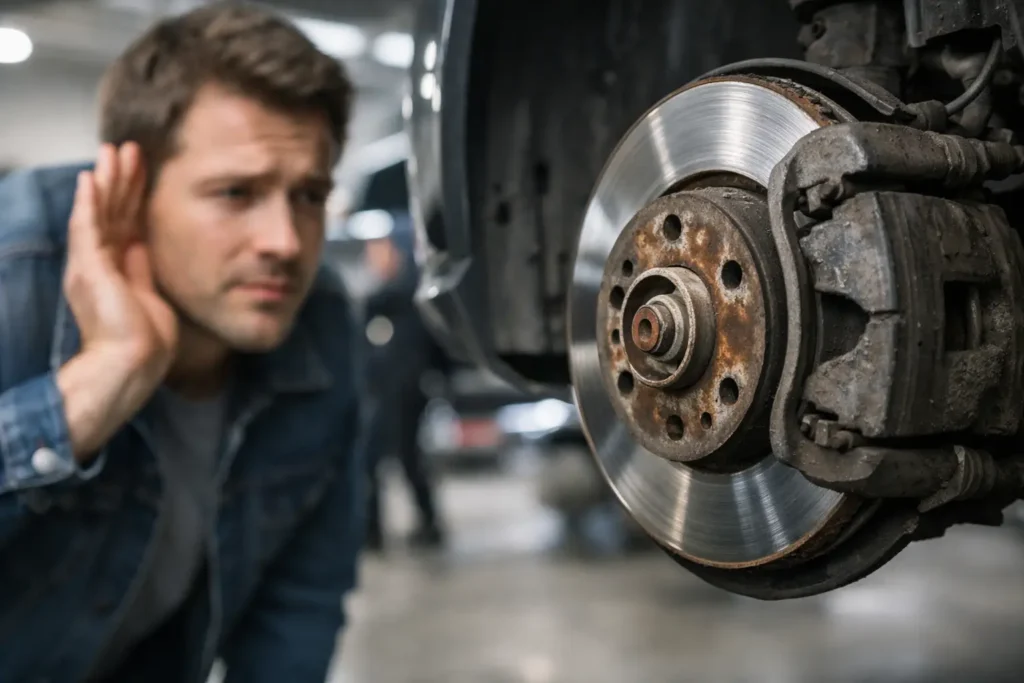
A quick squeal at the end of your driveway may be nothing more than moisture on the brake rotors. A grinding sound at a stop sign is different. Brake noises are one of the clearest ways your vehicle tells you something needs attention, and knowing the difference can protect your safety and save you from turning a straightforward brake job into a much bigger repair.
For drivers around Elk River, that distinction matters. Minnesota weather brings rain, road salt, snow, and long stretches of cold that can affect brake parts. Not every sound means you need brakes today, but no unusual noise should be ignored until it gets louder.
What Different Brake Noises Usually Mean
The sound, timing, and feel of the brake pedal all help point toward the cause. A good inspection looks at the complete brake system, not just the pads. Rotors, calipers, hardware, brake fluid, wheel bearings, and even tire condition can affect what you hear and feel while slowing down.
A high-pitched squeal or chirp
A sharp squeal when you apply the brakes is often caused by worn brake pads. Many pads include a small metal wear indicator designed to contact the rotor when the pad material gets low. That noise is your early warning that it’s time to inspect the brakes before metal contacts metal.
Still, squealing doesn’t always mean the pads are worn out. Dust, surface rust, glazed pads, loose hardware, or certain pad materials can make noise too. If it happens only during the first few stops after the vehicle sits overnight, especially after rain or snow, light surface rust on the rotors may be the reason. It often clears after a few normal stops.
If the squeal continues every day, gets worse, or comes with reduced stopping performance, have it checked. Waiting for a small noise to become a loud one rarely saves money.
Grinding or scraping
Grinding is the brake noise that deserves the fastest response. It can mean the brake pad friction material is gone and the metal backing plate is contacting the rotor. At that point, the vehicle may still stop, but stopping safely is only part of the issue. Metal-on-metal contact can quickly damage rotors and create more expensive repair needs.
A scraping sound can also come from a bent dust shield rubbing against a rotor, a rock caught near the brake assembly, or hardware that has shifted. Those causes may be less serious, but you can’t identify them confidently from the driver’s seat. A proper visual inspection is the right next step.
Clicking, clunking, or rattling
A click when changing from reverse to drive, or a rattle over bumps that seems to disappear when you press the brake pedal, may point to brake hardware that’s loose, worn, or installed incorrectly. Caliper slide pins and mounting hardware need to move and fit correctly for the pads to apply evenly.
This is one reason a brake repair shouldn’t be treated like a quick pad swap. The parts around the pads matter. If hardware is reused when it shouldn’t be, or if moving parts aren’t serviced correctly, you may end up with uneven wear, noise, pulling, or a brake job that doesn’t last as it should.
A thump, vibration, or pulsing pedal
If the steering wheel shakes or the brake pedal pulses while stopping, drivers often call it warped rotors. Sometimes rotor runout or uneven rotor thickness is involved, but the real cause can be more complicated. Sticking calipers, uneven pad deposits, worn suspension components, wheel bearing issues, or improperly tightened wheel lug nuts can all contribute.
The speed and conditions matter. A vibration only while braking points in one direction. A vibration at highway speed even when you’re not braking may be related to tire balance, tire wear, a wheel issue, or a bearing instead. That’s why diagnosis matters more than guessing and replacing parts.
A hiss when you press the pedal
A brief hiss near the brake pedal can be normal operation from the brake booster. But a loud or constant hissing sound, especially if the brake pedal feels hard or the vehicle takes more effort to stop, could indicate a vacuum or brake booster problem. That’s not a wait-and-see situation.
If you notice a hard pedal, a brake warning light, a sinking pedal, fluid leaking near a wheel, or a vehicle that pulls hard when braking, don’t continue driving it just because the noise comes and goes. Arrange for a prompt inspection and consider towing if braking feels unsafe.
When Brake Noises Are More Urgent
A sound by itself is useful information. A sound paired with a change in how the vehicle drives is a stronger warning. Pay attention if your car takes longer to stop, pulls to one side, shudders, smells hot after driving, or has a pedal that feels soft, spongy, hard, or unusually low.
You should also take new noises seriously after recent brake work. Brakes may make a little sound during a normal break-in period, depending on the parts used and driving conditions. But a repeated grind, a strong pull, or a vibration after service should be inspected rather than explained away.
If you’re unsure whether the noise can wait, it’s better to ask before it becomes a safety issue. Mobile visitors can tap the blue call button in the lower left corner to ask questions or schedule an appointment. We’re just a call away.
Why Minnesota Weather Can Make Brakes Noisy
Road salt and moisture are hard on brake components. After a wet or snowy night, rust can form on a rotor’s surface surprisingly fast. The first stop or two may sound rough, then clear as the pads clean the rotor surface. That’s common, especially during Minnesota’s long winter season.
What isn’t normal is noise that stays after the vehicle has warmed up and been driven, or noise that returns with every stop. Salt can accelerate corrosion around calipers, brake lines, hardware, and backing plates. A caliper that doesn’t release properly can cause a hot wheel, a burning smell, uneven pad wear, and poor braking. Catching that early can prevent damage to the rotor and other components.
Seasonal tire changes and rotations are also a smart time to have brakes looked over. With the wheels off, a technician can see pad thickness, rotor condition, hardware, leaks, and uneven wear patterns that aren’t obvious otherwise.
What a Proper Brake Inspection Should Check
A trustworthy brake inspection goes beyond a quick glance through the wheel spokes. The technician should measure or assess the remaining pad material, inspect rotor condition, check caliper movement, look at brake hoses and lines, and examine the hardware that holds everything in place.
They should also consider the symptoms you noticed. Does the noise happen only when cold? Only on gentle stops? Does it pull left? Did it begin after a tire rotation or a pothole? Those details help separate a routine pad-and-rotor job from a wheel bearing, suspension, or tire-related issue.
At Joe’s All Tire, locals know they can get a straight answer about what’s worn, what can wait, and what needs attention now. That’s especially valuable with brakes, where the cheapest quote isn’t always the best value if it skips the hardware, diagnosis, or workmanship needed to keep the repair quiet and dependable. This Isn’t Walmart. Your brake repair should be done right, with parts and service that fit how you actually drive.
Don’t Let a Small Sound Become a Bigger Repair
There’s no need to panic over every chirp after a rainy night. But there is a real cost to ignoring ongoing brake noises. Worn pads can ruin rotors. A sticking caliper can overheat a wheel. Loose hardware can create uneven wear and unstable braking. The earlier the cause is found, the more options you usually have.
Pay attention to when the sound occurs, whether it changes with speed or pedal pressure, and whether the vehicle feels different while stopping. Then get an experienced set of eyes on it. A quiet brake system isn’t just more pleasant to drive – it’s often a sign that the parts doing the most important safety work on your vehicle are being cared for the way they should be.
