

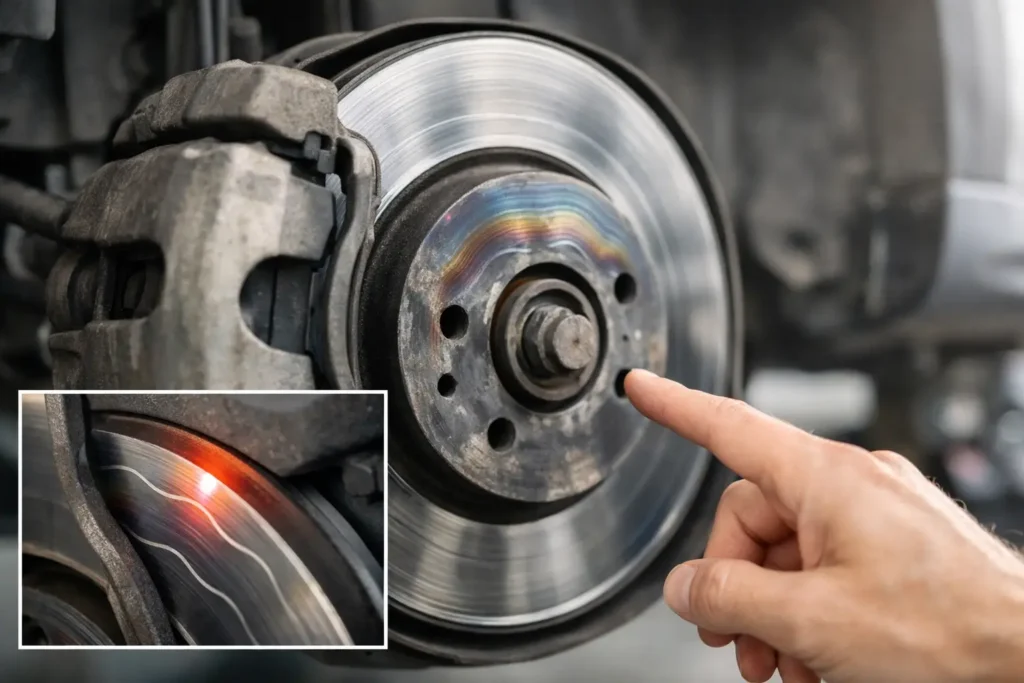
You usually feel brake trouble before you see it. The steering wheel starts shaking when you slow down from highway speed, or the brake pedal pulses under your foot at the next stop sign. That is where brake rotor warping symptoms explained in plain English can help, because the signs are often easy to notice but easy to misread.
A lot of drivers call it warped rotors anytime the brakes vibrate. Sometimes that is accurate. Sometimes it is not. What matters is this: if your vehicle shakes, pulses, scrapes, or takes the smoothness out of braking, it needs a proper inspection. If you want a straight answer before it gets worse, just tap the blue phone call button in the lower left corner – we’re just a call away.
What people mean by warped rotors
When someone says a brake rotor is warped, they usually mean the brake disc is no longer giving a smooth, even braking surface. That can happen from heat, uneven wear, thickness variation, or improper lug nut torque after wheel service. In everyday driving, the result feels about the same – the brake system grabs unevenly, and you notice vibration or pulsing.
The reason this gets confusing is that true rotor warping is only one cause of brake pulsation. Brake pad material can transfer unevenly onto the rotor surface. Rotors can wear unevenly. Rust can build up. A sticking caliper can overheat one side. Even suspension or wheel issues can make a driver think the rotors are the problem.
That is why a real brake inspection matters more than guessing from the symptom alone.
The most common brake rotor warping symptoms explained
Brake pedal pulsation
This is the symptom most drivers notice first. You press the brake pedal and it pushes back in a rhythmic way, almost like a heartbeat through your foot. That usually means the pads are not contacting a perfectly even rotor surface.
The stronger the pulsation, the more likely the brake issue has progressed. Light pulsation may show up only during harder stops. More advanced problems can be felt even in normal city driving.
Steering wheel shake when braking
If the front rotors are the issue, you may feel the steering wheel shimmy during deceleration. Many people notice it most when exiting the highway or slowing from 50 mph and up. The faster you are going, the more obvious it can become.
That shaking does not always mean your tires are out of balance. If it only happens when you brake, the brake system moves to the top of the suspect list.
Vehicle vibration through the seat or floor
Rear brake issues can feel different from front brake issues. Instead of the steering wheel shaking, you may feel vibration in the seat, floorboard, or body of the vehicle while braking. Some drivers describe it as a shudder running through the whole vehicle.
Again, it depends on which rotor is affected and how severe the condition is.
Squealing, scraping, or grinding
Warped or uneven rotors do not always make noise by themselves, but brake problems often travel together. If the pads have worn unevenly because of rotor issues, you might hear squealing. If the pads are worn down too far, you may hear grinding, which is more serious.
Grinding can mean metal-on-metal contact. At that point, you are not just dealing with rotor smoothness anymore. You may be looking at damaged pads, overheated hardware, and a more expensive repair.
Longer stopping feel or reduced confidence
Some vehicles still stop in a reasonable distance even with brake pulsation, but the braking feels rough, inconsistent, or less controlled. That matters. Smooth braking is part of safe braking, especially in Minnesota weather where traction can change fast.
If the brake pedal, steering wheel, or vehicle feel unsettled during stops, your confidence in the brakes drops for a reason.
Why rotors end up warped or uneven
Heat is the big one. Brakes convert motion into heat every time you slow down. Hard braking, towing, repeated stops, or riding the brakes downhill can push rotor temperatures high enough to cause trouble, especially if the parts are already worn.
Improper wheel installation is another cause people do not think about. If lug nuts are tightened unevenly or over-torqued, the rotor can be stressed in a way that creates braking vibration later. This is one reason proper workmanship matters. Small mistakes in brake or wheel service can show up as big drivability problems.
Pad and caliper problems also play a role. If a caliper sticks, one pad may stay in contact with the rotor too long and overheat it. If pads wear unevenly or low-quality parts are used, the system may not wear evenly over time.
Rust matters too, especially here in Minnesota. Moisture, road salt, and winter driving can leave corrosion on rotor surfaces and around brake hardware. Sometimes the issue starts with rust buildup, then turns into uneven braking and vibration.
Symptoms that are not always rotor warping
This is where honesty matters. Not every brake vibration means you need rotors, and not every shake during braking comes from the brakes alone.
A worn suspension component can amplify brake vibration. A bad wheel bearing can create noise or movement that feels similar. Tires with uneven wear, separated belts, or balance issues can muddy the picture too. At All Tire, that kind of vibration diagnosis is part of doing the job right instead of just selling parts and hoping the symptom goes away.
If you are weighing whether to keep driving it or have it checked, trust what the vehicle is telling you. Just tap the blue phone call button in the lower left corner – we’re just a call away.
Can you keep driving with warped rotors?
Sometimes you can drive for a while with mild pulsation. That does not make it a good idea.
If the problem is early and the braking is still controlled, you may not be in immediate danger on every trip. But brake issues rarely fix themselves. Pulsation usually gets worse, pad wear often becomes more uneven, and extra heat can damage other brake components.
If you are hearing grinding, feeling severe shaking, or noticing reduced braking performance, it should be inspected as soon as possible. Those symptoms move it from annoying to unsafe.
How a good shop confirms the problem
Brake rotor warping symptoms explained by inspection, not guesswork
A proper diagnosis starts with a road test and a visual inspection. The technician should feel when the vibration happens, look at pad wear, inspect rotor surfaces, and check for overheating, scoring, rust, or uneven contact.
From there, rotor thickness and runout may be measured to confirm whether the rotor is out of spec. Calipers, slide pins, hardware, and brake pad condition should be checked too. If needed, the shop may also rule out related issues like wheel bearing looseness or suspension wear.
That approach matters because the correct repair depends on the cause. Some vehicles need pads and rotors. Some need caliper service too. In a few cases, the brakes are only part of the problem.
For local drivers who want brake work done right the first time, Joe’s All Tire offers brake inspections and repair with the kind of clear explanation many chain stores skip. You can learn more at www.joesalltire.com/brake-shop-elk-river/.
What the repair usually involves
If the rotors are worn, heat-damaged, or uneven enough, replacement is usually the smart move. In modern brake service, replacing pads and rotors together is often the best value because it gives the new pads a proper surface to bed into.
Machining rotors is still possible in some situations, but it depends on rotor thickness, condition, cost, and whether the final result will be reliable. On many vehicles, new rotors make more sense than cutting old ones too thin.
The other key point is hardware and caliper condition. If the caliper slides are sticking or the bracket hardware is corroded, new pads and rotors alone may not solve the root cause. That is where a careful shop earns its reputation.
How to help prevent it from happening again
You cannot eliminate brake wear, but you can reduce the odds of repeat problems. Good parts help. Proper torque on lug nuts matters. Brake hardware needs to move freely. And if your driving involves heavy loads, frequent hard stops, or lots of stop-and-go traffic, your brakes simply work harder than average.
It also helps to address vibration early. A slight pulse today is easier and cheaper to deal with than a full brake overhaul later.
If your brakes have started shaking, pulsing, or making noise, do not wait for a more dramatic warning sign. A smooth stop should feel normal, controlled, and predictable. If it does not, your vehicle is asking for attention.