

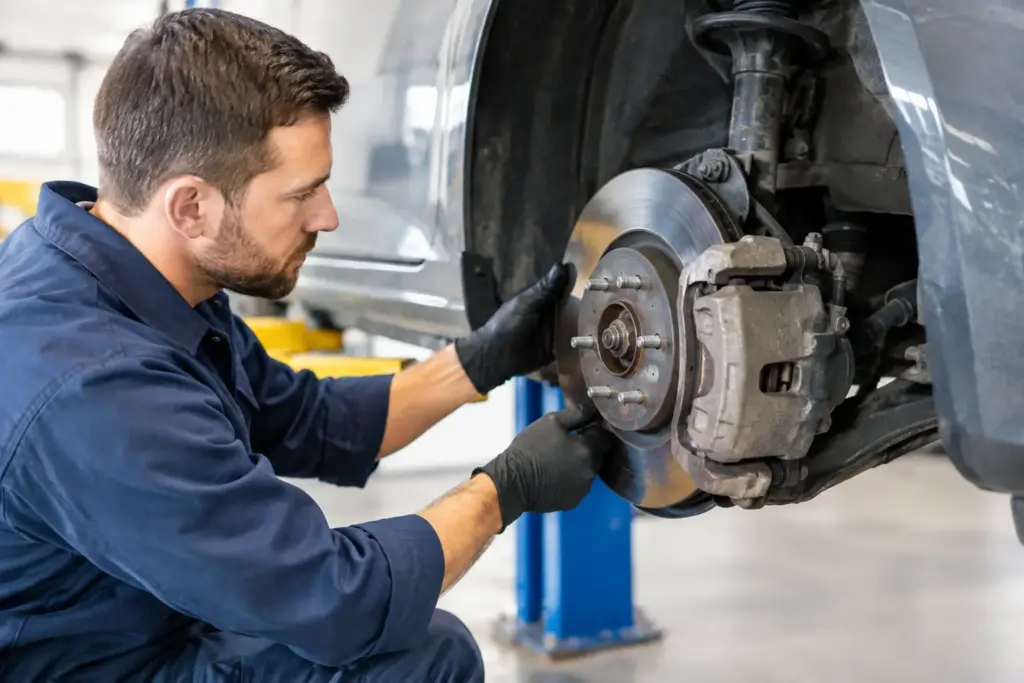
That quick squeal at the end of your driveway may not seem urgent. But if your brake pedal feels softer than normal, your vehicle pulls when stopping, or the steering wheel shakes under braking, it’s time to stop guessing. Brake inspections give you a clear answer before a small wear issue turns into a bigger repair or a safety problem on a wet Minnesota road.
At Joe’s ALL TIRE, locals know us as ALL TIRE because they can talk directly with the people working on their vehicle. We’ll look at what’s actually happening, explain it plainly, and recommend the repair that makes sense. No pressure, no mystery charges, and no replacing parts just because they’re close to a mileage number.
What Happens During Brake Inspections
Your braking system is more than pads and rotors. A proper inspection looks at the parts that create stopping power, the hardware that lets those parts move correctly, and the hydraulic system that transfers pedal pressure to each wheel.
At ALL TIRE, a brake inspection may include checking pad or shoe thickness, rotor condition, brake fluid level and condition, caliper operation, brake hoses, brake lines, mounting hardware, and visible leaks. We also pay attention to uneven wear patterns. A pad that wears out much faster on one side can point to a sticking caliper, seized slide, or hardware problem. Replacing pads alone in that situation may quiet the noise for a while, but it doesn’t solve the reason the pad wore unevenly.
Road testing and listening to your description matter, too. A noise that occurs only during the first few stops on a cold morning is different from grinding that happens every time you brake. A vibration felt in the pedal is different from a shake in the steering wheel. Those details help narrow down the real cause.
Signs You Should Schedule a Brake Inspection
Some brake problems are obvious. Others build slowly enough that drivers adjust to them without realizing it. If your vehicle does any of the following, it’s worth having it checked:
- Squeals, scraping, grinding, or clicking when you apply the brakes
- Pulls left or right while stopping
- Shakes through the steering wheel or brake pedal
- Has a soft, spongy, unusually hard, or low brake pedal
- Takes longer to stop than it used to
- Shows a brake warning light or has low brake fluid
- Gives off a burning smell near a wheel after driving
Grinding is the one to take especially seriously. It can mean the friction material is gone and metal parts are contacting the rotor. Waiting can turn a straightforward pad-and-rotor job into caliper damage or other added work.
If something feels off, getting an answer early is usually easier on your budget and safer for your family. Mobile visitors can tap the blue call button in the lower left corner to ask questions or schedule an appointment. We’re just a call away.
Why Brake Wear Isn’t the Same for Every Vehicle
There’s no single mileage point when every vehicle needs brake work. One driver may need front pads sooner because of short commutes, frequent stop-and-go traffic, towing, or a heavier pickup. Another may get much longer life from the same type of pad by driving mostly highway miles.
Minnesota weather plays a role as well. Road salt, moisture, and long periods of sitting can contribute to corrosion on rotors, caliper slides, brake hardware, and lines. That doesn’t mean every rusty-looking rotor needs replacement. Surface rust can appear quickly after rain or snow and often clears after a few normal stops. Deep rust, rough rotor surfaces, seized parts, or corrosion that affects safe operation are different matters.
That’s why ALL TIRE checks the condition in front of us rather than treating brake service like a preset package. Sometimes the right answer is to monitor the pads and recheck later. Sometimes it’s time to address a worn component before it causes more damage. Honest advice means being clear about that difference.
Pads, Rotors, Calipers, and Fluid: What May Need Attention
Brake pads create friction against the rotors, so wear is expected. Rotors absorb and release a tremendous amount of heat, and they can become thin, grooved, warped from excessive heat, or corroded. Depending on their condition and manufacturer specifications, a rotor may be usable, serviceable, or ready for replacement.
Calipers use hydraulic pressure to clamp the pads against the rotor. If a caliper sticks or its slides can’t move freely, one pad can wear down quickly and braking can become uneven. Brake hoses and metal lines also deserve attention, particularly on older Minnesota vehicles where corrosion may develop out of sight.
Brake fluid is another part of the picture. It absorbs moisture over time, which can affect performance and contribute to internal corrosion. Whether a fluid service is needed depends on the vehicle, fluid condition, maintenance history, and manufacturer recommendations. A good shop explains the reason instead of adding it automatically.
Don’t Ignore Vibration or Pulling When You Stop
A steering wheel shake during braking often points toward an issue at the front brakes, but diagnosis isn’t always that simple. Rotor condition, wheel bearing play, suspension components, wheel balance, or tire issues can all affect what you feel through the vehicle. A pull can come from braking differences side to side, but it can also be related to tire condition, alignment, or suspension wear.
That’s where a complete look matters. ALL TIRE handles brakes, vibration diagnosis, wheel bearings, and tires, so we can look beyond the most obvious part. There’s no value in selling a brake repair if the actual cause is elsewhere.
For drivers heading into snow, slush, and heavy rain, braking performance and tire traction work together. Good brakes can’t create grip where the tires don’t have it. If your tires are nearing replacement, Joe at ALL TIRE often recommends open shoulder tire designs for cars and trucks because they help move water and slush away from the tread, improving summer rain traction and winter driving confidence. With roughly five months of snow and ice in Minnesota, that extra evacuation channel matters.
How Often Should You Have Your Brakes Checked?
A practical approach is to have your brakes inspected during regular tire rotations, seasonal tire service, or any time the wheels are off for related work. That gives a technician a good view of pad wear, rotor condition, hardware, and other visible concerns. It’s also smart to schedule an inspection right away when you notice a change in pedal feel, stopping distance, noise, vibration, or pulling.
You don’t need to wait for a warning light or a loud grinding sound. Early inspections often give you choices. You may be able to plan service around your schedule rather than deal with an avoidable breakdown or a vehicle that doesn’t feel safe to drive.
Why Proper Brake Work Matters
Brake repairs aren’t an area for shortcuts. The parts have to fit correctly, moving surfaces need to operate as intended, fasteners need proper attention, and the system needs to be checked after the repair. Cheap work that skips diagnosis can cost more when the same problem comes back or damages new parts.
“This Isn’t Walmart” is more than a line when it comes to vehicle safety. ALL TIRE focuses on doing the job correctly the first time, with the kind of personal accountability you expect from a local owner-led shop. You’ll get a direct recommendation based on your vehicle’s condition, how you drive, and what actually needs attention.
FAQ About Brake Inspections
How long does a brake inspection take?
It depends on the concern and how much diagnosis is needed. A basic visual check may be quick, while tracking down a vibration, pull, fluid issue, or intermittent noise can take longer. We’ll let you know what we find and what the next step is.
Can I drive with squeaky brakes?
A brief squeak can come from moisture, dust, or normal pad movement, but repeated squealing should be checked. If you hear grinding, feel a major change in braking, or see a warning light, don’t wait.
Do I always need rotors when replacing brake pads?
Not always, but pads and rotors need to be evaluated together. Rotor thickness, surface condition, heat damage, rust, and manufacturer specifications determine whether replacement or another service is appropriate.
Why does my car pull to one side when braking?
A pull can be caused by uneven brake operation, a sticking caliper, worn components, tire differences, alignment concerns, or suspension issues. An inspection identifies the actual cause instead of assuming it’s only the brakes.
Will a brake inspection tell me how much life is left?
Yes. We can measure pad thickness, check rotor condition, and explain whether you have plenty of usable life, should plan service soon, or need attention now. That gives you a practical timeline without the sales pressure.
If your brakes have started to feel different, trust that change. A straightforward inspection now can keep your next stop calm, controlled, and predictable.
