

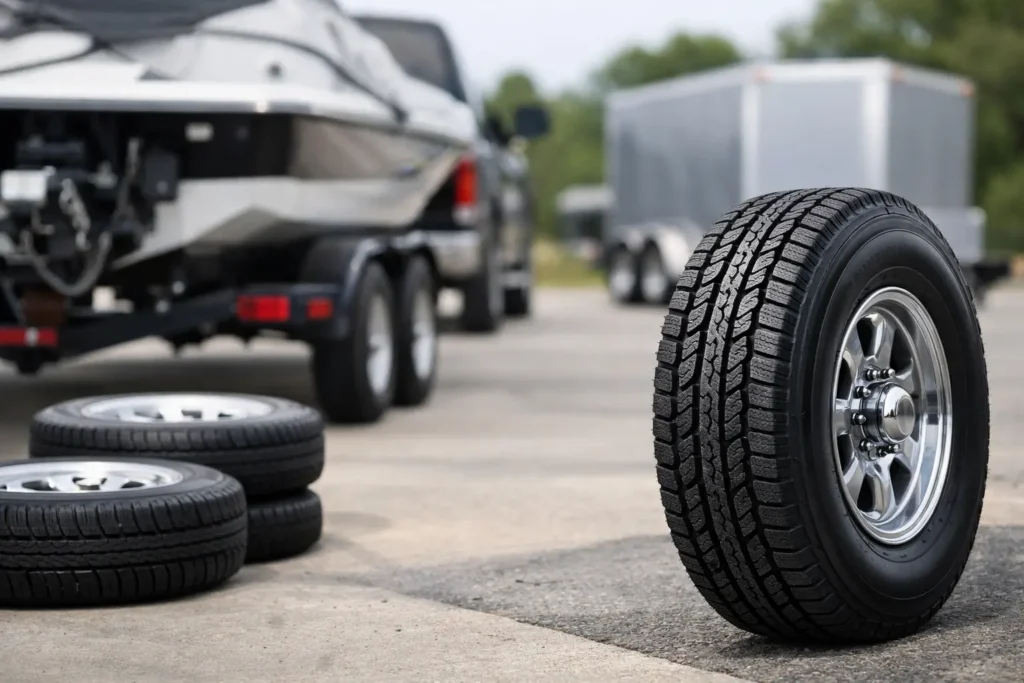
A trailer tire failure usually does not give you much warning. One minute everything feels normal, and the next you are dealing with sway, shredded rubber, or damage to the trailer itself. That is why choosing the best trailer tires for safety is less about chasing a brand name and more about getting the right tire for the load, the speed, and the way you actually tow.
Most trailer owners do not need the most expensive tire on the shelf. They need a tire that is built for trailer duty, installed correctly, inflated properly, and matched to the trailer’s real-world use. If you are not sure what fits your trailer and towing habits, we can help you sort it out quickly. Just tap the blue phone call button in the lower left corner – we’re just a call away.
What makes the best trailer tires for safety?
The safest trailer tire is the one that is designed specifically for trailers and has enough capacity for the load with a little breathing room. In many cases, that means an ST tire, which stands for Special Trailer. These tires are built with stiffer sidewalls to help control sway and handle the unique stress a trailer sees when cornering, backing, and carrying weight for long stretches.
That does not mean every ST tire is automatically a great choice. Build quality matters. So do load range, speed rating, age, inflation habits, and whether the tire is actually sized right for the wheel and trailer. A cheap tire with the correct size can still be a bad safety decision if it runs too close to its maximum load all the time.
For most everyday owners, the best trailer tires for safety share a few traits. They have a load rating that clearly exceeds the actual load on each tire, a speed rating that matches realistic highway use, strong heat resistance, and a reputation for consistent quality. That last part matters more than people think. Trailer tires often fail from heat and underinflation, but weak construction can turn a small issue into a roadside problem fast.
ST tires vs LT tires for trailers
This is one area where people get mixed advice. ST tires are made for trailers. LT tires are Light Truck tires, built mainly for powered vehicles like pickups and vans. In most trailer applications, ST tires are the better and safer fit because they are engineered to manage trailer sway and vertical load differently than LT tires.
There are exceptions. Some heavier equipment trailers or specialized commercial setups may do well with certain LT tires, especially when the trailer manufacturer calls for them. But that is not the default answer for a family camper, utility trailer, boat trailer, or enclosed cargo trailer.
At Joe’s All Tire, we usually tell people not to overcomplicate this. If the trailer came designed around ST tires, that is normally where the safe answer starts. Changing to LT tires without checking capacity, wheel fitment, and inflation requirements can create more problems than it solves.
Load range matters more than tread looks
A lot of buyers focus on tread pattern first because it is the part they can see. On a trailer tire, load range is usually the bigger safety factor. If the tire cannot carry the weight without running near its limit, heat builds up quickly, and that is when blowouts become more likely.
Load range is not the same thing as ply count in the old-fashioned sense, but it does tell you how much weight the tire is built to handle at a given pressure. A Load Range C tire is not automatically safer than a Load Range E tire, or the other way around. The safe choice depends on what your trailer actually weighs when loaded.
This is where many problems start. People buy based on the empty trailer sticker or what the last owner installed, then load up tools, machines, campers, or weekend gear and assume they are fine. In real use, the tire may be working much harder than expected.
A good rule is to know the gross trailer weight and divide the load realistically across the tires, while leaving margin. Margin matters because road heat, highway speeds, and rough pavement all add stress.
Speed rating is not a small detail
Older trailer tires had a reputation for lower speed limits, and some owners still overlook this. But speed rating is a real safety issue. If a tire is rated for a certain top speed and you run it over that for extended periods, heat builds fast. Heat is the enemy of trailer tires.
If you tow mostly on Minnesota back roads at moderate speeds, that is one thing. If you make long interstate trips in summer, your tire choice needs to reflect that. A tire with a higher speed rating can offer a better safety cushion for modern highway travel, assuming everything else is matched correctly.
That does not mean speed rating gives you permission to ignore pressure checks or overload the trailer. It just means the tire is better suited to the pace many people actually drive today.
Tread design and real-world safety
Trailer tires are not judged exactly the same way as car or truck tires, but tread still matters. You want a design that evacuates water well, wears evenly, and stays stable under load. Since Joe’s All Tire spends a lot of time helping Minnesota drivers choose tires for changing conditions, we pay attention to tread design across the board. On cars and trucks, we strongly recommend open shoulder tire designs because they help with summer rain and winter traction. Trailer tires are a different category, but the same principle applies – the way a tire moves water and handles heat matters more than marketing language.
If you want to learn more about how tire design affects traction, wear, and safety, our tire knowledge center is a helpful place to start at www.joesalltire.com/knowledge-center/.
For trailers, do not choose based on aggressive-looking tread alone. A tire that looks tough is not necessarily built better. Consistent construction and proper load handling are usually more important than a flashy pattern.
The brands matter, but fitment matters more
People often ask for the single best brand. The honest answer is that several manufacturers make solid trailer tires, and the right pick depends on your trailer type, load needs, budget, and how far you tow.
Higher-quality trailer tire lines from established manufacturers often provide better consistency, stronger warranty support, and fewer headaches than bargain imports with little track record. That said, even a respected brand will not protect you if the tire is undersized, too old, or mounted on a wheel that is not rated for the pressure.
This is why owner-led advice matters. A national chain may hand you whatever is in stock. A local shop that actually looks at the trailer, wheel rating, and use case is more likely to steer you right.
Safety mistakes that shorten trailer tire life
The biggest mistake is running low pressure. Trailer tires need proper inflation to carry weight safely, and even being a little low can create excess heat. Unlike some passenger tires, trailer tires do not have much room for neglect.
The second mistake is ignoring age. A trailer can have deep tread and still be on unsafe tires if they are old, weather-checked, or have been sitting through repeated seasonal changes. Many trailers age out their tires before they wear them out.
The third mistake is poor storage and lack of inspection. Sun exposure, long periods of sitting, curb contact, and bearing or alignment issues can all damage tires. If one tire is wearing oddly, that is not always a tire problem alone. Sometimes it points to suspension wear, axle issues, or wheel bearing trouble.
When replacing one tire is not enough
Sometimes a single damaged tire can be replaced safely. Sometimes it should not be. If the remaining tires are old, worn unevenly, or from a questionable batch, replacing just one can leave you with the same roadside risk a few weeks later.
This is especially true on tandem-axle trailers, where tires work together under load. If one failed because of age or overload, the others may be close behind. The cheapest fix up front is not always the safest fix over the season.
At All Tire, that is the kind of conversation we believe should be honest and straightforward. If one tire is fine, say so. If the set is tired and likely to cause trouble, say that too.
How to choose the right trailer tire without guessing
Start with the trailer placard and current tire size, but do not stop there. Check the wheel rating, confirm the load range, think about your normal towing speed, and consider how the trailer is actually used. A boat trailer that sees occasional short trips is different from an enclosed trailer running highways every weekend.
It also helps to look at age, not just tread depth. If your trailer has been sitting through hot summers and cold winters for years, safety may depend more on replacing aging tires than finding a different model.
If you bring that trailer into a trusted local shop, the right recommendation should feel clear, not confusing. You should hear why a certain tire fits your trailer, what trade-offs come with cheaper options, and whether anything else needs attention before you hit the road.
A good trailer tire does its job quietly. That is the point. You hitch up, drive confidently, and do not spend the trip watching your mirrors for trouble. If your current tires leave you guessing, that is usually your sign to get them checked before the next haul.
The safest trailer setup is rarely the fanciest one. It is the one that is matched correctly, aired properly, and done right the first time.
