
That little squeal when you back out of the driveway isn’t something to brush off and hope disappears. When brakes start talking, shaking, or changing the way your vehicle stops, they’re telling you something. The best signs you need brake service usually show up before total brake failure, and catching them early can save you money, time, and a whole lot of stress.
Around Minnesota, brakes don’t live an easy life. Snow, slush, road salt, stop-and-go traffic, and sudden winter stops all add wear. That’s why a brake issue can start small and turn into a much bigger repair if it’s ignored too long.
The best signs you need brake service before it gets expensive
Some brake problems are obvious. Others creep in slowly enough that drivers adjust without realizing it. If your vehicle doesn’t feel as confident stopping as it used to, that’s reason enough to pay attention.
At Joe’s All Tire, or All Tire as a lot of locals know us, we see this all the time – a customer waits because the brakes still technically work, then finds out the repair would’ve been simpler and less expensive a week or two earlier. This Isn’t Walmart. You’re not getting rushed through with a guess and a sales pitch. You’re getting honest advice about what’s actually worn out and what can wait.
1. Squealing or screeching when you brake
This is one of the most common early warnings. Many brake pads are built with a wear indicator that makes a high-pitched squeal once the pad material gets low. That noise is there for a reason.
Sometimes squealing can come from moisture, rust film, or dust, especially after the vehicle sits overnight. But if the sound happens often or gets louder over time, don’t assume it’s harmless. Consistent squealing usually means it’s time to inspect the brake pads and hardware.
If you’re hearing that noise and you’re not sure whether it’s minor or urgent, it’s worth getting it checked before it turns into metal-on-metal damage. If you’d like a straight answer without the runaround, just tap the blue phone call button in the lower left corner – we’re just a call away.
2. Grinding means you’ve likely waited too long
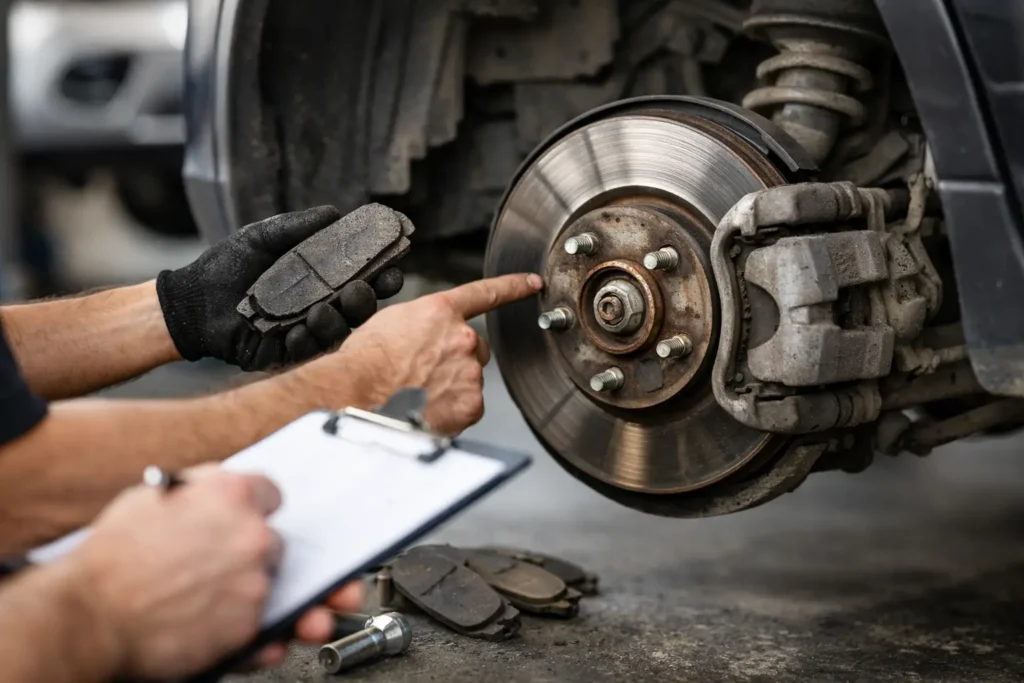
Grinding is different from squealing. It’s rougher, deeper, and more serious. In many cases, that sound means the brake pad material is worn down and metal parts are contacting the rotor.
Once that happens, you’re usually no longer talking about a simple pad replacement. Rotors may need resurfacing or replacement, and sometimes calipers or other parts are affected if the problem has gone on long enough. The vehicle may still stop, but it’s doing damage every time you hit the pedal.
If you hear grinding, don’t keep testing it for another week. That’s one of the clearest signs you need brake service right away.
How your brake pedal can warn you
Noise gets attention fast, but feel matters just as much. Your brake pedal gives you a lot of clues about what the system is doing.
3. The pedal feels soft, spongy, or sinks lower than normal
A soft brake pedal can point to air in the brake lines, worn components, or a hydraulic issue. If the pedal sinks toward the floor or feels less responsive than usual, that’s not a symptom to watch and wait on.
Brake systems are designed to feel firm and predictable. If that confidence disappears, the cause needs to be diagnosed properly. Sometimes it’s a relatively straightforward fix. Sometimes it’s a bigger issue with the master cylinder or a fluid leak. Either way, it depends on what’s causing the pressure loss, and guessing isn’t the safe move.
4. You have to press harder to stop
If your vehicle used to stop with normal pedal pressure and now takes more effort, something has changed. Worn pads are one possibility, but they’re not the only one. Glazed pad surfaces, rotor issues, brake booster problems, or contamination can all affect stopping performance.
Drivers sometimes adapt to this without realizing it. They start pressing earlier at intersections or leave more room in traffic and call it normal. It isn’t. Brakes should respond consistently.
Best signs you need brake service while driving
Some warnings don’t show up until the vehicle is moving at speed. These signs can tell you the issue is affecting more than just brake pad thickness.
5. The vehicle pulls to one side when braking
If your car or truck drifts left or right during braking, there could be uneven brake force from side to side. A sticking caliper, uneven pad wear, a brake hose issue, or even a tire problem can cause a pull.
That’s one reason brake diagnosis should be done carefully instead of assuming every issue needs the same repair. Pulling can also become more dangerous on wet or icy roads, which matters here in Minnesota where road conditions can change fast.
6. The steering wheel or pedal vibrates when you stop
Brake vibration often points to rotor problems, but not always in the way people think. Many drivers call it “warped rotors,” though uneven rotor surfaces, heat spots, or pad material transfer can all create that pulsing feeling.
The key point is that smooth braking should feel smooth. If the steering wheel shakes or the pedal pulses during normal stops, the braking surfaces need attention. The sooner that’s checked, the better your chances of avoiding extra wear on related parts.
7. Your stopping distance is getting longer
This one can be easy to miss because it happens gradually. If your vehicle takes longer to stop than it used to, even though road conditions are normal, that’s one of the best signs you need brake service.
Longer stopping distance can come from worn pads, poor friction surfaces, heat-related fade, fluid issues, or a combination of smaller problems adding up. Whatever the cause, a few extra feet can make all the difference in a panic stop.
A few signs drivers overlook
Not every brake warning is dramatic. Sometimes the clue is a smell, a light, or a change that only happens once in a while.
A burning odor near a wheel can mean a brake is sticking and overheating. A brake warning light on the dash should never be ignored, even if the vehicle seems to stop normally. And if your vehicle starts making odd noises only after heavy braking, towing, or driving down long grades, that still counts. Intermittent symptoms are real symptoms.
Brake wear can also be uneven. One axle might be fine while another is due. One pad can wear faster because of seized hardware or caliper issues. That’s why a real inspection matters more than guessing based on noise alone.
Why brake problems get worse fast
Brakes are one of those systems where delay usually costs more, not less. Pads wear into rotors. Overheated parts wear unevenly. Small hydraulic problems become larger leaks. What starts as a manageable repair can turn into a bigger bill if it’s pushed too far.
There’s also the safety side. You don’t need total brake failure for a brake problem to put you at risk. Reduced stopping power, pulling, vibration, and inconsistent pedal feel are enough to make emergency situations a lot more dangerous.
For everyday drivers, that’s the real issue. You need your vehicle to stop the same way every time, whether you’re commuting, picking up kids, or heading out on icy morning roads.
What to do if you notice one of these signs
Start by paying attention to patterns. Does the noise happen every stop or only when the brakes are cold? Does the vibration show up only at highway speeds? Is the pull consistent or occasional? Those details help, but they shouldn’t delay an inspection.
The right next step is to have the brakes looked at by someone who will tell you what’s worn, what’s still usable, and what actually needs to happen now. That’s where owner-led shops stand out. At All Tire, Joe is on-site daily, and that makes a difference. You’re not getting bounced between advisors or sold parts because a screen says you’re due. You’re getting a real look at the problem and recommendations based on safety, condition, and common sense.
Sometimes the repair is straightforward. Sometimes there are choices, especially if wear is uneven or other front-end issues are involved. The point is to deal with it before a warning sign turns into damaged rotors, compromised stopping power, or a breakdown you didn’t need.
If your brakes have sounded off, felt different, or made the vehicle less steady when stopping, trust that instinct. Catching it early is usually the cheapest part of the whole situation, and it helps keep your vehicle dependable when you need it most.