

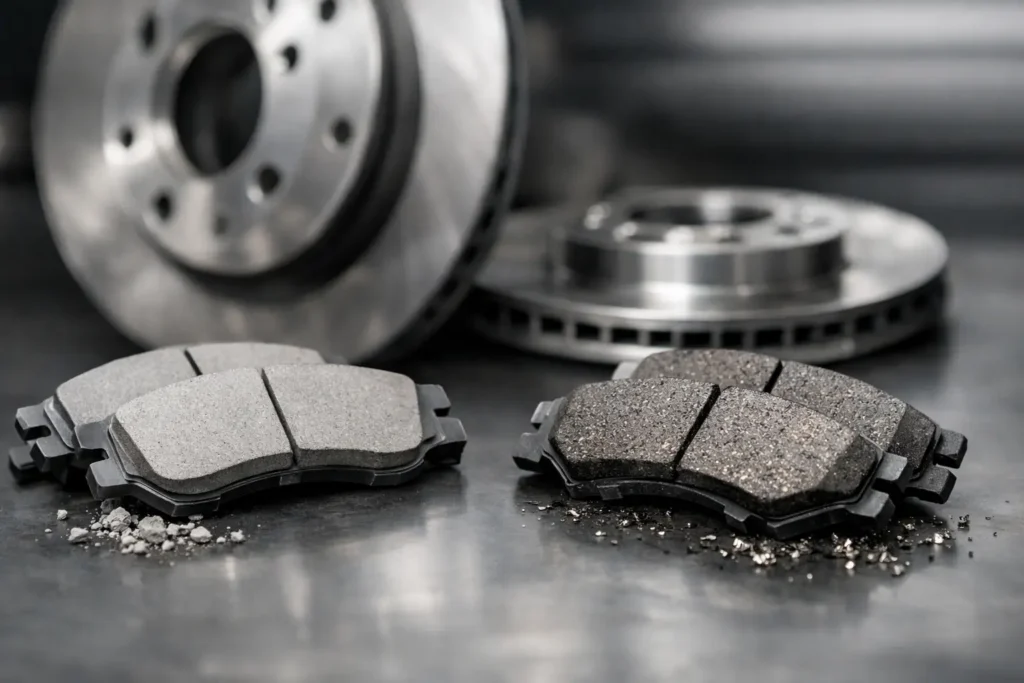
You usually notice bad brake pad choice after the install, not before. The brakes squeal every morning, the wheels turn black in a week, or the pedal feels different than you expected. That is why ceramic brake pads vs semi metallic is not just a parts question. It is a daily driving question, especially if you want your vehicle to stop well, stay quiet, and hold up through real Midwest use.
At a glance, ceramic pads are usually quieter and cleaner, while semi-metallic pads often offer stronger bite and better heat handling. But that simple answer leaves out the part that actually matters – how you drive, what you drive, and what you expect from the brakes.
Ceramic brake pads vs semi metallic: the basic difference
Ceramic brake pads are made with dense ceramic compounds and fine copper or similar fibers blended into the material. Semi-metallic pads use a higher percentage of metal, commonly steel, iron, or copper, mixed with fillers and friction materials. That change in makeup affects how the pad grips the rotor, how much heat it can deal with, and how it sounds and wears over time.
For everyday drivers, the biggest difference is feel. Ceramic pads tend to deliver smooth, predictable braking with less noise and less visible dust. Semi-metallic pads often feel a little more aggressive on the first bite, especially under harder braking, but they can be noisier and rougher depending on the vehicle.
Neither one is automatically better. A good brake job is about matching the pad type to the vehicle and how it is used.
Where ceramic pads make the most sense
Ceramic pads are a strong fit for many passenger cars, crossovers, and lighter SUVs that spend most of their time commuting, running errands, and handling normal day-to-day traffic. If you care about quiet operation and cleaner wheels, ceramic is usually the first option people are happiest with.
They also tend to wear evenly and offer a refined feel at the pedal. That matters more than people think. A brake system that feels smooth and consistent gives the driver confidence, especially in stop-and-go traffic.
Another reason people like ceramic pads is dust. Brake dust is normal with any pad, but ceramic pads generally produce finer, lighter-colored dust that is less noticeable on wheels. If you have alloy wheels and hate seeing them coated after a few days of driving, that can be a real benefit.
Ceramic pads also tend to stay quieter. They are less likely to squeal under normal use, though no brake pad is completely noise-proof. Rotor condition, hardware, lubrication, and installation quality still matter.
When semi-metallic pads are the better call
Semi-metallic pads shine when the vehicle works harder. If you drive a pickup, tow a trailer, carry heavy loads, or spend a lot of time braking on hills or at highway speeds, semi-metallic pads are often the more durable choice.
The metal content helps them handle heat better, and heat is one of the biggest factors in brake performance. Brakes convert motion into heat. The harder the vehicle works, the more heat the system has to manage. A pad that handles heat well is less likely to fade when pushed.
That is one reason many trucks and performance-oriented vehicles come with semi-metallic pads from the factory. They can provide stronger initial bite and more confidence under demanding use. For some drivers, that firmer, more immediate response is worth the extra dust and occasional noise.
In Minnesota driving, where people deal with sudden stops, slush, and a lot of seasonal temperature swings, some drivers also prefer the more aggressive feel of a semi-metallic pad. It can feel more planted under heavier vehicles, especially when road conditions are less than ideal.
Noise, dust, and rotor wear
This is where the choice gets real for most people.
Ceramic pads usually win on noise. They are known for quiet performance, especially when installed properly with quality shims and hardware. Semi-metallic pads are more likely to make some noise, particularly in colder weather or when braking lightly.
Dust is similar. Ceramic pads are generally cleaner. Semi-metallic pads often create darker, more visible dust because of the higher metal content.
Rotor wear is a little more nuanced. Semi-metallic pads can be harder on rotors, especially if the pad is aggressive and the rotor is lower quality. Ceramic pads are often easier on rotors in normal driving, but that does not mean they are always the longer-lasting option in every situation. If a ceramic pad is used in an application that really needs more heat tolerance, performance can suffer and wear patterns can change.
This is why pad choice should never be made on pad material alone. The full brake setup matters – pad quality, rotor quality, hardware condition, and whether the caliper is working correctly.
Stopping power: which one brakes better?
People often ask which pad stops better, but the honest answer is that both can stop very well when they are the right fit for the vehicle.
In normal everyday driving, a quality ceramic pad can provide excellent braking. For many drivers, it will feel smooth, controlled, and more than strong enough. In heavier-duty situations, semi-metallic pads often have the edge because they maintain performance better as heat builds.
That does not mean ceramic pads are weak. It means they are usually tuned more for comfort, quiet operation, and balanced daily use. Semi-metallic pads are more likely to favor bite, heat resistance, and heavier-duty braking demands.
If you are comparing a cheap ceramic pad to a premium semi-metallic, or the other way around, material alone will not tell the whole story. Quality matters. There is a big difference between a well-made pad and the cheapest thing in a box.
Ceramic brake pads vs semi metallic for trucks and SUVs
This is where drivers need to be careful about assuming quieter always means better.
For a small sedan or compact crossover, ceramic pads are often a smart choice. For a half-ton truck, larger SUV, or a vehicle that hauls gear, the answer depends more on use. If the vehicle is basically a commuter and family hauler, ceramic may still work very well. If it tows, carries weight, or sees hard braking regularly, semi-metallic is often the safer recommendation.
That is especially true when the brake system is already being asked to do more work because of vehicle size. A heavier vehicle builds more momentum, and the brakes need to manage that weight every time you slow down.
Drivers with light trucks sometimes choose ceramic because they want less noise and dust, then end up unhappy with the feel under load. Others switch from semi-metallic to ceramic and love the quieter operation because they rarely tow. It really does come down to use.
What matters more than the pad material alone
A lot of brake complaints blamed on pad type are actually installation or hardware problems. If the rotors are worn badly, the slides are sticking, or the hardware was reused when it should have been replaced, even a good pad can feel poor.
Proper brake service means checking rotor condition, measuring wear, servicing the caliper hardware, and making sure everything moves the way it should. That is how you get brakes that are done right, not just installed quickly.
It also helps to look at the driver’s priorities honestly. Some people want quiet and clean above all else. Some want stronger bite. Some want the best value over the life of the repair. Those are all reasonable goals, but they do not point to the same answer every time.
So which should you choose?
If your vehicle is a daily driver and you want low noise, less dust, and a smooth feel, ceramic pads are often the better fit. If your vehicle is heavier, sees tougher use, or you want stronger performance under heat and load, semi-metallic pads are often the smarter choice.
For most drivers, the right answer is not about picking the “best” brake pad material. It is about picking the right one for the way the vehicle is actually driven. Honest advice matters here more than marketing claims.
That is why a good brake recommendation should sound simple and specific, not like a sales pitch. The best pad is the one that fits your car, your driving, and your expectations – and keeps you confident every time you hit the pedal.