

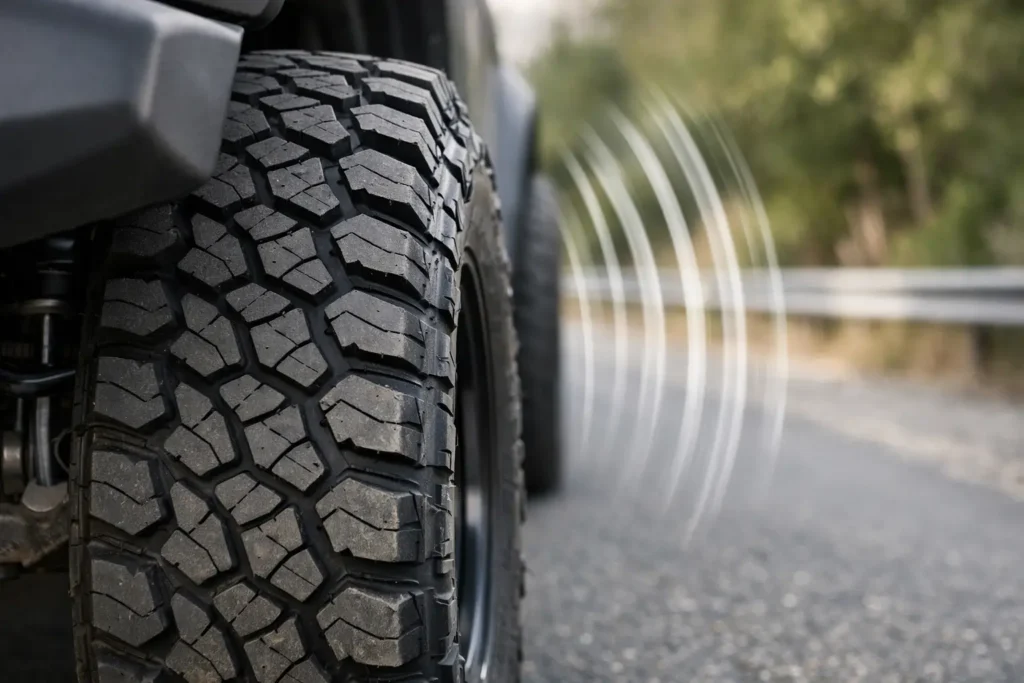
You notice it right away when you switch tires – maybe a little more hum on dry pavement, maybe not much at all, but enough to make you ask: are open shoulder tires louder? The honest answer is yes, sometimes they are. But that simple answer misses the part that matters most to real drivers around Minnesota: why they can be louder, when that extra noise is minor, and why open shoulder tires are often still the better choice for traction and control.
At Joe’s All Tire, or All Tire as a lot of locals call us, this comes up all the time with cars, SUVs, and pickups. People want a tire that’s quiet, sure, but they also want to get through summer downpours, slushy intersections, and snow-packed roads without feeling like the vehicle is skating around. That’s where tread design matters more than a quick yes-or-no answer.
Why open shoulder tires can sound louder
An open shoulder tire has larger gaps and more open space along the outer edge of the tread. That design helps the tire move water, slush, and loose snow out from under the contact patch faster. It also gives the tread more biting edges, which can improve grip when the road surface isn’t ideal.
The trade-off is that more open tread blocks can create more air movement and more pattern noise as the tire rolls. That’s the hum or growl some drivers hear, especially at neighborhood speeds and on certain pavement types. If you’ve ever driven from older rough asphalt onto fresh blacktop and noticed the sound change instantly, you’ve already seen how much the road itself affects tire noise.
So yes, open shoulder tires can be louder than a more closed-shoulder touring tire. But louder doesn’t always mean loud, and it definitely doesn’t mean every open shoulder tire is noisy.
Are open shoulder tires louder on every vehicle?
Not necessarily. Tire noise depends on more than the shoulder design.
The vehicle matters. A heavy pickup, a body-on-frame SUV, or a vehicle with less sound insulation will usually let you hear more tread noise than a quiet sedan or crossover. The size matters too. A larger, wider tire often makes more noticeable road noise than a smaller passenger-car tire, even if the tread design is similar.
Then there’s inflation pressure, alignment, suspension condition, and wheel bearing condition. We’ve seen plenty of drivers blame the tread pattern when the real issue was uneven wear, cupping, or a worn component making the tire sound worse than it should. That’s why a good tire recommendation isn’t just about the catalog. It’s about looking at the whole vehicle.
Why we still recommend open shoulder tires so often
Here in Minnesota, we get a real mix of driving conditions. Dry summer pavement is only part of the story. We also deal with standing water, spring melt, early ice, packed snow, and months of roads that are somewhere between wet and slick. That’s exactly why we strongly recommend open shoulder tire designs for many cars and trucks.
The extra void area at the shoulder helps evacuate water and slush. That can mean better resistance to hydroplaning in heavy rain and more usable traction when the weather turns ugly. For a lot of drivers, that safety benefit outweighs a modest increase in road noise.
This is where cheap tire shopping can get people in trouble. A tire that seems quiet and inexpensive in the store can disappoint fast when the roads turn wet or snowy. That’s part of the thinking behind our attitude at All Tire: This Isn’t Walmart. People come to us because they want honest advice and a tire setup that’s right for how they actually drive, not just whatever looks cheapest on a screen.
If you’re weighing quiet ride versus better all-around traction, that’s a good time to ask questions. Just tap the blue phone call button in the lower left corner – we’re just a call away.
When the noise difference is small
A lot of drivers expect an open shoulder tire to sound dramatically louder, but often the difference is pretty mild. Modern tire brands do a much better job than they used to with pitch sequencing, tread block arrangement, and casing design. In plain English, that means some open shoulder tires are engineered to keep the traction benefits without getting overly noisy.
This is especially true in quality all-season and all-weather tires built for everyday use. They may have open shoulder features for wet and winter performance, but they don’t sound anything like an aggressive off-road tire. That’s an important distinction. An open shoulder design is not the same thing as a mud-terrain tread.
For most daily drivers, the real-world difference is often a low background hum, not a harsh roar. Some people won’t notice it at all once the radio is on or once they’re at highway speed.
When open shoulder tires really do get louder
There are situations where the extra noise is more obvious. The first is when the tread is more aggressive overall, especially on light trucks and SUVs. Bigger tread blocks and wider voids usually mean more sound.
The second is uneven wear. Even a decent tire can get noisy if it’s not rotated on time, if the alignment is off, or if worn shocks let the tread bounce and chop against the road. Drivers sometimes replace a noisy set and think the tread pattern alone caused it, when the wear pattern was the bigger issue.
The third is road surface. Minnesota roads aren’t all the same, and coarse pavement can make almost any tire louder. On those surfaces, an open shoulder tire may stand out more.
Are open shoulder tires louder than closed shoulder tires enough to matter?
For some drivers, yes. For others, not really.
If you drive mostly on smooth highways, care a lot about cabin quiet, and rarely deal with deep water or winter mess, a more closed-shoulder touring tire may be a better fit. That’s the kind of driver who’ll notice and care about the last bit of ride comfort and reduced road hum.
But if you want stronger wet-road confidence, better slush evacuation, and a tire that handles changing Minnesota conditions better, open shoulder tires usually make more sense. A slight increase in noise is often the price of better grip where it counts.
That’s the part national chains and big-box stores don’t always slow down and explain. The best tire isn’t the quietest one in every case. It’s the one that matches your vehicle, your roads, and your priorities.
What drivers should listen for
A normal open shoulder tire sound is usually a steady hum that rises and falls with speed. What you don’t want is a droning, roaring, helicopter-like sound, or a vibration through the seat or steering wheel. That can point to irregular wear, balancing problems, alignment issues, or even a bearing problem rather than just normal tread noise.
When someone comes in saying, “These tires are loud,” the right next step isn’t guessing. It’s checking wear patterns, balance, inflation, and the rest of the suspension and rotating components. That’s how you separate normal tread sound from a problem that needs attention.
If you like learning how tread design affects road feel and seasonal traction, our knowledge center has more practical tire information for everyday drivers at www.joesalltire.com/knowledge-center/.
The best way to choose
If you’re shopping tires and wondering whether open shoulder tires are too loud for your taste, don’t get stuck on one trait by itself. Look at the whole picture: how much highway driving you do, how much winter driving you do, how sensitive you are to road noise, and whether your vehicle tends to amplify tread sound.
A good tire recommendation should feel specific, not generic. That’s one of the advantages of working with an owner-led local shop. Joe is on-site daily, and that matters. Instead of getting pushed toward whatever moves inventory fastest, you can get a straight answer based on how you actually use your vehicle.
For a lot of Minnesota drivers, open shoulder tires hit the right balance. Maybe they give up a little quietness compared with the softest touring tire, but they give back confidence in rain, slush, and snow. That’s usually a trade worth making.
The right tire shouldn’t just sound good on paper. It should feel right when the weather turns, the roads get ugly, and your family is in the vehicle.