

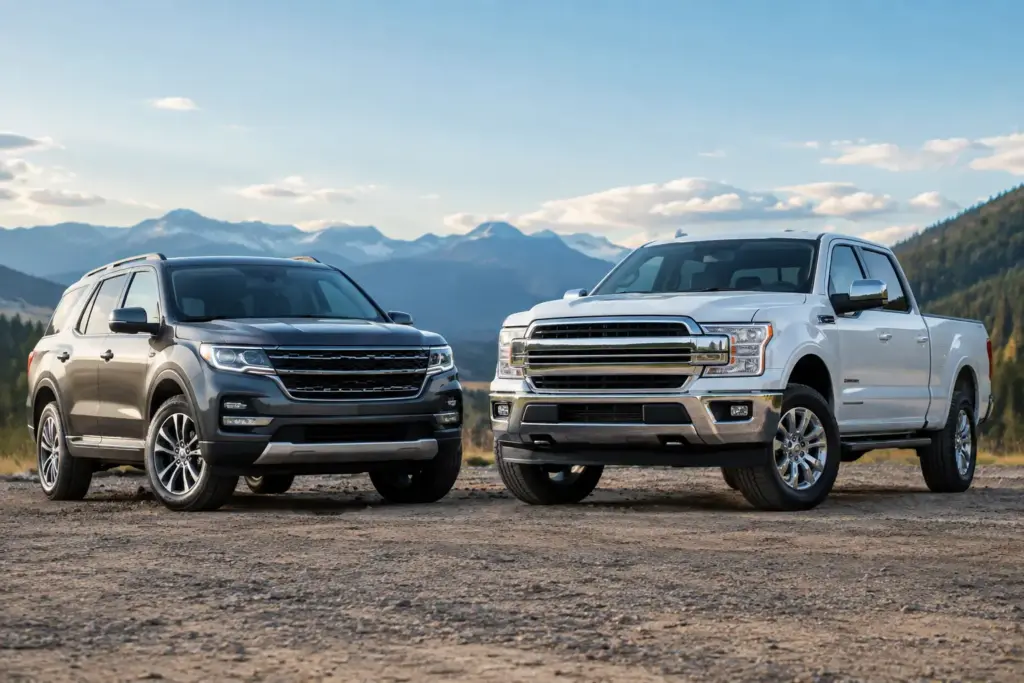
A half-ton pickup can look like it needs the toughest tire on the rack. An SUV with a camper hitch can seem like it needs the same thing. But when people ask about ply ratings on SUV’s and 1/2 ton trucks, the right answer usually starts with another question: what do you actually carry, tow, and drive through?
A heavier-rated tire can add useful strength and stability, especially for towing, hauling, gravel roads, and rough job sites. It can also make an unloaded vehicle ride firmer, cost more, and be unnecessary if the truck spends most of its time commuting around Elk River with an empty bed. At Joe’s ALL TIRE, we look at the vehicle, the door-jamb tire label, and how you use it before recommending anything. That’s how ALL TIRE helps customers get a tire that fits the job instead of just the toughest-looking sidewall.
What a Ply Rating Really Means
Ply rating is an old-school term that still appears in tire conversations. Years ago, it referred more directly to the number of fabric layers in a tire’s construction. Modern tires use much stronger materials, so a tire marked with a ply rating does not necessarily contain that literal number of plies.
Today, ply rating is mainly a strength category tied to load-carrying capability and inflation pressure. You’ll often see it paired with a load range, such as Load Range C, D, or E. The letter matters because it tells you more about the tire’s intended workload than a marketing label like “heavy duty.”
For many SUVs and half-ton trucks, the choice is between passenger-style tires, XL tires, and LT tires. LT stands for Light Truck. LT tires are built for tougher service and commonly come in higher load ranges, but they are not automatically the right upgrade for every vehicle.
Ply Ratings on SUVs and 1/2-Ton Trucks: The Practical Difference
A typical SUV that carries kids, groceries, and occasional sports gear may be happiest with the tire size and load rating specified on its door placard. Many crossovers and family SUVs use P-metric tires or extra-load, often called XL, tires. These can provide good handling, comfort, fuel economy, and all-season performance without the weight and stiffness of an LT tire.
A half-ton truck is more variable. One owner may use it as a daily driver and tow a small utility trailer twice a year. Another may pull a camper every weekend, load a bed full of materials, or spend long days on unpaved roads. Those trucks can need very different tires even if both say 1500 or 1/2-ton on the badge.
Here’s the general breakdown:
- Standard-load or P-metric tires are often appropriate for lighter-duty SUV and truck use when they meet the manufacturer’s required load capacity.
- XL tires offer added load capability and firmer sidewalls without moving all the way into many LT tire designs.
- Load Range C LT tires can be a sensible option for some half-ton owners who regularly tow or haul but don’t need the stiffness of a higher range.
- Load Range D and E LT tires are built for higher-pressure, heavier-duty work. They can add stability under a loaded trailer or payload, but they may ride noticeably firmer when the truck is empty.
The key is that the tire must meet or exceed the required load capacity for your vehicle. A higher ply rating doesn’t give your truck permission to exceed its payload, axle, or towing limits. Those limits are set by the truck itself, not just the tires.
Why “More Ply” Isn’t Always Better
There’s a common belief that a 10-ply-rated tire is automatically safer than a 6-ply-rated tire. It’s safer only when it’s correctly matched to the vehicle and the work being done.
A heavier LT tire can feel more planted when towing. Its stronger casing may resist sidewall flex and handle sharp gravel or job-site debris better. That can be a real advantage for a truck hauling equipment or a camper through northern Minnesota.
On the other hand, the same tire can make an unloaded half-ton ride rougher. It may weigh more, which can affect acceleration and fuel economy, and it can change how the truck responds over frost heaves and broken pavement. Some owners also notice that an overly stiff tire doesn’t provide the wet-road or winter confidence they expected if the tread design is wrong for the conditions.
That last part matters here. Minnesota gets months of snow, ice, slush, and hard summer rain. Sidewall strength is only one piece of traction. At ALL TIRE, we strongly recommend open shoulder tire designs for cars and trucks whenever the application allows. Open shoulders give water, slush, and loose material more places to clear out of the tread. That improves traction in heavy rain and can help winter driving, especially compared with a closed-shoulder design that packs up more easily.
M&S marking is common, but it doesn’t automatically mean a tire is equally capable in every winter condition. If you drive early mornings, rural roads, or unplowed areas, tread design and compound matter just as much as the load range printed on the sidewall.
Start With the Door Sticker, Not the Tire Rack
The tire information label inside the driver’s door area is the first place to look. It identifies the factory tire size, recommended cold inflation pressure, and vehicle load information. That label is a better starting point than guessing from the truck’s appearance or copying what another owner installed.
Then consider your real use. Do you tow a boat a few weekends each summer? Carry tools every day? Pull a travel trailer across the state? Drive gravel roads? Those details decide whether an XL tire, Load Range C, or a more heavy-duty LT option makes sense.
If you’re trying to balance towing confidence with a comfortable daily ride, it helps to have someone look at the whole setup. ALL TIRE can check the tire size, load index, tread wear, inflation needs, and the condition of the tires already on your vehicle. Mobile visitors can tap the blue call button in the lower left corner to ask questions or schedule an appointment.
Inflation Pressure Matters as Much as the Rating
One mistake we see often is treating maximum sidewall pressure as the everyday target. The number molded onto the sidewall is generally the maximum cold pressure for that tire, not necessarily the pressure your SUV or truck should always run.
For normal driving, begin with the vehicle manufacturer’s cold-pressure recommendation. If you install a different type of tire, especially an LT tire, proper pressure may need to be adjusted based on the tire’s load capacity and the vehicle’s actual weight. Too little pressure builds heat and wears shoulders. Too much pressure can create a harsh ride and wear the center of the tread faster.
For towing or heavy loads, pressure may need to change within safe limits. That’s a good time for a direct conversation instead of a quick guess at the gas station. Proper inflation also helps TPMS sensors do their job and reduces the chance of uneven wear or heat-related tire trouble.
Don’t Forget the Wheels and the Full Setup
Tires work as part of a system. Before moving to a higher load range, confirm that the wheels are rated for the load and pressure involved. Check the spare, too. A mismatched or under-rated spare can become a problem when you need it most.
It’s also worth checking suspension condition, alignment, and wheel balance. A truck with worn steering or suspension parts can still wander or vibrate with expensive new tires. Bigger, heavier tires can make those issues more noticeable.
This Isn’t Walmart. Buying the heaviest tire available without checking the application can be just as wasteful as choosing a tire based only on price. The right tire is the one that carries the load safely, handles Minnesota weather well, wears evenly, and fits how you actually use the vehicle.
FAQ
Does a 10-ply tire actually have 10 plies?
Usually, no. Modern “10-ply rated” tires use stronger materials than older designs. The term now describes a strength and load category more than a literal count of layers.
Should I put Load Range E tires on my half-ton truck?
It depends on your hauling, towing, and road conditions. Load Range E can be useful for frequent heavy work, but it may be unnecessarily stiff for a lightly used daily driver. Your door label and actual load needs should guide the decision.
Are LT tires better than passenger tires on an SUV?
Not automatically. LT tires can offer stronger sidewalls and higher load capacity, but they can also ride firmer and weigh more. Many SUVs perform best with the tire type the manufacturer specified, or an appropriate XL option.
Will higher ply ratings improve winter traction?
Not by themselves. Winter traction depends heavily on tread design, rubber compound, tire condition, and proper inflation. An open shoulder design can be especially helpful for clearing rain, slush, and loose snow.
Can I inflate my tires to the maximum pressure on the sidewall?
Not as a default. Use the vehicle’s recommended cold pressure unless a qualified tire professional has advised a different pressure for your specific tire and load situation. Maximum sidewall pressure is not a universal everyday setting.
Before your next towing trip, long commute, or winter season, take a close look at the tires carrying your family and cargo. A quick, honest fitment conversation now can save you from a rough ride, uneven wear, or a tire that simply isn’t built for the job.
