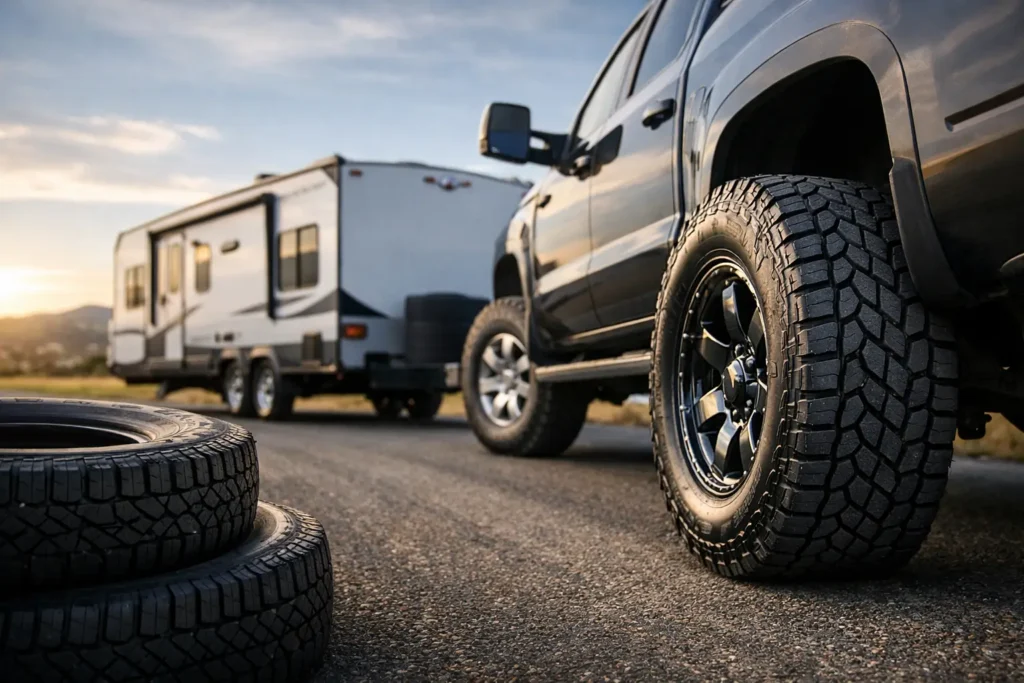
Hooking up a camper or trailer changes your truck fast. The steering feels heavier, stopping distances grow, and any weakness in your tires shows up in a hurry. If you are shopping for the best truck tires for towing, the right answer is not the most aggressive-looking tread or the cheapest all-season on the rack. It is the tire that matches your truck, your trailer weight, and the roads you actually drive.
This is where a lot of truck owners get tripped up. They focus on brand first and skip the basics that matter more – load capacity, sidewall stability, heat control, and wet traction. A tire can look tough and still be the wrong choice for pulling a boat, enclosed trailer, work trailer, or fifth wheel.
What matters most in the best truck tires for towing
When a truck is towing, the tires are carrying more weight, dealing with more heat, and working harder in corners and crosswinds. That means the best towing tire usually needs a stronger carcass, a stable tread pattern, and the right inflation support for the load.
Load rating is the first thing to get right. If the tire does not have enough capacity for the truck and trailer setup, nothing else matters. Many half-ton and three-quarter-ton trucks can use different load ranges depending on trim, axle setup, and tire size. A tire with the proper load range helps the truck stay more settled under tongue weight and keeps the sidewall from feeling too soft.
Tread design matters too, but not always in the way people think. For towing, you want a tread that stays predictable on dry pavement, holds its line in rain, and does not squirm under load. Around Minnesota, wet roads and long stretches of snow and ice are part of real truck use, not edge cases. That is one reason we strongly recommend
open shoulder tire designs when they fit the vehicle and the job. Open shoulder designs help clear water better in summer rain and improve traction in slush and winter conditions, which is a real benefit for trucks that tow through changing seasons.
All-terrain vs highway tires for towing
This is where it depends on how you use the truck.
If your truck spends most of its time on pavement and tows a trailer on highways, a highway-terrain tire is often the better choice. These tires usually run quieter, track straighter, and wear more evenly. They also tend to feel more planted at speed, which matters when a trailer starts pushing the truck around in wind or traffic.
If you tow from job sites, gravel roads, campgrounds, or boat landings, an all-terrain tire may be the smarter fit. A good all-terrain tire gives you better bite off pavement without giving up too much stability on-road. The key is choosing one that is built for real truck duty, not just looks. Some all-terrain tires have soft tread blocks that feel vague under a heavy load. Others are designed with stronger support and do much better when towing.
For many local drivers, the sweet spot is a mild all-terrain with an open shoulder design. That gives better foul-weather traction and useful off-pavement grip without the road noise and wandering that come with very aggressive mud-terrain patterns.
Why sidewall strength and load range matter
A lot of towing complaints start with the wrong sidewall, not the wrong brand. If the truck feels loose, sways more than expected, or seems to move around on the highway, a softer P-metric tire may be part of the problem.
Many trucks that tow do better on LT tires, especially when loads are frequent or heavy. LT tires are built for more demanding service, with stronger construction and higher load-carrying ability. That can improve control and reduce the mushy feeling some drivers notice when towing with lighter-duty tires.
That does not mean every truck needs the stiffest tire available. Going too heavy on load range for a lightly used truck can make the ride harsher and hurt everyday comfort. The best choice is the one that fits your actual towing habits. A truck that tows a utility trailer twice a month has different needs than one pulling a camper every weekend.
The best truck tires for towing are also good in the rain
A towing tire has to do more than carry weight. It has to stop and steer confidently on wet pavement. That part gets overlooked until the first hard rain with a trailer behind the truck.
This is another reason tread pattern matters so much. Open shoulder designs help evacuate water and keep the contact patch working instead of skating across standing water. For truck owners in places with long winters and plenty of shoulder-season rain, that added wet traction is not a small detail. It is part of staying in control when the truck is already working harder.
If you want to understand more about how
tread design affects traction, wear, and seasonal performance, our tire knowledge center covers those basics in plain language at www.joesalltire.com/knowledge-center/.
Tire categories that usually work well for towing
There is no single perfect tire for every truck, but a few categories consistently make sense.
A highway all-season light truck tire is often the best fit for drivers who tow on-road and want steady handling, lower noise, and good tread life. It is a practical choice for commuting during the week and hauling on weekends.
A mild all-terrain LT tire works well for truck owners who need year-round traction, occasional gravel-road confidence, and dependable towing manners. This is often the most balanced option for Minnesota use because it handles mixed conditions better than a basic highway tire while staying more civilized than a very aggressive off-road design.
A severe-snow-rated all-terrain can make sense if the truck tows through winter and cannot sit when roads get ugly. That said, winter traction always involves trade-offs. Some tires with excellent snow grip may wear faster or feel louder on dry pavement. The right call depends on how much winter towing you actually do.
What to avoid when shopping
The biggest mistake is buying by appearance. A deep, aggressive tread can look ideal for a truck, but if it is noisy, unstable, or weak in the rain, it may be a poor towing tire.
The second mistake is ignoring age and inflation. Even the best tire will not tow well if it is underinflated or already aging out. Heat is tough on tires, and towing creates more of it. Proper pressure is not optional.
The third mistake is mixing priorities. Some drivers ask for a tire that tows heavy, rides like a luxury SUV, lasts forever, stays quiet, digs through mud, and costs as little as possible. Real tires involve trade-offs. Honest advice means narrowing the choice to what matters most for your truck.
Brand matters, but fit matters more
There are plenty of strong tire brands making good truck tires. Premium brands often offer better consistency, better wet braking, and stronger long-term performance. Still, the name on the sidewall is only part of the story.
A well-matched mid-priced tire can outperform a premium tire that is wrong for the job. That is why a good recommendation starts with your truck size, trailer type, payload, road use, and whether you tow year-round. The best truck tires for towing are the ones that fit your real workload, not somebody else’s internet debate.
How to choose the right tire for your truck
Start with the truck’s door placard, current tire size, and how much you really tow. Then consider whether your miles are mostly highway, mixed driving, or rougher surfaces. After that, think about weather. In this part of the country, summer rain and winter traction both deserve real weight in the decision.
If you tow often, ask about LT options and tread designs with strong wet-road performance. If you only tow occasionally, a well-chosen highway or mild all-terrain tire may be all you need. If your current truck feels unsettled with a trailer, do not assume the hitch is the only issue. Tire construction, inflation, alignment, and even
wear pattern can all affect how the truck behaves.
That is also why local, hands-on advice still matters. Joe at All Tire sees how these tires perform on real trucks, in real weather, with real towing setups – not just in a catalog description. Done right, the tire choice makes the truck calmer, safer, and easier to live with every day, not just on towing weekends.
The best towing tire is not the one with the loudest marketing. It is the one that keeps your truck steady when the trailer is loaded, the road is wet, and you still have a long drive home.