

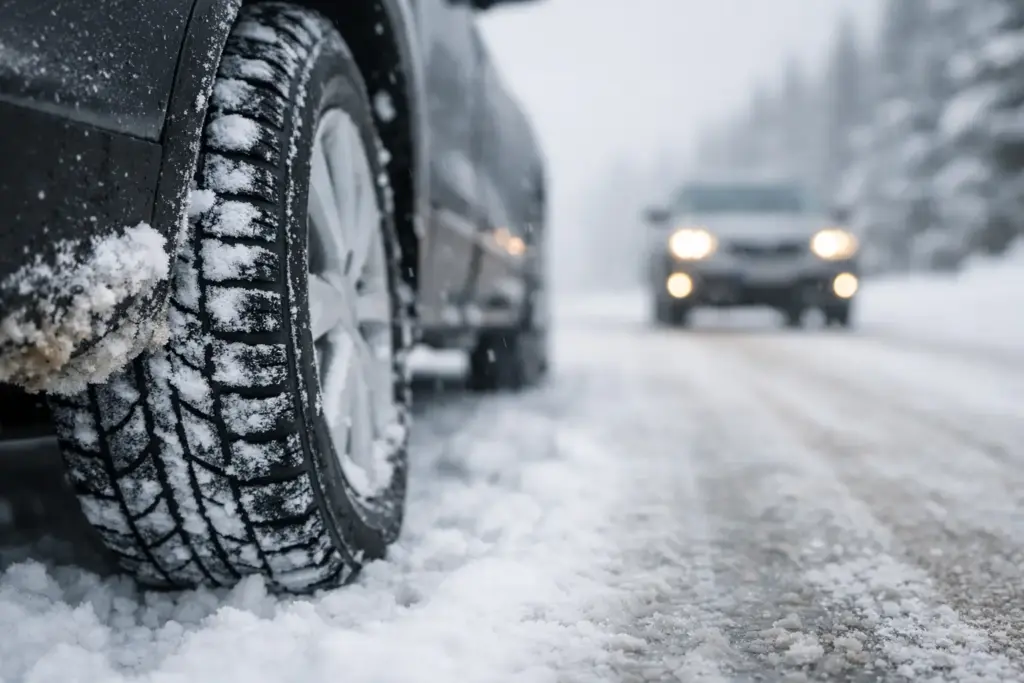
A tire can earn strong all-season reviews, wear well, and feel quiet on dry pavement – then leave you sliding through an Elk River intersection after the first real snowfall. That’s why the phrase “all season ratings not good in snow” comes up so often among Minnesota drivers. It isn’t that every all-season tire is unsafe. It’s that the all-season label can promise more than a particular tire design, rubber compound, and driver’s winter conditions can deliver.
For much of the country, an all-season tire is a practical year-round choice. Here, we deal with roughly five months where snow, ice, slush, cold pavement, and wet roads can all show up in the same week. That changes what a tire needs to do.
Why all-season ratings aren’t good in snow for every driver
A customer rating often reflects a driver’s personal experience, vehicle, route, and expectations. Someone who drives mostly plowed highways in light snow may call an all-season tire great in winter. A commuter leaving before roads are treated, a family driving neighborhood streets, or a pickup owner traveling rural roads may have a completely different experience on that same tire.
Tire ratings also tend to combine several qualities: ride comfort, tread life, noise, dry handling, rain traction, fuel economy, and value. A tire can score highly overall while being only average in deep snow or on ice. If winter grip is the safety issue you’re trying to solve, don’t let a broad star rating make that decision for you.
The bigger factor is temperature. As the pavement gets cold, the rubber in many all-season tires becomes firmer. A firmer tread doesn’t conform to the road surface as well, which reduces grip. That’s especially noticeable during braking and turning, when you need traction most.
“All-season” isn’t the same as “winter-ready”
The all-season name describes a compromise tire. It’s intended to cover a wide range of normal conditions without requiring seasonal changes. That convenience makes sense for plenty of drivers, but it doesn’t mean every all-season tire is built for serious snow and ice.
A standard M+S marking means the tread design meets a basic mud-and-snow classification. It does not mean the tire has passed the same snow-traction testing as a dedicated winter tire. If snow performance matters, look for the Three-Peak Mountain Snowflake symbol. That mark indicates the tire meets a recognized snow-traction standard.
Even then, the symbol doesn’t turn every tire into a full winter tire. Some all-weather tires carry it and offer a meaningful step up from standard all-seasons. Dedicated winter tires still use a softer cold-weather compound and more aggressive biting edges that generally provide stronger grip in sustained Minnesota winter conditions.
There’s a real trade-off. Winter tires usually wear faster in hot weather and may feel less sharp on dry summer roads, which is why they should come off once the season is over. All-weather tires offer a middle ground for drivers who want stronger winter capability without keeping a second set. A quality all-season can still be the sensible answer for a lower-mileage vehicle, a driver who can stay home in bad weather, or a vehicle used mainly on well-maintained roads.
Tread design matters more than the label
Two tires can both say all-season and behave very differently in snow. At Joe’s All Tire, known locally as ALL TIRE, we look past the sidewall description and talk through the tire’s actual tread design, your vehicle, and the roads you drive.
One feature we strongly recommend discussing is an open shoulder design. Open shoulder tires use wider channels around the outer part of the tread to move water and slush away from the contact patch. That helps reduce the chance of hydroplaning in summer rain and helps clear slush and loose snow in winter. For cars and trucks that see Minnesota’s changing conditions, that extra evacuation space can make a practical difference.
An open shoulder alone isn’t the entire answer. Snow traction also depends on tread depth, siping, the small cuts that create extra biting edges, groove placement, and rubber compound. But a tire with a more closed, highway-focused shoulder may trap slush and water where you need the tread to clear itself. It may ride quietly and last a long time, yet still feel less confident when conditions get messy.
That’s why a low-priced tire with a generic all-season claim isn’t automatically a value. Tires are part of your braking system every time the road gets slick. This Isn’t Walmart: choosing the right tire and having it mounted, balanced, and inspected correctly matters more than grabbing the lowest sticker price.
Know when your all-season tires are no longer enough
You don’t always need to replace a set simply because snow is coming. But you should pay attention to the signs that your current tires aren’t meeting your needs. Think about whether your vehicle struggles to start moving on packed snow, takes longer to stop at familiar intersections, or pushes wide during slow turns. Those are real-world signals, not something to shrug off because the tires still have some tread left.
Tread depth is especially important. As grooves get shallower, they can’t move water, slush, and snow as effectively. The legal minimum tread depth is not the same thing as a smart winter safety threshold. A tire that is acceptable for summer driving can be far less capable once snow starts filling the grooves.
Here are four situations where it’s worth having the tires checked before winter gets serious:
- Your tires are nearing the end of their usable tread life, even if they aren’t fully worn out.
- You drive early mornings, nights, back roads, or routes that aren’t cleared right away.
- Your vehicle has trouble gaining traction, stopping, or maintaining control in ordinary snow.
- You depend on your vehicle for work, school drop-offs, medical appointments, or transporting family.
Alignment, tire pressure, and drivetrain also affect winter behavior. An underinflated tire can feel vague and wear unevenly. An alignment issue can reduce the usable contact patch. Four-wheel drive helps you get moving, but it doesn’t give you four-wheel stopping power. Every vehicle still depends on its tires to brake and turn.
Choose for your actual Minnesota driving
The right question isn’t, “Are all-season tires bad?” The honest question is, “Are these particular all-season tires enough for the way I drive?” A driver in town with flexible plans may need something different from someone commuting from Zimmerman, Big Lake, or St. Cloud before sunrise every day.
Bring in the details that matter: your vehicle, tire size, mileage, whether you have a second set of wheels, where you travel, and how much winter driving you can realistically avoid. Joe is on-site daily, and ALL TIRE will give you a direct recommendation instead of pushing a one-size-fits-all answer.
If you’re unsure whether your current tires can handle another Minnesota winter, we can help you sort it out before the next storm makes the choice for you. Mobile visitors can tap the blue call button in the lower left corner to ask questions or schedule an appointment.
Frequently Asked Questions
Are all-season tires safe in snow?
They can be safe in light snow and on maintained roads when they have good tread depth and are properly inflated. Their limits show up sooner on packed snow, ice, deep snow, and very cold pavement compared with all-weather or dedicated winter tires.
What does the Three-Peak Mountain Snowflake symbol mean?
It means the tire meets a recognized snow-traction testing standard. It’s a useful mark to look for when winter performance is a priority, though dedicated winter tires typically remain the stronger option for severe ice and snow.
Why do my all-season tires feel worse after a few winters?
Tread depth drops over time, reducing the tire’s ability to clear slush and create traction. Rubber also ages and can become less flexible. Uneven wear, incorrect pressure, or alignment problems can make the loss of grip more noticeable.
Do I need winter tires if my vehicle has all-wheel drive?
All-wheel drive helps send power to the wheels for acceleration, but it doesn’t replace tire grip when braking or cornering. Winter-capable tires still matter for control, especially on ice and packed snow.
Can ALL TIRE tell me if I need new tires before winter?
Yes. We can inspect tread depth, wear patterns, tire condition, and your current setup, then explain whether your tires are still serviceable or whether a different tire type fits your driving needs. A straightforward inspection now can save you from finding out your tires are short on traction at the worst possible time.
Good winter driving starts before the forecast turns ugly. Give your tires an honest look while you still have time to choose what keeps you and your passengers moving safely.
