

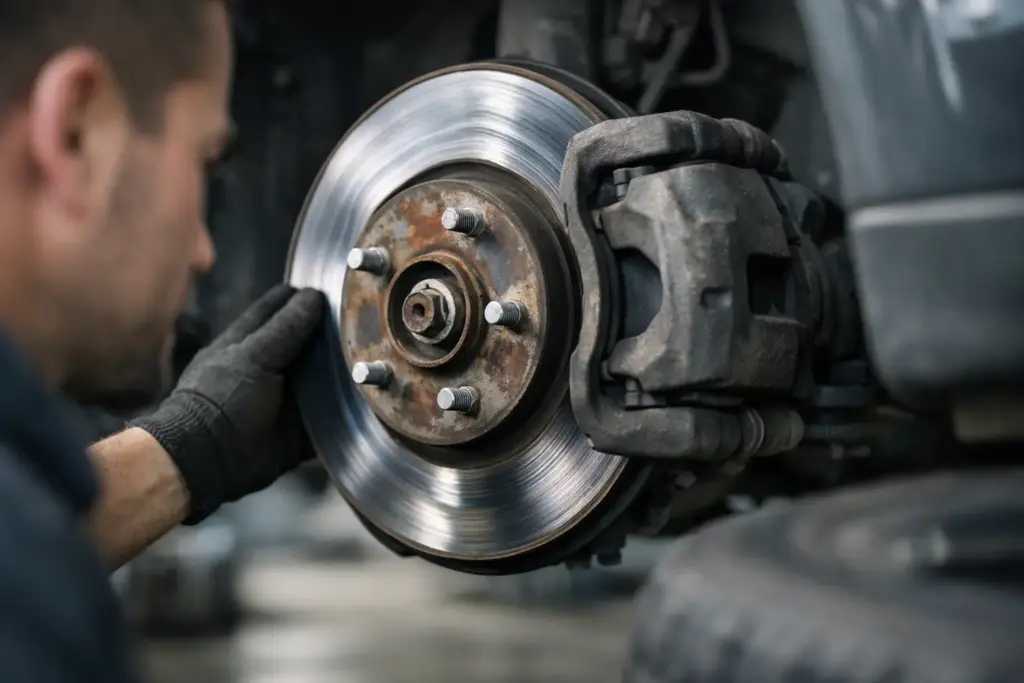
A brake pedal that pulses under your foot can turn an ordinary stoplight into a question mark. Rotor warping symptoms often show up as a steering wheel shake, a vibrating pedal, or a rhythmic thump when you brake. If it only happens while slowing down, especially from highway speed, your brake system deserves a closer look before the problem becomes more expensive or less safe.
At Joe’s ALL TIRE, we know drivers usually don’t need a lecture on brake parts. They need a straight answer: Is this safe to drive, what caused it, and what needs to be fixed? ALL TIRE checks the full braking system so you aren’t replacing parts based on a guess.
What Rotor Warping Symptoms Feel Like
The classic complaint is a pulsing brake pedal. As you press the pedal, it may feel as if it moves gently up and down beneath your foot. That sensation can range from barely noticeable to strong enough to make the whole vehicle shudder.
You may also feel the vibration in the steering wheel. This is especially common when the front brake rotors are involved because the front wheels transfer that movement through the steering system. A shake that appears only during braking, then goes away once you’re off the pedal, points more toward brake components than tires or wheel balance.
Common rotor warping symptoms include:
- A brake pedal that pulses, surges, or feels uneven during a stop
- Steering wheel shake while braking, often more noticeable at 45 mph or higher
- Vibration through the seat, floor, or vehicle body when slowing down
- A repeated scraping, groaning, or thumping noise as the brakes are applied
- Longer stopping distances or a vehicle that feels less controlled during a hard stop
Not every brake vibration means the rotors are the problem. A loose suspension component, worn wheel bearing, tire issue, or improperly torqued wheel can create similar symptoms. That’s why a real inspection matters more than a quick diagnosis from across the parking lot.
Are Brake Rotors Actually “Warped”?
The term “warped rotors” is common, but it doesn’t always describe what technicians find. In many cases, the issue is rotor thickness variation. That means the rotor isn’t the same thickness all the way around, so the brake pads grab harder in certain spots during each rotation. The driver feels that inconsistency as pedal pulsation or vibration.
Rotor runout can also be part of the story. Runout means the rotor doesn’t spin perfectly true. Rust, debris, or uneven contact between the rotor and hub can cause it. Over time, this can contribute to uneven pad material transfer and brake pulsation.
The distinction matters because the right repair depends on the condition of the parts. Some vehicles need new rotors and pads. Others may have a mounting, hub, caliper, or wheel torque issue that needs to be corrected so the new brake parts don’t develop the same symptoms again.
What Causes Rotor Problems?
Heat is a major factor. Brakes convert vehicle speed into heat, and repeated hard braking can push rotor temperatures high. Towing, hauling, driving steep grades, stop-and-go traffic, and aggressive braking all add stress. Minnesota winters add another challenge: road salt and moisture can create rust buildup between the hub and rotor, affecting how the parts sit together.
Uneven lug nut torque is another preventable cause. When wheels are installed with an impact gun and no final torque check, some lug nuts can be far tighter than others. That uneven clamping force may contribute to rotor runout and vibration. Precision matters here, even though it’s a small detail most drivers never see.
Other common contributors include:
- Brake pads worn too low or worn unevenly
- A sticking brake caliper that keeps one pad dragging on the rotor
- Rust or corrosion on the rotor mounting surface
- Cheap or poorly matched brake parts that can’t handle the vehicle’s normal use
- Overheating brakes after repeated heavy stops
A new set of pads alone isn’t always the answer. If the rotor surface is uneven, glazed, cracked, too thin, or heavily rusted, installing pads without addressing the rotor can leave you with the same shake right away.
When a Brake Shake Needs Immediate Attention
A mild pedal pulse doesn’t automatically mean your brakes are about to fail. Still, don’t put it off for months. Brake vibration can worsen, wear pads unevenly, and make it harder to judge your vehicle during an emergency stop.
Schedule an inspection soon if the vibration is getting stronger, appears at lower speeds than before, or comes with noise. Treat it as more urgent if your vehicle pulls sharply to one side, the brake warning light comes on, you smell something burning near a wheel, or the pedal feels soft or sinks farther than normal.
If you’re unsure whether you’re feeling a brake issue, tire vibration, or a wheel bearing problem, we can sort it out without making you chase parts. Mobile visitors can tap the blue call button in the lower left corner to ask questions or schedule an appointment.
How ALL TIRE Diagnoses Brake Vibration
A proper brake inspection starts with listening to when and how the vibration happens. Does it occur only while braking? Does the steering wheel shake, or do you feel it more in the seat? Does it happen after driving for a while, after rain, or at a certain speed? Those details help narrow down the source.
Then the vehicle needs a hands-on inspection. At ALL TIRE, that can include checking pad thickness and wear patterns, rotor condition, caliper operation, wheel bearing play, suspension components, and the rotor-to-hub mounting surface. Measuring rotor thickness and runout gives a clearer answer than simply calling every brake shake “warped rotors.”
Joe works on-site and gives direct recommendations based on what the vehicle actually needs. If replacement is the safe, sensible repair, we’ll explain why. If there’s another cause behind the vibration, we’ll tell you that too. This isn’t Walmart – brake work isn’t the place for rushed service or parts swapping without finding the root problem.
Can You Prevent Rotor Warping Symptoms?
You can’t avoid normal brake wear, but you can reduce the chance of uneven rotor wear and recurring vibration. Give your brakes a little breathing room after a long downhill stretch or repeated hard stops. Avoid riding the brakes, especially when towing or carrying a heavy load. If you smell hot brakes, pull over safely and let the system cool rather than continuing to push it.
Have wheels installed and torqued correctly whenever tires are rotated or replaced. That matters year-round, but especially for drivers who switch between summer and winter wheel sets. When brake pads are due, don’t wait until they’re grinding. Early service can protect the rotors and give you more repair options.
And if a vibration appears right after tire work, don’t assume it has to be a tire balance problem. It could be wheel torque, a wheel seating issue, or a brake concern that became noticeable at the same time.
Frequently Asked Questions
Can I drive with warped rotors?
You may be able to drive short distances with mild vibration, but it isn’t a problem to ignore. Have it checked soon, particularly if the shake is worsening, the vehicle pulls, or braking feels inconsistent.
Why does my steering wheel shake only when I brake?
That pattern often points to a front brake rotor or front brake system issue. However, worn suspension parts, wheel bearings, and wheel installation problems can contribute, so an inspection is the smart next step.
Will new brake pads fix a pulsating pedal?
Usually not by themselves. If rotor thickness variation, runout, corrosion, or a caliper problem caused the pulse, those issues need to be addressed along with the pads.
Can overtightened lug nuts cause brake vibration?
They can contribute to rotor runout when tightening force is uneven. Proper wheel installation and torque are small details that help protect both the wheel assembly and brake service.
How quickly should I get brake vibration checked?
Make the appointment soon, even if the vehicle still stops. A clear diagnosis now can prevent uneven pad wear, added rotor damage, and a brake concern from becoming a bigger repair later.
