
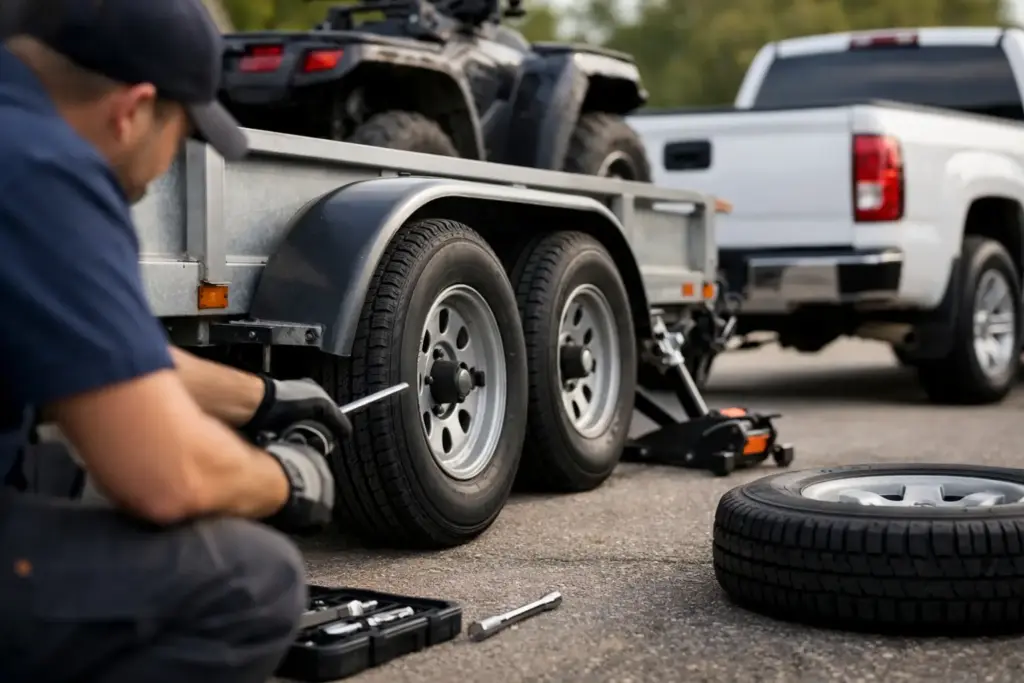
A trailer tire can look fine in the driveway and still become the reason a weekend at the lake, a work delivery, or a camping trip stops on the shoulder. When you need trailer tire repair in Elk River, the first question isn’t just whether the tire is losing air. It’s whether the tire, wheel, and trailer are still safe to tow.
At Joe’s ALL TIRE, we take trailer tire concerns seriously because trailers often sit for long stretches, carry heavy loads, and don’t always get the same regular attention as the vehicle pulling them. A slow leak, a damaged tread area, a bent wheel, or a vibration can turn into a much bigger problem once you’re moving at highway speed. Joe and the team inspect the issue, explain what they find plainly, and recommend the repair or replacement that makes sense.
Trailer Tire Repair in Elk River Starts With a Real Inspection
Not every flat trailer tire needs to be replaced, but not every damaged tire can safely return to service either. The location and size of the injury matter, along with the tire’s age, tread condition, load rating, and the condition of the wheel.
A proper inspection can uncover problems that aren’t obvious from the outside. Air loss may come from a repairable tread-area puncture, but it can also come from a leaking valve stem, corrosion where the tire seals to the wheel, a cracked wheel, or damage caused by running the tire low. If a tire has sidewall damage, severe weather cracking, separated tread, or has been driven flat, replacement is usually the safer call.
That honest distinction matters. ALL TIRE isn’t here to sell you something you don’t need, but we won’t tell you a questionable tire is safe just to get you back on the road quickly. Your trailer may be carrying equipment, a boat, ATVs, materials, or your family’s camping gear. It deserves a repair decision that accounts for the load behind your truck.
Why Trailer Tires Fail So Often
Trailer tires live a tougher life than many people realize. They may only travel a few hundred or thousand miles per year, yet they can age quickly from sun exposure, changing Minnesota temperatures, and long periods of sitting in one spot. They also tend to carry a high percentage of their rated load.
Common causes of trouble include underinflation, overloaded trailers, aging rubber, impact damage, and mismatched tires. A trailer can also wear tires unevenly when an axle is out of alignment, a wheel bearing is worn, suspension parts are failing, or one brake is dragging. Replacing a tire without checking why it wore out can leave you with the same problem on the next trip.
Pay attention if your trailer starts pulling differently, bouncing, shaking, or leaving uneven wear across the tread. Those symptoms may point to more than a tire issue. ALL TIRE can check wheel balance, wheel condition, bearings, and other basic trailer safety concerns while addressing the tire problem.
The Right Tire Depends on the Trailer and the Load
A small utility trailer used for occasional yard work doesn’t need the same tire setup as an enclosed contractor trailer or a camper headed up north every other weekend. The right choice depends on your trailer’s axle rating, how much weight you carry, how far you tow, and how long the trailer sits between uses.
Start with the information printed on the trailer’s tire placard and the current tire sidewall. Tire size, load range, maximum inflation pressure, and speed rating all matter. Don’t assume that a tire with a similar physical size has the same carrying capacity. Trailer tires are built for trailer service, and their construction and ratings should match the job.
If you’re unsure whether your current tires are correctly rated, bring the trailer in or call before your next haul. We’ll help you sort out what fits your trailer and your budget without burying you in sales talk. If you’re on a mobile device and need an answer before loading up, tap the blue phone call button in the lower left corner to ask questions or schedule an appointment.
For the vehicle doing the towing, tire choice matters too. Elk River drivers deal with roughly five months of snow and ice, plus summer downpours that can make a loaded trailer harder to control. For cars and trucks, ALL TIRE strongly recommends open shoulder tire designs when they fit the vehicle and driving needs. Those channels help move water away in rain and can provide better traction in winter conditions. The trailer needs proper tires, but the tow vehicle needs dependable traction and braking control as well.
Don’t Ignore Tires That Look Old but Still Have Tread
Tread depth is only one part of the picture. Trailer tires can look nearly new because they haven’t traveled many miles, while the rubber has still hardened or cracked from age and exposure. Check the sidewalls and tread grooves for fine cracks, bulges, cuts, or signs that the tread is separating from the casing.
You should also check tire pressure before every towing trip, including the spare. Trailer tires can lose pressure while sitting, and even a small drop can create excess heat under load. Use the pressure specified for the trailer tire and load setup, not the pressure listed on your truck’s door sticker.
It also helps to keep an eye on how your trailer is stored. Parking on a dry surface, covering tires when practical, and moving the trailer occasionally can reduce some of the stress that comes with long-term sitting. These habits don’t make old tires new again, but they can help you catch trouble before it becomes a roadside emergency.
Repairs, Replacements, and Work Done Right
At ALL TIRE, the goal is simple: get the trailer safe to tow without making the decision harder than it needs to be. We can inspect the tire, assess whether a proper repair is appropriate, mount and balance replacement tires, address valve stem and wheel concerns, and look into vibration issues that may be affecting the trailer.
Sometimes the most affordable answer is a single tire repair. Other times, replacing a pair makes more sense because the remaining tire is old, mismatched, or worn. It depends on the condition of both tires, the axle setup, and what the trailer is used for. We’ll explain the tradeoff so you can make a clear decision.
Cheap shortcuts can feel tempting when the trailer is only used a few times a year. But a tire failure can damage the trailer, delay your plans, and create a dangerous situation for everyone around you on the road. This Isn’t Walmart – at ALL TIRE, the focus is on quality work, the right fit, and advice from people who want you to come back because we earned your trust.
FAQ
Can a trailer tire be repaired after a nail puncture?
It may be repairable if the damage is in an appropriate tread area and the tire passes a full inspection. Damage near the sidewall, significant internal damage, or a tire that was driven low usually calls for replacement.
Should I replace both trailer tires if only one is damaged?
Not always. If the other tire is the same size, age, condition, and load rating, a single replacement may be reasonable. If both tires are aging, cracked, worn differently, or mismatched, replacing the pair is often the smarter move.
How often should I check trailer tire pressure?
Check pressure before every trip, especially after the trailer has been parked for weeks or months. Check the spare at the same time. Proper inflation is one of the biggest factors in preventing heat-related tire failures.
Why is my trailer shaking even though the tires look okay?
The cause could be tire balance, a bent wheel, uneven tire wear, a worn wheel bearing, axle alignment, or suspension trouble. A quick inspection can identify where the vibration is coming from before it gets worse.
Can ALL TIRE help with trailer wheel bearings?
Yes. Along with trailer tire service, ALL TIRE can inspect wheel-related issues and provide wheel bearing replacement or repack service when needed. Bearing concerns should be handled before a long towing trip.
Before you hook up for the next job, getaway, or trip to the cabin, give your trailer tires the same attention you give the vehicle pulling them. A straightforward inspection now can save you from a much harder stop later.