

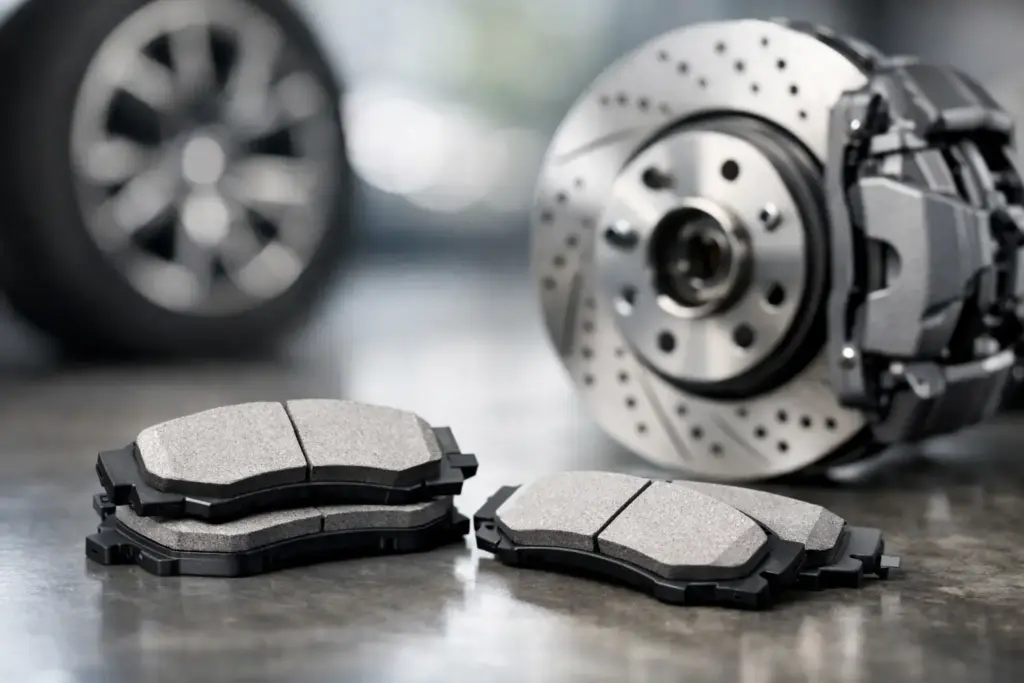
A brake job can look simple from the outside: replace the pads, drive away, and forget about it. But the material chosen for those pads affects noise, dust, pedal feel, rotor wear, and how your vehicle handles daily stops. Ceramic brake pads are a popular option for commuters, family vehicles, and drivers who are tired of black brake dust coating their wheels. They can be an excellent choice, but they are not automatically the right choice for every vehicle or every Minnesota driving habit.
At Joe’s ALL TIRE, Joe looks at the whole brake system before recommending parts. ALL TIRE’s approach is straightforward: figure out what’s worn, explain what fits the vehicle and how it’s used, then do the repair right. Brakes aren’t a place for guesswork or parts chosen only because they’re on the lowest shelf.
What ceramic brake pads are made to do
Ceramic pads use a dense friction material that typically includes ceramic fibers, bonding agents, and small amounts of metal. They are designed to create consistent, smooth braking while producing less visible dust than many conventional semi-metallic pads.
For a typical Elk River-area commuter, that usually means quieter operation around town, cleaner wheels, and dependable everyday stopping power. Ceramic pads also tend to stay fairly stable across normal operating temperatures, so they work well for school drop-offs, highway traffic, errands, and regular commuting.
The word “ceramic” can make the pads sound like a premium answer to every brake problem. It isn’t that simple. Pad material is only one piece of a safe brake repair. Rotor condition, caliper movement, brake hardware, fluid condition, and proper installation all matter just as much.
The real benefits of ceramic brake pads
The biggest reason many drivers choose ceramic pads is refinement. They’re generally quieter than other common pad materials when paired with good rotors and correctly serviced hardware. That matters when a vehicle has started making an embarrassing squeal every time it rolls up to a stop sign.
They also make less dark dust. No brake pad is dust-free, but ceramic material often leaves a lighter, less noticeable residue on alloy wheels. If you wash your vehicle regularly or simply don’t want fresh-cleaned wheels turning black after a few days, that’s a practical advantage.
Ceramic pads can also be easier on rotors in normal daily driving. That does not mean rotors last forever, and it does not mean every rotor can be reused. A rotor that is too thin, deeply grooved, warped, rust-damaged, or heat-spotted needs proper attention. Installing quality pads on a bad rotor doesn’t create a quality brake job.
For many cars, crossovers, and light-duty SUVs, ceramic pads provide a comfortable balance of quiet operation, clean wheels, and reliable street performance. That balance is why they’re often worth considering when the vehicle is used primarily for regular driving.
Where ceramic pads may not be the strongest choice
Every pad material has a trade-off. Ceramic pads may not offer the same aggressive initial bite as a well-matched semi-metallic pad in some heavy-duty situations. If you haul a trailer, carry heavy loads in a pickup, drive steep grades often, or work your brakes hard, a different pad formulation may be the better fit.
Minnesota weather matters, too. Winter starts, road salt, slush, and long periods between drives can affect the entire braking system. Pads can be in decent shape while caliper slides bind, hardware corrodes, or rotor surfaces rust unevenly. Those problems can cause pulling, noise, vibration, or uneven pad wear regardless of whether the pads are ceramic or semi-metallic.
Some vehicles also have specific factory brake characteristics. A pad that is great on one sedan may feel different on another vehicle because of its rotor design, caliper setup, weight, and electronic braking system. That’s why a one-size-fits-all recommendation is usually a shortcut, not honest advice.
A good brake job is more than new pads
When brake pads are replaced correctly, the work should start with an inspection, not a parts invoice. The technician should verify pad thickness and wear pattern, inspect the rotors, check caliper operation, look at the slides and hardware, and pay attention to brake hoses and fluid when the condition calls for it.
A vibration during braking may point to rotor issues, but it can also be related to suspension, wheel bearing, or tire concerns. A grinding sound can mean pads are worn through, though debris or damaged hardware can make noise too. Brake warning signs deserve a real diagnosis because the safest repair depends on the actual cause.
At ALL TIRE, the goal is to prevent a return visit for a problem that should have been caught the first time. That means using the correct parts, servicing the components around them, and checking the work before the vehicle goes back on the road. This Isn’t Walmart – you should not have to wonder whether the person servicing your brakes took the time to look beyond the pad box.
Signs it’s time to have your brakes checked
Brake pads don’t always announce themselves with a loud squeal. Some wear quietly, while others create a change in feel long before they make noise. It’s smart to schedule an inspection if you notice four or more of these signs:
- A squealing, scraping, grinding, or clicking sound when braking
- A steering wheel shake or pedal pulsation during stops
- A soft pedal, unusually long stopping distance, or a pedal that feels different
- Pulling to one side when the brakes are applied
- A brake warning light, burning smell, or wheel that feels unusually hot
- Visible brake dust that suddenly becomes much heavier on one wheel
Don’t wait for grinding if you can help it. Once the friction material is gone, metal can contact the rotor and turn a simpler pad replacement into a more involved repair.
If your vehicle is making noise, vibrating, or simply doesn’t feel right under braking, getting a straight answer early can save money and stress. Mobile visitors can tap the blue call button in the lower left corner to ask questions or schedule an appointment – we’re just a call away.
Ceramic vs. semi-metallic pads
Semi-metallic pads are another common choice, and they have their place. They often provide strong stopping performance, especially for heavier vehicles and demanding driving. The trade-off can be more brake dust, more noise, and potentially greater rotor wear depending on the parts used.
Ceramic pads tend to favor quiet, clean, smooth daily driving. Semi-metallic pads can favor harder use and stronger response under load. Neither is automatically superior. The right choice depends on the vehicle, the quality of the parts, and whether you’re commuting in a crossover, running a work truck, towing a trailer, or driving a performance-oriented vehicle.
Price should be part of the conversation, but it should not be the entire conversation. The cheapest brake quote can leave out rotor replacement, quality hardware, caliper service, or the labor needed to correct the underlying issue. A fair brake repair tells you what is being replaced, why it is needed, and what you can reasonably expect afterward.
FAQ
Are ceramic brake pads worth the extra cost?
They often are for daily drivers that value quiet braking and cleaner wheels. If your vehicle tows, hauls, or sees harder braking, another pad type may offer better value and performance for your use.
Do ceramic brake pads wear out faster?
Not necessarily. Pad life depends on driving habits, vehicle weight, traffic, rotor condition, and how well the calipers and hardware are functioning. Ceramic pads can last a long time in normal commuting use.
Can ceramic brake pads be installed on any vehicle?
Many vehicles can use them, but the correct pad depends on the brake system and the vehicle’s intended use. It’s worth confirming fitment and choosing a quality formulation instead of assuming ceramic is always the upgrade.
Why do new ceramic brake pads still make noise?
New pads may make noise if the rotors are damaged, hardware is worn, caliper slides are sticking, or the parts were not installed and bedded in correctly. Noise should be diagnosed rather than ignored.
Should rotors be replaced with ceramic brake pads?
Sometimes. Rotors should be measured and inspected. If they are below specification, badly rusted, grooved, heat-damaged, or uneven, replacement is usually the right call. If they are in good condition and meet specifications, the technician can explain the appropriate option.
Your brakes should feel predictable every time you leave the driveway, whether you’re heading across Elk River, loading up for work, or bringing the family home after a snowy evening. When something changes, trust the feeling and have it checked before a small concern becomes a bigger repair.
