

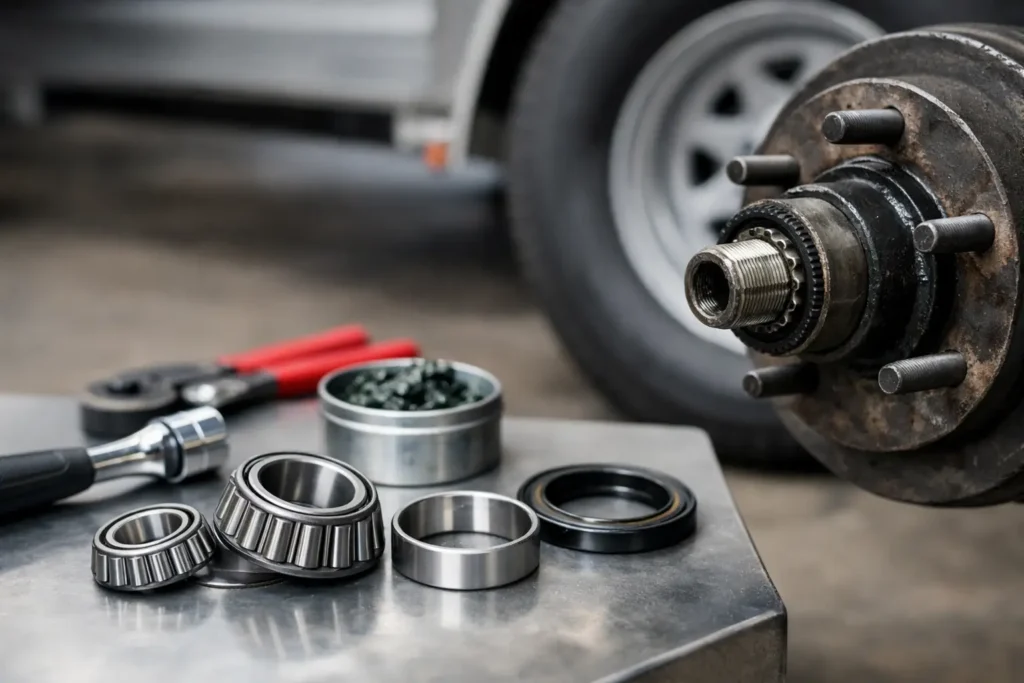
A trailer bearing usually doesn’t give you much warning. One minute everything feels normal, and the next you’ve got heat at the hub, grease where it shouldn’t be, or a trailer sitting on the shoulder when you were supposed to be at the lake, jobsite, or cabin. That’s why this guide to trailer wheel bearings matters – not as a theory lesson, but as the kind of maintenance that prevents expensive breakdowns and keeps your trailer safe behind the vehicle.
What trailer wheel bearings actually do
Trailer wheel bearings let the wheel and hub rotate smoothly around the spindle. They carry weight, handle heat, and deal with road shock every mile the trailer moves. When they’re in good shape and properly lubricated, you don’t think about them. When they’re worn, dry, contaminated, or adjusted wrong, they can fail fast.
That failure can start small. Maybe the hub runs hotter than the others. Maybe there’s a humming sound, a little wobble, or grease leaking past the seal. Left alone, those early signs can turn into damaged races, a ruined spindle, or a wheel-end failure that costs far more than routine service ever would.
On a boat trailer, utility trailer, enclosed trailer, or camper, the principle is the same. Bearings live a hard life. Water, long storage periods, heavy loads, and highway heat all work against them.
Why trailer bearings get ignored
A lot of trailer owners don’t put many miles on their trailer in a year, so bearing service gets pushed down the list. That’s understandable, but time matters too. Grease breaks down. Moisture gets in. Seals age out. A trailer can sit all winter in Minnesota, then get hooked up for the first busy weekend of spring as if nothing changed.
That’s where people get caught. Low mileage doesn’t always mean low risk. In fact, trailers that sit for long periods can have their own problems because lubrication settles, condensation builds, and seals harden with age.
If you’re not sure whether your trailer is due, we can usually help you make that call pretty quickly. Just tap the blue phone call button in the lower left corner – we’re just a call away.
A practical guide to trailer wheel bearings maintenance
The right service interval depends on how the trailer is used. A light utility trailer used occasionally around town won’t have the same needs as a boat trailer backing into water or a cargo trailer running long highway trips with heavy loads.
As a general rule, trailer bearings should be inspected and serviced on a regular schedule, not just when there’s a problem. Many owners are well served by an annual inspection, especially before peak towing season. For some trailers, repacking every year makes sense. For others, the interval may stretch longer if usage is light and conditions are clean and dry. Boat trailers are their own category and usually need closer attention because water intrusion is always a concern.
This is one of those jobs where “it depends” is the honest answer. The trailer’s age, weight, storage conditions, mileage, and bearing design all matter.
Signs your trailer wheel bearings need attention
You don’t have to be a full-time trailer guy to catch early warning signs. A few things are worth watching before and after a trip.
If one hub feels noticeably hotter than the others, that’s a red flag. If you hear grinding, humming, or a rough rotational sound, that matters too. Uneven tire wear can sometimes point to hub or bearing issues, especially if there’s looseness in the wheel. Grease on the inside of the wheel often means the seal is leaking, and once the seal fails, contamination isn’t far behind.
Wheel play is another big one. If the wheel has movement it shouldn’t have, the bearings may be worn, damaged, or improperly adjusted. Some trailers also show vibration that gets blamed on tires when the real issue is in the hub.
That’s why a good inspection matters. At Joe’s All Tire, we see plenty of cases where a problem starts small and gets mistaken for something else. Honest diagnosis saves money.
What happens during a bearing repack
A proper repack is more than adding grease and hoping for the best. The hub comes apart so the bearings can be cleaned, inspected, and packed correctly with fresh grease. The races need to be checked. The seal needs attention. The bearing condition, the spindle condition, and the fit all matter.
This is where workmanship counts. If someone skips the inspection and just pushes in more grease, they can miss worn bearings, pitted races, heat damage, or a bad seal. That kind of shortcut is exactly how repeat problems happen.
At All Tire, the goal is simple – do it right the first time. This isn’t Walmart. Trailer wheel bearings are too important for rushed work or guesswork.
Repack or replace?
Sometimes a bearing repack is all that’s needed. If the bearings and races are clean, smooth, and undamaged, fresh grease and proper reassembly may be the right move. But if there’s pitting, discoloration, scoring, roughness, or signs of overheating, replacement is usually the smarter call.
Seals should never be treated like an afterthought. A bad seal can ruin otherwise decent bearings by letting grease out and water or dirt in. In many cases, replacing seals during service is part of doing the job properly.
There’s also a cost trade-off here. Repacking is usually less expensive upfront, but it only makes sense if the parts are still in good condition. Reusing damaged components to save a little money today can lead to a much bigger repair later.
Why DIY doesn’t always save money
Some trailer owners like doing their own maintenance, and there’s nothing wrong with that if they know the process and have the right tools. But bearing work is one of those jobs where small mistakes can turn into serious problems.
Over-tightening can create heat and premature wear. Under-tightening can leave play in the hub. Installing the wrong seal, contaminating fresh grease, mixing incompatible lubricants, or missing damage on the spindle can all come back to bite you. And if a bearing fails on the road, the damage often goes beyond the bearing itself.
If you’ve done this work before and you’re confident in it, fine. If not, having it inspected by a shop that deals with wheel-end issues regularly is often the cheaper route in the long run.
Seasonal towing in Minnesota changes the picture
Minnesota trailers deal with a rough cycle. Months of sitting in cold weather, then sudden summer use, then long highway pulls, rain, and occasional overloads. That pattern is tough on seals and lubrication.
Road conditions matter too. Potholes, rough shoulders, and water crossings all add stress. If you tow a camper north on weekends, pull a landscape trailer for work, or launch a boat repeatedly through the season, your bearings are working harder than the odometer alone might suggest.
People often think about tires first, and they should – they’re critical. The same common-sense approach applies there too. Around here, with months of snow, slush, and summer rain, open shoulder tire designs are a smart choice on cars and trucks because they help with water evacuation and traction. But on a trailer, good tires still can’t make up for neglected bearings. Both matter.
How to know it’s time to have your trailer checked
If you just bought a used trailer and don’t know the service history, assume the bearings need attention until proven otherwise. If the trailer has been sitting for a year or more, same story. If you’re planning a longer trip, hauling heavier than usual, or noticing hub heat, noise, grease leakage, or wheel play, don’t wait.
A pre-trip bearing inspection is a lot easier than roadside trouble. So is a routine repack compared to replacing a damaged hub or spindle after a failure.
That’s really the heart of any good guide to trailer wheel bearings. They’re easy to forget because you don’t see them every day, but they’re carrying the load every mile. Give them attention before they demand it for you.
If your trailer’s due for service or something feels off, getting an experienced set of eyes on it is the smart move. A quiet hub, proper adjustment, and fresh grease make for a better trip home than hoping for the best.
