A tire can look fine in the parking lot and still be the reason your vehicle feels loose in standing water or struggles to clear slushy snow. Knowing how to choose open shoulder tires gives Minnesota drivers a practical advantage because the outer edges of the tread play a major role in moving water, snow, and road grime away from the contact patch.
At Joe’s ALL TIRE, we often recommend open shoulder designs for cars and trucks because they can improve summer rain performance and give you more useful traction through the long stretch of snow and ice we see here. But an open shoulder alone doesn’t make a tire right for every vehicle. The right choice comes down to your tire size, driving habits, vehicle load, and the conditions you actually face.
What an open shoulder tire does
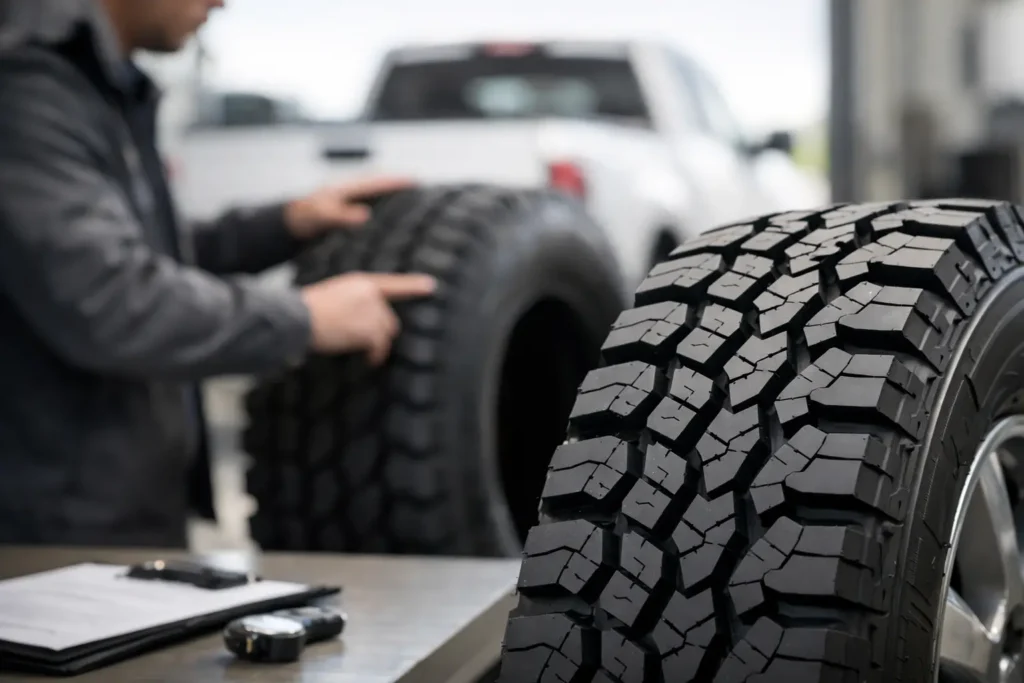
The shoulder is the outside edge of the tire tread. On an open shoulder tire, the tread blocks and grooves are designed with more space at that outer edge. Those open channels give water and loose snow a path to escape instead of getting trapped beneath the tire.
That matters most when roads are wet, slushy, rutted, or covered in loose snow. By clearing material away from the tread, an open shoulder design can help the tire maintain better contact with the road. It can also improve stability when you’re turning or changing lanes in heavy rain.
A closed shoulder tire has a more continuous rib or block pattern along the outer edge. That can be helpful for certain highway-focused tires because it may produce a quieter ride and a more planted steering feel on dry pavement. The trade-off is that a tightly closed edge may not evacuate water and snow as effectively as a well-designed open shoulder.
How to choose open shoulder tires for your vehicle
Start with the tire’s job, not just its appearance. A tire with aggressive-looking open shoulders may be a great fit for a pickup that sees gravel roads and winter weather, but it might be louder or ride differently than a commuter wants. On the other hand, a mild all-season tire with open shoulder grooves can be an excellent everyday choice for a family SUV or sedan.
Match the tire to your real driving conditions
If most of your miles are local commuting around Elk River, Zimmerman, Otsego, or the surrounding area, rain channels and snow-clearing ability should be high on your list. Minnesota doesn’t give drivers a short winter window. We get months of snow, ice, slush, and freeze-thaw cycles, often followed by heavy summer rain.
Look at where and when you drive:
- Daily commuters benefit from open shoulder grooves that help move water away during rain and reduce slush buildup.
- Families and SUV drivers should prioritize predictable wet braking, all-season capability, and a tire that performs consistently as temperatures change.
- Pickup and light truck owners may need a more open, durable pattern if they carry tools, tow trailers, travel gravel roads, or work in muddy conditions.
- Highway-focused drivers may prefer a less aggressive open shoulder design that balances wet traction with lower road noise.
- Drivers who regularly face unplowed roads should consider whether a dedicated winter tire is the safer choice, even if their all-season tires have open shoulders.
An open shoulder pattern is a strong feature, but it doesn’t replace the right tire category. A good all-season tire is built for broad everyday use. An all-weather tire generally offers stronger cold-weather capability. A dedicated winter tire is still the better option for drivers who need the most dependable traction on packed snow and ice.
Check the tire’s wet and winter priorities
Don’t buy based on the shoulder pattern alone. Look across the full tread design. The best-performing rain and snow tires combine open shoulders with wide circumferential grooves, well-placed sipes, and a rubber compound designed to stay flexible in colder temperatures.
Wide grooves help route water through the tire. Sipes are the small cuts in the tread blocks that create extra biting edges on snow and slick surfaces. The compound matters because hard rubber loses grip when temperatures fall. You want these features working together, not one aggressive-looking detail doing all the marketing.
For Minnesota drivers, we strongly favor tires that are honest about their purpose. If winter traction is a priority, ask whether the tire carries the Three-Peak Mountain Snowflake symbol. That designation can be useful when comparing an all-weather tire against a standard all-season model. It doesn’t mean the tire is identical to a dedicated winter tire, but it signals tested snow performance.
Keep ride, noise, and tread life in the conversation
More open tread space can bring real traction benefits, but there are trade-offs. Tires with larger tread blocks or wider shoulder voids may create more road noise than a touring tire. Depending on the design and your vehicle, they can also wear differently if rotations and inflation are ignored.
That doesn’t mean you should avoid them. It means the tire should fit the vehicle and the owner. A half-ton pickup, for example, may handle a more open all-terrain pattern well. A quiet sedan used for long freeway trips may be better served by a premium all-season tire that uses moderately open shoulders rather than an aggressive truck-style tread.
Pay attention to the mileage warranty, expected tread life, and ride goals. A longer warranty is useful, but it shouldn’t outweigh wet braking, snow traction, proper fitment, and a tire that can handle the work your vehicle does.
Don’t overlook size, load rating, and speed rating
The right tread pattern won’t help if the tire isn’t built for your vehicle. Your replacement tires should match the manufacturer-approved size, load capacity, and speed rating unless a knowledgeable tire professional has recommended a proper alternative.
This is especially important for trucks, SUVs, trailers, and vehicles that tow. A tire may fit on the wheel physically but still be wrong for the weight being carried. Under-rated tires can run hotter, wear faster, and compromise safety. Overly stiff or heavy-duty tires can also make an unloaded vehicle ride harshly.
When comparing options, bring up how you use the vehicle. Tell the shop if you tow a boat, carry construction equipment, make frequent highway runs, or have a long gravel driveway. Those details are more valuable than simply asking for the cheapest tire in a certain size.
Buy for the whole ownership experience
Tire choice isn’t finished when the new tires go on the vehicle. Mounting, balancing, inflation, alignment condition, and rotation intervals all affect how well an open shoulder tire performs and how long it lasts.
A good tire can develop irregular wear if the alignment is off or a worn suspension part lets the vehicle wander. Cupping, vibration, edge wear, and a pull to one side should be checked early. Waiting until the tire is damaged enough to be obvious usually costs more.
At ALL TIRE, Joe works on-site and gives direct recommendations based on the vehicle in front of him, not a sales quota. We’ll explain why one tread pattern makes sense and why another might not. This Isn’t Walmart. Tires are a safety decision, and the work needs to be done right the first time.
If you’re comparing tire options and aren’t sure how much open shoulder design you need, we’re happy to narrow it down based on your vehicle and driving routine. Just tap the blue phone call button in the lower left corner – we’re just a call away.
Signs your current tires aren’t handling weather well
You don’t need to wait for a flat or a failed inspection to start thinking about replacement. Wet-weather confidence often fades before a tire looks completely worn out.
Watch for these common signs:
- Your vehicle hydroplanes or feels unsettled through puddles that never used to bother it.
- Snow packs into the tread and the tires spin easily when starting from a stop.
- The outer edges are wearing unevenly or the tread blocks look feathered.
- Braking distances feel longer on wet pavement.
- You see cracks, bulges, exposed cords, or tread depth getting close to the wear bars.
A tread-depth check can tell you part of the story, but it can’t show every issue. Tire age, uneven wear, internal damage, and the condition of the rubber all matter. A quick professional inspection is often the easiest way to avoid guessing.
FAQ
Are open shoulder tires good for snow?
They can be. Open shoulder channels help clear loose snow and slush, which improves traction compared with a tighter tread design. For frequent ice, deep snow, or rural winter driving, dedicated winter tires may still be the stronger choice.
Are open shoulder tires louder than regular tires?
Some are, especially aggressive all-terrain and truck patterns. Many modern all-season tires use open shoulder grooves while staying comfortable and reasonably quiet. The specific tire design matters more than the feature by itself.
Do open shoulder tires help prevent hydroplaning?
They can help by giving water a route away from the tread, particularly when paired with wide main grooves. No tire eliminates hydroplaning risk, so slowing down in standing water is still essential.
Should I put open shoulder tires on a car or only a truck?
Cars, crossovers, SUVs, and trucks can all benefit from the right open shoulder design. A passenger-car all-season tire will use a different pattern than a truck tire, but both can provide better wet and slush evacuation.
How do I know which open shoulder tire is right for me?
Start with your vehicle’s approved size and ratings, then consider your normal roads, mileage, towing needs, ride preferences, and winter exposure. The right tire should make everyday driving feel more controlled when the weather turns, not just look more aggressive in the driveway.