
A lot of wet-weather tire trouble starts before the rain ever falls. The first hot stretch of summer shows up, roads get greasy from oil buildup, and suddenly a tire that felt fine in spring starts slipping at stoplights or feeling loose on the highway. That is why knowing how to prepare tires for summer rain matters more than most drivers think.
For most everyday drivers, this is not about turning your vehicle into a science project. It is about making sure your tires can move water, hold the road, and stop when traffic slows down fast. If you are trying to decide whether your current tires are still good enough for another season, that is the right time to ask. Just tap the blue phone call button in the lower left corner – we’re just a call away.
How to prepare tires for summer rain starts with tread
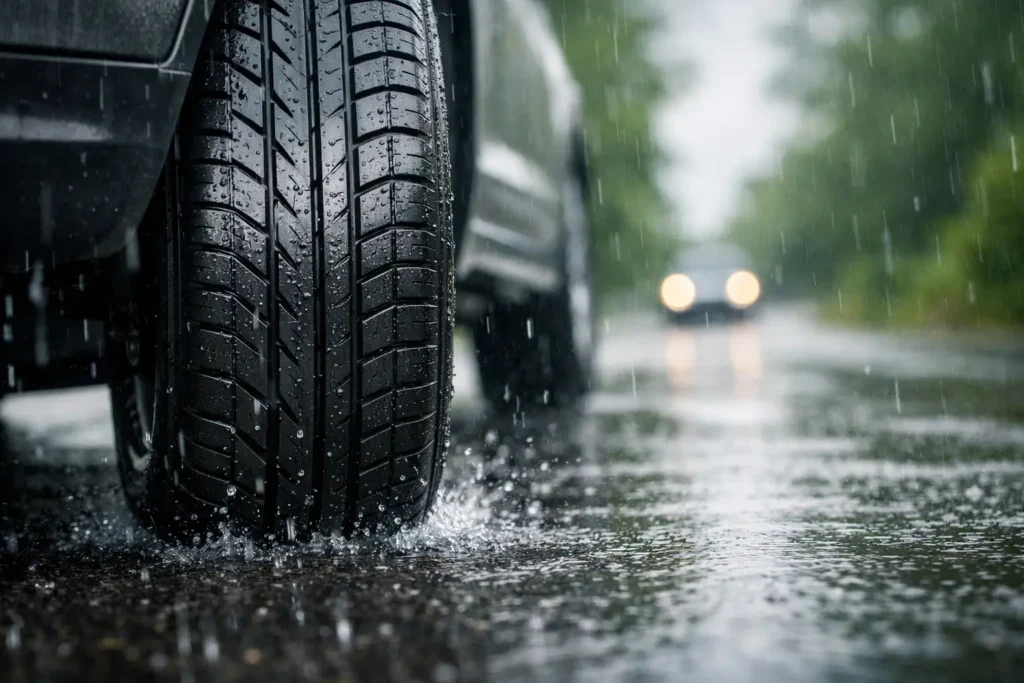
The biggest wet-road job your tire has is water evacuation. If the tread cannot move water out from under the contact patch fast enough, the tire starts to ride on top of the water instead of gripping the pavement. That is hydroplaning, and it can happen sooner than drivers expect when tread is low.
A tire may still be legal and still not be a good rain tire. That is an important distinction. Many drivers hear that 2/32 inch is the minimum tread depth, but wet traction starts dropping off well before that point. In the real world, once tread gets down around 4/32 inch, stopping distance in rain can increase quite a bit.
You can do a quick visual check at home, but an honest inspection is better. Uneven wear, shoulder wear, or cupping can make a tire perform worse in water even if one part of the tread still looks decent. At All Tire, this is one of the most common things we point out to drivers who feel their vehicle is “fine” until the first heavy downpour proves otherwise.
Why tread pattern matters in summer rain
Not all tread patterns handle wet roads the same way. This is where tire design matters, especially for Minnesota drivers who deal with both heavy summer rain and long winter seasons. We strongly recommend open shoulder tires for many cars and trucks because they do a better job clearing water and maintaining traction in the conditions people here actually drive in.
An open shoulder design gives water more room to escape from the tire footprint. That can improve wet-road stability, braking, and cornering compared with more closed-off tread designs. It is not the only factor in tire performance, but it is one of the most useful ones to look at if rain traction is a priority. If you want to understand more about tread design and seasonal tire performance, the Joe’s All Tire knowledge center covers that in more detail at www.joesalltire.com/knowledge-center/.
Check tire pressure before the storms start
Air pressure has a direct effect on how your tire contacts the road. Underinflated tires can feel soft and vague in wet conditions, and they often wear faster on the shoulders. Overinflated tires can reduce the size of the contact patch and make the vehicle feel less planted, especially on slick pavement.
Summer heat can also change pressure more than people realize. A tire that was set months ago during cooler weather may not be where it should be now. That is why it is worth checking pressure regularly instead of assuming it is close enough.
Use the vehicle manufacturer’s recommended pressure, not the maximum pressure listed on the tire sidewall. Those are two different numbers. The correct setting is usually found on the driver door sticker. If one tire keeps losing pressure, do not ignore it. Slow leaks, valve stem issues, and wheel problems only get more frustrating when rain reduces your margin for error.
Do not trust a quick glance
A tire can look properly inflated and still be off by several PSI. Modern sidewalls can hide low pressure better than older tires did. If your TPMS light has come on at any point, or the vehicle feels like it is pulling or wandering, it is worth having the pressure checked with an accurate gauge and the system looked at if needed.
Pay attention to age and rubber condition
Tread depth gets most of the attention, but rubber condition matters too. Summer heat, UV exposure, and years of use can harden the compound. A hardened tire may still have tread left, but it often will not grip wet pavement the way it should.
Look for visible cracking, dry rot around the sidewalls, or a generally aged appearance. Also consider the tire’s age, especially if the vehicle is driven fewer miles each year. A low-mileage tire is not automatically a good tire. Sometimes it is just an old tire with tread left on it.
If your vehicle sits for long periods, that can add another problem. Tires can develop flat spots, internal wear issues, or uneven wear patterns that only show up at speed. Those problems can feel worse on wet roads because reduced traction makes any stability issue more noticeable.
Alignment and suspension affect wet traction too
A lot of people think wet-road performance is only about the tire itself. It is not. If your alignment is off, your tires may not be meeting the pavement the way they should. If shocks, struts, or steering parts are worn, the tire may not stay planted consistently over bumps, grooves, and standing water.
This is one of those it-depends situations. If your tread is good and your pressure is right, but the vehicle still feels nervous in rain, the problem may be underneath. Pulling, uneven tire wear, vibration, or a steering wheel that is off-center are all signs worth checking.
A proper inspection can save you from replacing tires too soon or blaming the wrong part. Honest diagnosis matters here. Sometimes the answer is a new set of tires. Sometimes it is alignment work, a worn front-end part, or a balance issue that is making the tire feel worse than it really is.
Rotation matters more than people think
Tire rotation helps keep tread wear more even, and even tread matters in the rain. If your front tires are doing most of the work on a front-wheel-drive vehicle, they can wear down faster and lose wet traction earlier than the rear tires. That can affect both stopping and handling.
The trade-off is simple. Waiting too long to rotate may save a little time now, but it often shortens tire life and hurts rain performance later. Staying on top of rotation intervals helps protect the investment you already made in the tires.
If your tires have gone a long time without rotation, it is smart to check for feathering, heel-to-toe wear, or shoulder wear before rainy season gets serious. Once a tire develops a wear pattern, rotation can help slow it down, but it may not completely fix the feel.
How to prepare tires for summer rain if you need replacements
If your current tires are near the end, do not wait until you hydroplane to make the call. Wet traction is one of the best reasons to replace a tire before it is fully worn out. The right replacement tire can make your vehicle feel more stable, more predictable, and easier to stop in a sudden storm.
This is where brand, tread design, and real-world driving habits all matter. A driver who spends most of the week on Highway 10 in heavy rain may need something different than a local driver making shorter in-town trips. That is why a one-size-fits-all recommendation from a chain store counter is not always the best answer.
For many Minnesota drivers, open shoulder tires make a lot of sense because they help in summer rain and also support better traction when the seasons change. That does not mean every open shoulder tire is the same, and it does not mean the cheapest option is the smartest one. Good advice should fit the vehicle, the miles you drive, and what kind of weather you actually face.
A few driving habits still matter
Even the best tire cannot beat physics. If the roads are flooded, slowing down is still one of the most effective things you can do. Hydroplaning risk rises with speed, especially when tires are worn or the water is deeper than it looks.
Leave more following distance in summer storms. Be smoother on the brakes and steering wheel. And if your tires are already marginal, take that as a warning sign instead of trying to squeeze out one more season.
That is usually the difference between getting by and being prepared. Good tires, set up correctly, give you a lot more room to handle the road when conditions turn fast.
If your vehicle has been feeling loose in the rain, taking longer to stop, or showing uneven wear, it is worth getting a real look before the next storm rolls through. At Joe’s All Tire, we believe in giving straight answers and fixing what actually needs to be fixed. A good tire setup should feel steady, predictable, and done right the first time.