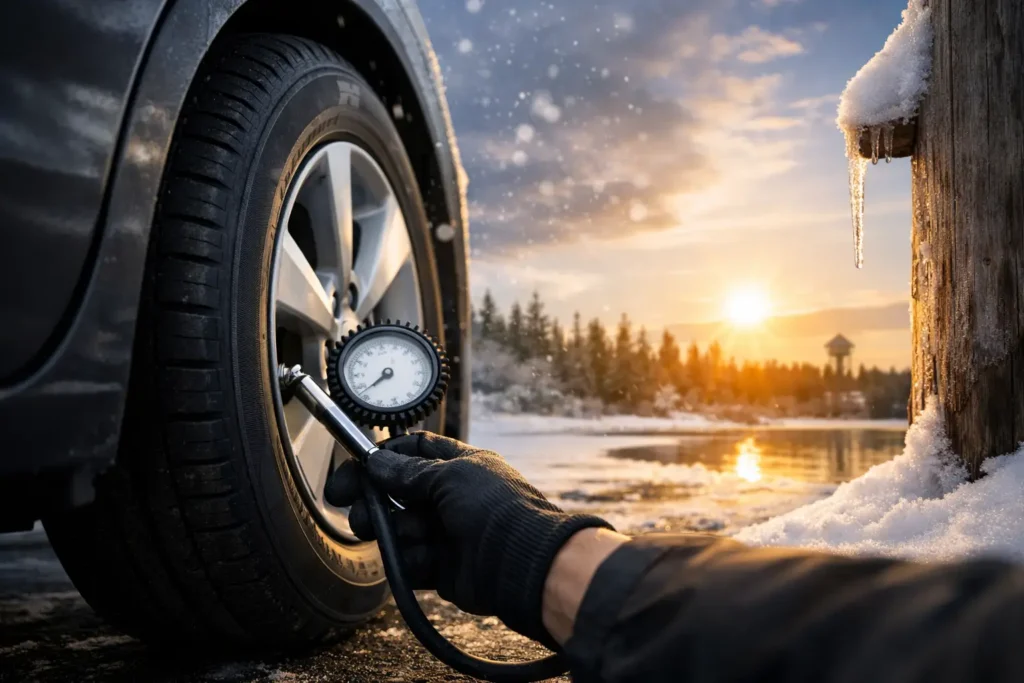
A 20-degree temperature swing in Minnesota can turn a perfectly fine tire into a low-pressure warning by the next morning. That is why minnesota teperatures and tire pressure issues catch so many drivers off guard, especially in fall, winter, and early spring when the weather changes fast.
Most people notice the problem when the TPMS light comes on after a cold night. Others feel it first – the vehicle rides softer, steering feels a little off, or fuel mileage slips. The good news is that this is usually normal physics, not a mystery failure. The bad news is that ignoring it can wear tires faster, hurt traction, and make a safe vehicle feel less stable when roads are wet, snowy, or icy.
If your tire light came on and you are not sure whether it is just weather or something more serious, getting a real answer early saves hassle. If you want help sorting it out, just tap the blue phone call button in the lower left corner – we’re just a call away.
Why Minnesota temperatures and tire pressure issues happen
Air contracts when temperatures drop. As a rule of thumb, tire pressure changes by about 1 PSI for every 10 degrees of temperature change. So if your tires were set correctly during a warmer afternoon and then overnight temperatures drop hard, the pressure inside those tires can fall enough to trigger the warning system.
That matters more in Minnesota than in milder climates because our seasonal swings are not small. A truck or SUV in Elk River might see warm pavement one week and a cold snap the next. In winter, a vehicle can go from a heated garage to subzero air in minutes. Tires respond to those changes quickly.
This is also why the TPMS light often comes on in the morning and disappears later in the day. As you drive, the tires warm up and pressure rises. That does not always mean the issue fixed itself. It may simply mean the tire is still running lower than it should be when cold.
What low tire pressure actually does to your vehicle
Low pressure changes more than the look of the tire. It affects how the tread meets the road. When a tire is underinflated, more of the outer edges carry the load. That creates extra heat, uneven wear, slower steering response, and less efficient rolling.
In real-world driving, that can show up as vague handling, longer stopping distances, and reduced control in sloppy winter conditions. It can also make hydroplaning more likely in heavy rain. Around here, that matters in every season. Minnesota gets months of snow and ice, but wet roads and cold rain are part of the picture too.
For drivers choosing replacement tires, tread design matters just as much as inflation. At Joe’s All Tire, locals know us as All Tire, and we strongly recommend open shoulder tires for many cars and trucks because they do a better job clearing water, slush, and loose snow. That added evacuation helps both summer rain traction and winter grip. Pressure still has to be correct, but the right design gives you a better starting point.
Minnesota temperatures and tire pressure issues in winter and summer
Winter gets most of the attention, but summer brings its own pressure concerns. In cold weather, underinflation is the usual problem. In hot weather, pressure rises as ambient temperatures and road temperatures climb. That does not mean you should bleed air out of a hot tire just because the number looks higher after driving. Tire pressures should be checked cold, not after the tire has built heat from use.
The tricky part is shoulder season. Fall and spring are when people get fooled. A mild afternoon can make everything seem normal, then a 30-degree overnight drop changes the picture by morning. This is one reason tire pressure problems seem random when they are not.
There is also a difference between a normal seasonal drop and a leak. If you top off one tire and it keeps losing pressure while the others stay steady, that points to a puncture, bead leak, valve stem issue, or TPMS-related problem. Weather affects all four tires in a similar way. One repeat offender deserves inspection.
How often should you check tire pressure?
For most drivers, once a month is a good baseline. In Minnesota, it makes sense to check more often during major weather swings. Anytime temperatures change sharply, before a road trip, or when the TPMS light comes on, it is worth verifying pressure with a quality gauge.
Always use the pressure listed on the vehicle placard, usually found inside the driver’s door jamb. Do not use the number molded on the tire sidewall as your target. That number is the tire’s maximum pressure rating, not the correct operating pressure for your specific vehicle.
A lot of drivers assume the shop or quick-fill station got it right last time and forget about it. Sometimes they did. Sometimes pressures were set when the tires were warm, or one tire was missed, or the seasons changed enough that the original setting no longer fits current conditions.
When the TPMS light means more than cold weather
A steady TPMS light often means one or more tires are low. A flashing light usually points to a system fault, such as a bad sensor, programming issue, or communication problem. That difference matters because adding air will not fix a sensor issue.
This is where chain-store guesswork wastes time. A warning light can be caused by low pressure, but it can also come from a damaged sensor, corrosion, service mistakes, or a tire that was repaired improperly. You want someone to check the actual condition of the tire and the system, not just clear the light and move on.
If you have been dealing with a warning that keeps coming back, or a tire that always seems low, this is the point where hands-on diagnosis pays off. A shop that does tire repair, TPMS diagnostics, and mounting work every day can usually spot whether the problem is temperature-related or a true mechanical issue.
The right way to handle tire pressure in Minnesota
Start simple. Check pressures cold, ideally before driving. Inflate to the vehicle manufacturer’s recommended PSI. Recheck when temperatures change sharply. If one tire keeps dropping, do not keep guessing – have it inspected.
It also helps to think beyond air pressure alone. Tire age, tread depth, repair history, and tire design all play a role in how a vehicle performs on cold pavement. A properly inflated tire with a poor tread pattern can still struggle in slush. A quality tire with the right design but low pressure still will not do its job.
That is why seasonal driving advice should be practical, not generic. For Minnesota conditions, many drivers are better served by open shoulder tire designs because they clear water and snow better than more closed patterns. If you want to read more about tread design and seasonal tire choices, the tire knowledge center at www.joesalltire.com/knowledge-center/ covers the basics in plain language.
A few common mistakes drivers make
The first is waiting for the tire to look low. Modern tires can be underinflated without appearing obviously flat. By the time it looks wrong, it may have been running low for a while.
The second is trusting the dashboard light as the only check. TPMS is useful, but it is not a substitute for a gauge and regular inspection. Sensors can fail, and some systems do not alert until pressure is already well below ideal.
The third is assuming all tire pressure problems are seasonal. Minnesota weather causes pressure changes, yes, but nails, rim corrosion, cracked valve stems, and worn tires do not fix themselves when the sun comes out.
What local drivers should keep in mind
If your vehicle feels different after a temperature drop, trust that feeling. Tire pressure affects traction, braking, comfort, and tire life. On a dry summer road you might get away with running a little low for a while. On cold pavement, in rain, or on packed snow, the margin gets smaller.
That is where honest service matters. You do not need a sales pitch when a pressure light comes on. You need to know whether you just need air, a proper repair, a sensor check, or a better tire setup for the way you actually drive.
A tire should help your vehicle stay predictable when conditions are not. In Minnesota, that means paying attention before the problem turns into uneven wear, poor traction, or a roadside headache. A quick pressure check today is a lot cheaper than a ruined tire next month.