

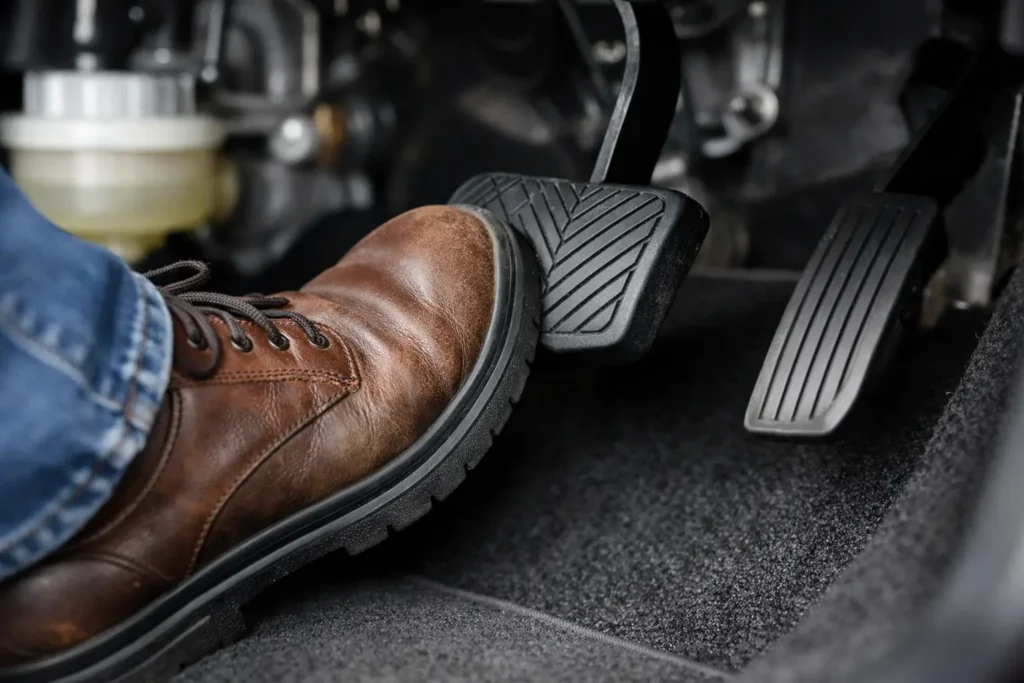
You press the brake at a stoplight, and the pedal slowly keeps moving toward the floor. That is the moment a lot of drivers ask, why does my brake pedal sink, and should I be worried? The short answer is yes. A sinking brake pedal is not something to brush off, because your braking system is hydraulic, and when pedal feel changes, it usually means pressure is not being held the way it should.
Some brake problems give you noise first. Others show up as vibration, pulling, or longer stopping distance. A pedal that sinks is different. It often points to a pressure leak, an internal component failure, or air where fluid should be. Sometimes the vehicle still stops, which makes it tempting to keep driving. That is where people get into trouble. A brake system can feel only mildly off one day and become unsafe the next.
Why does my brake pedal sink when I hold it?
If the pedal goes down gradually while your foot stays steady, the brake system is losing hydraulic pressure somewhere. In a properly working system, you press the pedal, brake fluid transfers force, and that pressure stays consistent. When it does not, the pedal keeps traveling.
There are a few common reasons this happens. The most serious is a brake fluid leak. That leak might be at a brake hose, steel line, caliper, wheel cylinder, or another connection in the system. If fluid is escaping, pressure drops and the pedal sinks.
Another common cause is a failing master cylinder. This part creates hydraulic pressure for the entire brake system. When the internal seals wear out, fluid can bypass inside the master cylinder without always leaking onto the ground. From the driver’s seat, it feels like the pedal slowly falls even though no obvious external leak is visible.
Air in the brake lines can also cause a low or sinking pedal. Air compresses more than brake fluid, so instead of a firm response, the pedal feels soft, spongy, or unstable. This can happen after brake work, from low fluid, or from a leak that lets air into the system.
What a sinking brake pedal can feel like
Not every driver describes it the same way. Some say the brake pedal feels soft. Others say it drops at stop signs or needs to be pumped to feel normal. A few say the vehicle stops fine at first, but the pedal gets lower the longer they hold it.
Those details matter. A soft pedal right after brake service may point to trapped air. A pedal that sinks only while holding pressure often leans more toward a master cylinder issue or fluid loss. A pedal that firms up when pumped can also suggest air in the lines or rear brake adjustment problems on some vehicles.
That said, brake diagnosis is not guesswork if it is done right. The symptoms can overlap. The same pedal feel can come from more than one problem, which is why a proper inspection matters more than internet guesswork.
The most likely causes of a brake pedal that sinks
Brake fluid leak
This is one of the first things to rule out because it directly affects safety. Leaks can happen at flexible brake hoses, rusted lines, calipers, wheel cylinders, fittings, or the master cylinder area. In Minnesota, line corrosion is a real issue because of road salt and winter conditions.
You might notice a low brake fluid level, a warning light, wet spots near a wheel, or fluid under the vehicle. But not every leak is easy to spot from your driveway. Some only show under pressure, and some collect dirt before they ever drip noticeably.
Failing master cylinder
A bad master cylinder is a classic cause of a brake pedal that slowly sinks under steady pressure. The internal seals wear down and allow fluid to pass inside the unit instead of maintaining pressure to the brakes.
This can fool people because the fluid level in the reservoir may still look normal. There may be no puddle, no obvious line leak, and no loud warning signs. The main clue is pedal behavior. You press, hold, and the pedal keeps moving.
Air in the brake lines
Air usually creates a spongy pedal, but it can also contribute to sinking or inconsistent feel. If the system was recently opened for brake repairs and not bled completely, the pedal may feel low right away. Air can also enter if fluid gets too low or if a leak develops.
This is one reason proper repair methods matter. Brakes are not a place for shortcuts. If air remains in the system after service, the car may technically stop, but pedal feel and braking confidence will be off.
Rear drum brake issues
On vehicles with rear drum brakes, out-of-adjustment shoes or wheel cylinder problems can create extra pedal travel. That does not always feel exactly like a hydraulic sink, but to many drivers it feels close enough to describe the same way.
This is where experience matters. A shop needs to inspect the full system and not just replace the first part that seems possible.
ABS hydraulic issues
Less commonly, an ABS hydraulic control unit can cause unusual pedal feel. This is not the first thing to suspect, but it does happen. Usually, the diagnosis gets there only after the basics are checked first – fluid condition, leaks, calipers, lines, rear brake operation, and the master cylinder.
Is it safe to drive with a sinking brake pedal?
Usually, no. If your brake pedal is sinking, the safe move is to stop driving the vehicle until it is inspected. Even if the brakes still work, you do not know whether the problem will stay the same for another day or get much worse on the next trip.
The risk is not just longer stopping distance. It is unpredictability. A leaking line can fail further. A weak master cylinder can lose pressure when you need it most. Air in the system can make emergency braking less consistent. If the pedal is dropping low enough that you are questioning it, that is already enough reason to take it seriously.
If you have to move the vehicle a short distance for safety, do it carefully and only if braking still functions. But regular driving, highway use, and putting family in the vehicle should wait until the issue is checked.
What you can check before calling a shop
There are a few basic things a driver can look at without getting in over their head. Check the brake fluid reservoir and see whether the level is low. Look near each wheel for wetness. Notice whether the pedal feels soft all the time or only sinks while holding it at a stop. Pay attention to whether any brake warning or ABS light is on.
That said, this is not a good problem for trial-and-error repairs. Topping off fluid without finding the leak does not fix anything. Replacing parts based on a hunch can get expensive fast. Brakes need a clear diagnosis, because the symptom is serious and the causes can overlap.
Why proper diagnosis matters
A chain store approach to brake work can turn into parts swapping. Pads, rotors, maybe a caliper, then maybe something else if the pedal still feels wrong. That is not the right way to handle a sinking pedal.
The right approach is to inspect the system, verify whether pressure is being lost externally or internally, and repair the actual fault. Sometimes that means a master cylinder. Sometimes it is a rusted brake line. Sometimes it is air from previous work that was never fully bled out. The difference matters, both for safety and for cost.
At a local shop like Joe’s All Tire, the value is simple: honest advice, a real inspection, and work done right the first time. That matters a lot with brakes, because confidence in pedal feel is not optional.
When to get it checked right away
If the brake pedal goes near the floor, if you need to pump it to stop, if the vehicle takes longer to stop, or if the brake warning light is on, get it looked at now. The same goes for any visible fluid leak or sudden change in pedal feel.
A brake pedal does not usually sink for a harmless reason. Sometimes the repair is straightforward. Sometimes it takes a more careful diagnosis. Either way, the smart move is not to wait for the problem to make the decision for you.
If your brakes feel different enough that you are asking why does my brake pedal sink, trust that instinct. Brake feel is one of those things drivers notice for a reason, and catching it early is often the difference between a manageable repair and a real safety problem. Get it checked, get a straight answer, and get back on the road with confidence.