

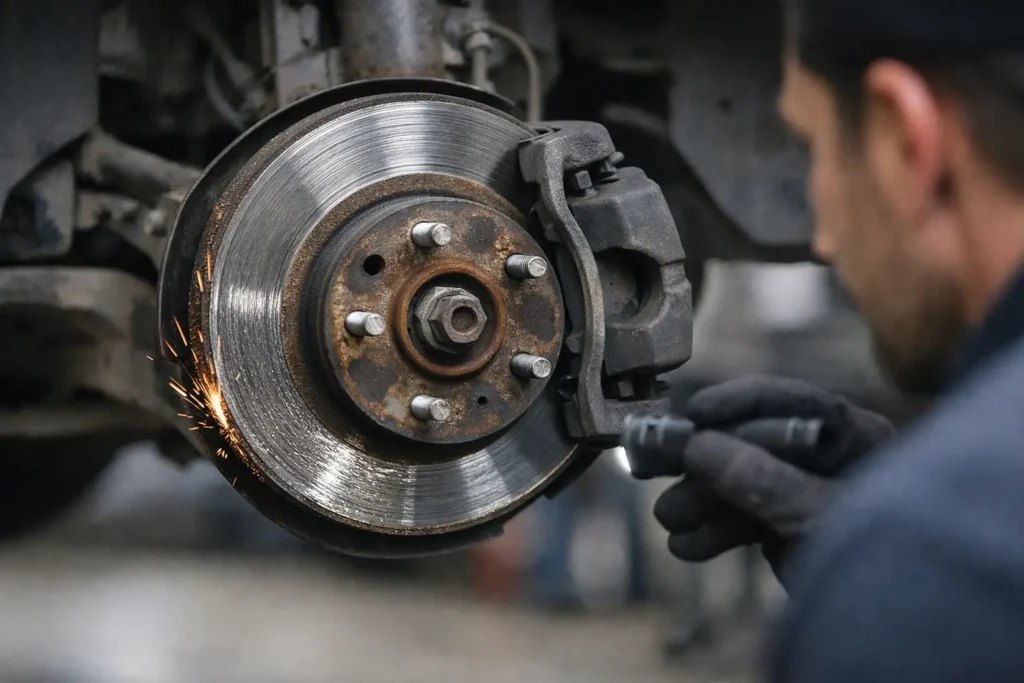
One stop sign, everything sounds normal. The next stop, your car makes a harsh metal-on-metal noise that gets your attention fast. If you’re asking why do brakes grind suddenly, the short answer is this: something in the brake system changed enough that it can no longer stop quietly, and that change can range from minor surface rust to a serious wear issue that should be checked right away.
Grinding brakes are one of those problems that can fool people because the sound may show up out of nowhere. In reality, the parts were usually wearing down, shifting, or collecting debris before the noise started. The sound is just the point where the problem becomes impossible to ignore.
Why do brakes grind suddenly if they felt fine yesterday?
Brakes do not always give a long warning period. In some cases, they do. You might hear squealing for days or weeks before the noise gets worse. But sometimes the final bit of brake pad material wears away, a small stone gets caught, or a rotor surface changes enough that the next stop sounds terrible.
That is why sudden grinding is common. The system can be close to a threshold without making much noise, then cross that line during one trip. A wet night, a cold morning, stop-and-go traffic, or a hard stop can be enough to bring the problem to the surface.
The most common cause is worn brake pads. Brake pads are built with friction material attached to a metal backing plate. Once that friction material is too thin or gone, the metal backing can contact the rotor. That creates the classic grinding sound people describe as scraping, growling, or metal dragging.
Another possibility is a stuck brake component. If a caliper is not releasing properly, the pad can drag against the rotor longer than it should. That extra heat and contact can wear parts unevenly and make noise seem sudden, even though the real cause has been building.
The most likely causes of sudden brake grinding
Worn-out pads are at the top of the list, but they are not the only answer. Brake systems are exposed to road salt, water, dirt, and temperature swings, especially here in Minnesota where winter roads are hard on vehicles. That matters because corrosion and debris can change how brake parts move and wear.
Brake pads are worn past the safe limit
This is the first thing most shops check, and for good reason. If the friction material is used up, the metal backing plate can grind into the rotor. At that point, you are usually beyond a simple pad replacement. The rotors may also need to be replaced or machined, depending on their condition and thickness.
Sometimes drivers notice no warning at all before this happens. That can occur if the inner pad wears faster than the outer pad. From the outside, everything may look acceptable, while the inside pad is nearly gone.
A rock or road debris is caught in the brakes
A small stone can get stuck between the rotor and backing plate and create a sudden grinding or scraping sound. This is one of the better-case scenarios because the fix can be simple once the debris is removed. Still, it should not be guessed at. The sound of debris can be very similar to the sound of damaged brake parts.
Surface rust formed on the rotors
After rain, snow, or even overnight humidity, brake rotors can develop a thin rust layer. On the first few stops, that can sound rough or slightly grinding. Usually, this clears up quickly as the pads sweep the rotor surface clean.
The key detail is duration. If the sound goes away after a few light stops, rust was likely the issue. If the grinding continues, gets louder, or comes with vibration, that points to something more serious.
Caliper or hardware problems
Brake calipers, slide pins, and hardware need to move freely. If they stick, the pad may stay in contact with the rotor and wear unevenly. That can create sudden noise, pulling to one side, overheating, or a burning smell.
This is where proper brake service matters. Replacing pads without addressing seized hardware or caliper issues can leave the real problem in place.
Rotor damage
Rotors can become heavily grooved, cracked, heat-spotted, or warped. Some rotor issues start as a mild noise and then quickly get worse. If a rotor surface is damaged enough, the pads cannot make smooth, even contact, and braking becomes noisy and less predictable.
Is it safe to drive when brakes start grinding?
Usually, no. A very brief rust sound on a damp morning is one thing. Ongoing grinding is another. If the noise is truly grinding, especially metal-on-metal, the vehicle should be inspected as soon as possible.
The risk is not just noise. Grinding can mean reduced braking performance, longer stopping distances, and damage that gets more expensive every mile. A brake job that might have started as pads only can turn into pads, rotors, and possibly caliper work if it is ignored.
If the brake pedal feels soft, the car pulls, the steering wheel shakes during braking, or a warning light comes on, stop pushing your luck. Those signs tell you the issue may be affecting safety in a bigger way.
What the sound can tell you
Not every brake noise means the same thing, and that is why a clear inspection matters.
A light scrape that appears only after the car sat overnight may point to rust. A steady metal grind every time you brake often suggests pad material is gone. A grinding sound that changes when turning can sometimes be a wheel bearing issue rather than the brakes, which is another reason not to self-diagnose based on sound alone.
If the noise happens even when you are not pressing the brake pedal, there may be constant contact from a stuck component, debris, or a bearing problem. If it only happens under braking, the issue is more likely inside the brake system itself.
Why sudden grinding should not be ignored in winter climates
Vehicles in Minnesota deal with moisture, slush, salt, and freeze-thaw cycles for months at a time. That environment speeds up corrosion on brake hardware and can make marginal parts fail faster. A vehicle that seemed fine during dry weather can start making noise when colder temperatures or road salt expose a sticking slide pin or rust-heavy rotor.
That does not mean every winter brake noise is catastrophic. It does mean winter makes brake inspections more valuable, especially if your vehicle is driven daily, parked outside, or used for short trips where brakes do not fully dry out.
What a shop should check when brakes grind suddenly
A good brake inspection should go beyond a quick glance through the wheel. The pads need to be measured, rotor condition checked, hardware inspected, and caliper operation verified. Inner and outer pad wear should be compared because uneven wear tells a story.
A proper inspection should also separate brake noise from other front-end issues. Wheel bearings, backing plates, and loose components can create similar sounds. Getting the diagnosis right the first time saves money and avoids replacing parts that were not the real problem.
For drivers who want straightforward brake service without the runaround, this is exactly where a local brake shop earns trust. If you want to understand what professional brake service should include, see www.joesalltire.com/brake-shop-elk-river/.
Can you prevent sudden brake grinding?
You cannot prevent every brake issue, but you can lower the odds of being surprised by one. Regular inspections help catch thin pads before they hit metal. Paying attention to squealing, vibration, or changes in pedal feel gives you a window to fix the problem before rotors get damaged.
Driving habits matter too. Heavy braking, towing, stop-and-go traffic, and carrying extra weight all wear brakes faster. That does not mean you are doing anything wrong. It just means your maintenance timing may be different from someone who mostly drives highway miles.
If you rotate tires or have seasonal service done, that is a smart time to have the brakes checked as well. It is quicker and usually cheaper to address brake wear early than to wait for grinding.
When to call for service right away
If the grinding is loud, constant, or paired with poor stopping, do not wait for a better day. The same goes for burning smells, visible rotor damage, or a vehicle that feels unstable under braking.
At All Tire, this is the kind of problem that should be looked at with honest eyes and no guesswork. Brake noise is not always the worst-case scenario, but it is never something to brush off just because the car still moves.
When brakes suddenly start grinding, your vehicle is telling you something changed. The smartest move is to listen early, get a proper inspection, and fix what is actually wrong before a manageable repair turns into a much bigger one.
