

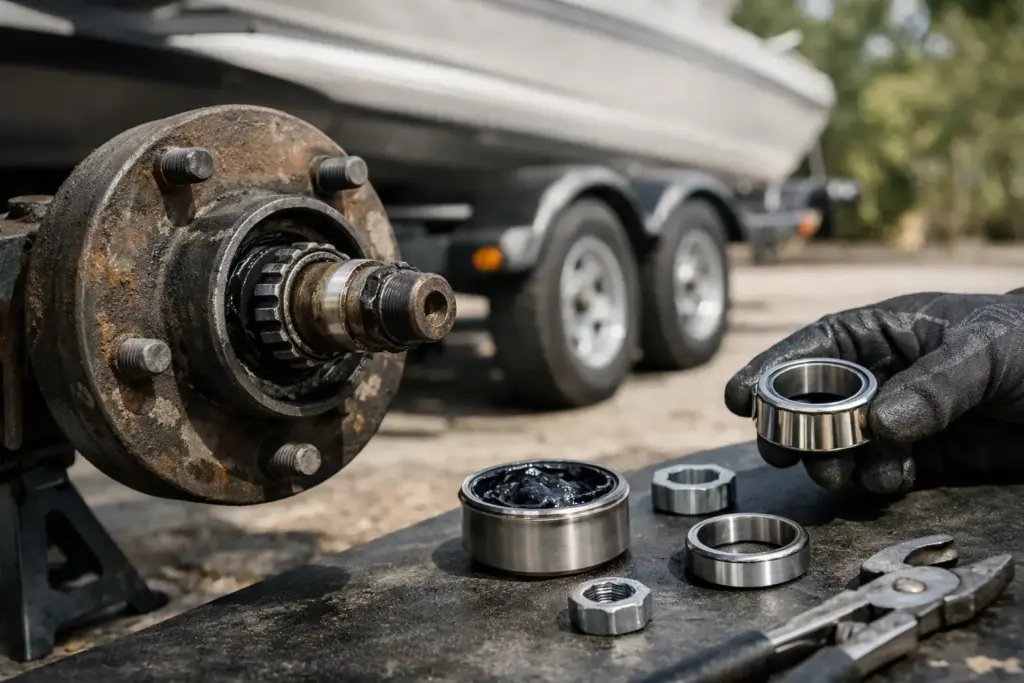
A trailer can look completely ready for the road and still have a problem hiding behind the hub. Knowing when to replace trailer wheel bearings can prevent a ruined spindle, a damaged wheel, or a trip that ends on the shoulder instead of at the lake, campground, jobsite, or boat launch.
Trailer bearings don’t usually fail without leaving clues. The trouble is that those clues are easy to miss because trailers spend long stretches parked, then get asked to carry heavy loads at highway speeds. A quick check before a big trip is a lot less stressful than dealing with smoke or a hot hub miles from home.
When to Replace Trailer Wheel Bearings
There isn’t one mileage number that fits every trailer. A small utility trailer used a few weekends each summer has very different needs than a boat trailer backed into the water, an enclosed trailer hauling equipment, or a camper that sees regular highway miles.
As a practical rule, trailer wheel bearings should be inspected and repacked about every 12 months or every 10,000 to 12,000 miles. Trailers used in water, exposed to road salt, stored outdoors, or loaded heavily may need attention sooner. If an inspection finds pitting, corrosion, blue heat marks, rough rolling, damaged rollers, or a worn bearing race, replacement is the right call. Fresh grease can’t repair metal that’s already damaged.
Replace bearings immediately if you notice any of these warning signs:
- A hub that is noticeably hotter than the others after driving
- Grinding, growling, rumbling, or squealing from a wheel
- Side-to-side wheel movement when the trailer is jacked up
- Grease leaking heavily from the hub or grease flung onto the wheel
- Rust-colored grease, milky grease, or metal flakes in the grease
- A wheel that locks up, wobbles, or doesn’t spin smoothly
One hot hub deserves attention even if the trailer still seems to pull normally. Compare hub temperatures carefully after a short drive, without touching a possibly overheated hub with your bare hand. Heat can come from a brake issue as well as a bearing problem, but either way, it needs a proper inspection.
Why Trailer Bearings Wear Out Faster Than Expected
Bearing grease has a tough job. It has to stay in place under load, resist water and contamination, and protect moving metal from heat and friction. When a seal fails, moisture and dirt can get inside the hub. On a boat trailer, a warm hub entering cool water can pull water past a weak seal. In Minnesota, winter storage and wet, salty roads can create corrosion even on a trailer that doesn’t get many miles.
Incorrect adjustment is another common issue. Bearings that are too tight build heat. Bearings adjusted too loose allow movement that can damage the bearing, race, seal, and spindle. The work may look simple from the outside, but correct cleaning, inspection, packing, seal installation, and adjustment are what make a bearing service last.
Overloading matters, too. A trailer can be within its gross weight rating and still put too much load on one axle if cargo isn’t balanced correctly. Potholes, curb strikes, and long highway runs add more stress. That’s why a trailer that hauls landscaping equipment or construction materials may need more frequent checks than a lightly used utility trailer.
Repack or replace: what’s the difference?
A repack service means the hub is removed, the bearings are cleaned, inspected, and packed with the correct grease, then reinstalled with proper adjustment. If the bearings and races are clean, smooth, and undamaged, repacking is often all that’s needed.
Replacement means installing new bearings and races, usually along with new seals. It costs more than a straightforward repack, but it is the safer choice when components show wear or heat damage. Reusing questionable parts to save a little now can lead to a much bigger repair later, especially if a failed bearing damages the spindle or hub.
Check Before a Long Haul, Not After a Failure
Before towing, walk around the trailer and look for grease on the inside of the wheel, loose lug nuts, uneven tire wear, or a wheel sitting at an odd angle. With the trailer safely supported, grab each tire at the top and bottom and check for excessive movement. Spin the wheel and listen for roughness.
These checks don’t replace a full bearing inspection, but they can catch obvious trouble. If your trailer has been parked through a Minnesota winter, has recently gone through deep water, or hasn’t had documented bearing service in over a year, don’t assume it’s fine because it was fine last season.
If you’re trying to decide whether a hot hub, grease leak, or wheel vibration needs immediate service, Joe at Joe’s ALL TIRE can give you a straight answer. Mobile visitors can tap the blue call button in the lower left corner to ask questions or schedule an appointment. At ALL TIRE, the goal is to find the actual cause and do the repair correctly, not sell work your trailer doesn’t need.
Don’t overlook the rest of the running gear
A bearing concern is also a good reason to inspect the parts around it. Trailer tires, brakes, grease seals, hubs, lug nuts, suspension components, and lights all affect whether the trailer gets where it’s going safely. For trailers with brakes, a dragging brake can create hub heat that feels a lot like a failing bearing. On the other hand, a bearing that has developed play can affect brake operation and tire wear.
That is why diagnosis matters. Replacing a bearing without checking the race, seal, hub, brake condition, and spindle can leave the original problem behind. A shop should be able to explain what it found in plain language and show you why a repack or replacement is being recommended.
What Happens If You Wait Too Long?
The early stage of bearing wear may only create a little noise or warmth. As lubrication breaks down, friction rises quickly. Heat can discolor and weaken the bearing, damage the seal, and score the spindle. In a worst-case failure, the bearing can seize or come apart, allowing the hub and wheel assembly to separate from the trailer.
Not every noisy trailer wheel is a bearing, and not every warm hub means the bearing is bad. But neither condition is something to put off until the next trip. Prompt inspection is usually less expensive and far safer than waiting for a small concern to become a roadside emergency.
FAQ
How often should trailer wheel bearings be repacked?
For most trailers, once a year or every 10,000 to 12,000 miles is a sensible starting point. Boat trailers, heavily loaded trailers, and trailers exposed to water, salt, or long periods outdoors may need service more often.
Can I replace just one trailer wheel bearing?
Yes, if only one bearing is damaged. Still, the other hubs should be inspected at the same time. If one side has water contamination, age-related wear, or poor grease, the other side may be close behind.
How do I know if a trailer hub is too hot?
A hub that is much hotter than the hub on the other side after similar driving conditions needs attention. Never grab a hot hub directly. Use caution and have the trailer checked for a bearing or brake issue.
Is it safe to tow with a little play in the trailer wheel?
No. Noticeable wheel play can mean loose adjustment, worn bearings, or damage inside the hub. It should be inspected before towing, especially at highway speed or with a load.
Do trailer bearings need replacement if they have grease in them?
Not necessarily. Grease is only part of the picture. Bearings still need replacement if they are rough, pitted, corroded, overheated, or contaminated. A proper inspection determines whether a repack is enough.
A trailer is supposed to make your weekend or workday easier, not add a surprise repair to it. If something feels off at the hub, getting it checked before you load up is the smart move.
