

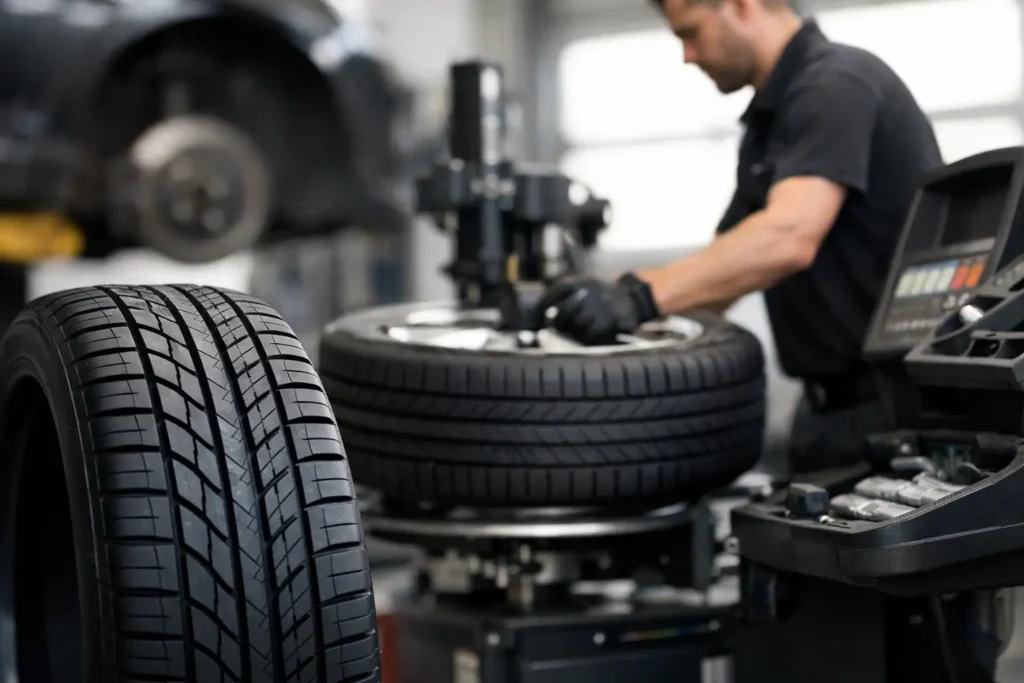
A new set of tires should make your vehicle feel better right away – smoother on the highway, steadier in corners, and more confident when the weather turns. But that only happens if you mount and balance new tires correctly. Good tires installed poorly can still shake, wear unevenly, or leave you wondering why the ride does not feel right.
That is where a lot of drivers get frustrated. They buy the tires, expect the problem to be solved, and then deal with a steering wheel vibration at 65 mph or a ride that feels rougher than it should. The issue is not always the tire itself. Often, it comes down to how the tire was mounted, balanced, and checked before the vehicle leaves the shop.
Why it matters to mount and balance new tires
Mounting is the process of safely installing the tire onto the wheel. Balancing is the process of making sure the weight of the tire and wheel assembly is evenly distributed as it spins. Both matter, and one does not replace the other.
If a tire is mounted carelessly, the bead may not seat properly, the wheel can get damaged, or the tire may not run true. If the assembly is not balanced correctly, you can end up with vibration, faster tread wear, and extra stress on suspension parts. On some vehicles, that vibration shows up in the steering wheel. On others, you feel it in the seat or floor. Either way, it is not something you should ignore.
For Minnesota drivers, proper installation matters even more. Roads get rough, temperatures swing hard, and for several months out of the year traction is a real safety issue, not a talking point. If you are putting on tires before winter, the right tire design and the right installation both matter. We strongly recommend open shoulder tire designs for many cars and trucks because they do a better job clearing slush, snow, and packed winter buildup. If you want to understand tread design better, our tire knowledge center is a good place to start.
When should you mount and balance new tires?
The short answer is simple – every time you install new tires on wheels, they should be mounted and balanced.
There are a few situations where people get confused. If you are reusing your current wheels and replacing worn tires with new ones, yes, the new tires still need to be balanced. If you bought a tire and wheel package that was already assembled and balanced, it may not need much beyond installation on the vehicle, but it should still be checked. If a tire is repaired and remounted later, balance should be checked again.
Some drivers ask if they can skip balancing to save money. That usually costs more in the long run. Uneven wear can shorten tire life, and vibrations can mask other issues or contribute to premature wear in steering and suspension components. Saving a little up front is rarely worth it.
What a proper tire installation should include
A lot of shops talk about installation as if it is one quick step. It is not. Done right, it is a process.
First, the wheels should be inspected for cracks, bends, corrosion, and bead seat issues. If the wheel has damage, even a brand-new tire may not seal or balance properly. The old tire is removed carefully to avoid damaging the wheel or the tire pressure sensor.
Then the new tire is mounted using the right equipment and lubricant so the bead seats correctly. On vehicles with TPMS sensors, care matters. A rushed install can break a sensor or create a slow leak around the valve stem.
After that, the tire and wheel assembly is balanced on a machine that identifies where weight needs to be added. This is also the point where a good tech notices if something seems off – like an out-of-round tire, a bent wheel, or a road-force issue that basic balancing alone may not solve.
Finally, the wheel is installed on the vehicle and lug nuts are torqued to the correct specification. Not guessed. Not hammered on with an impact and forgotten. Proper torque helps protect the wheel, brake components, and studs.
Signs your new tires were not balanced correctly
Sometimes a bad balance shows up right away. Sometimes it takes a few days before you notice it on your commute.
The most common sign is vibration at certain speeds, often between 55 and 75 mph. You may also notice uneven tread wear starting earlier than expected, a steering wheel that shakes, or a ride that just feels unsettled. If one tire is significantly out of balance, the problem can be obvious. If several are slightly off, it may feel more like a general roughness.
It depends on the vehicle, too. A half-ton pickup, a small SUV, and a midsize sedan can all react differently to the same balance issue. That is why experience matters. The right shop does not just say, “It drives fine.” They road test, inspect, and track down the cause.
Mount and balance new tires the right way the first time
This is one of those jobs that sounds simple until it is done wrong. To mount and balance new tires properly, the shop needs the right equipment, the right process, and someone paying attention. Precision matters more than speed.
That is especially true if your vehicle already had a vibration before the tire replacement. New tires do not automatically fix every shake. If a wheel is bent, a hub is not running true, a wheel bearing is worn, or a suspension part has play, the problem can still be there after installation. Honest shops explain that up front instead of blaming the tires or hoping you do not come back.
At Joe’s All Tire, that straightforward approach matters. If the tire is the issue, you should hear that. If the vibration points to something else, you should hear that too. That kind of direct recommendation saves people time and money.
Why balance quality matters more than most drivers realize
A balancing machine gives numbers, but the machine alone does not guarantee a good result. The operator has to mount the assembly correctly on the balancer, use the right settings, and know when the result does not make sense.
For example, if a wheel calls for an unusual amount of weight, a good technician does not just keep stacking weights and send it. They look for the reason. Maybe the tire needs to be repositioned on the wheel. Maybe the wheel has damage. Maybe there is debris or corrosion affecting how it sits.
This is where chain-store volume can work against the customer. When the goal is speed, little details get missed. Those little details are often the difference between a smooth ride and a return visit.
New tires, winter traction, and choosing the right tread
Mounting and balancing matter, but tire choice still plays a big role in how the vehicle performs once the work is done. In Minnesota, winter traction should be part of the conversation whenever you are buying tires for year-round use.
We strongly recommend open shoulder tires for many cars and trucks because they help evacuate snow and slush more effectively than closed shoulder designs. That added biting edge and self-cleaning ability can make a real difference during the long stretch of winter driving we get here. Not every driver needs the same tire, and there are trade-offs involving road noise, ride feel, and tread life, but winter performance should never be treated like a minor detail.
If your current tires are worn and you are heading into cold weather, waiting too long can cost you in stopping distance and control. A proper install paired with the right tread design is a much better plan than trying to squeeze one more season out of marginal tires.
What to expect after new tires are installed
Right after installation, the ride should feel smooth and planted. You may notice the steering feels more precise, especially if the old tires were badly worn. Brand-new tread can also feel slightly different on the road than worn tires, which is normal.
What is not normal is a steady shake, thumping, pulling, or a TPMS warning light that stays on without explanation. If something feels off, have it checked. The earlier the problem is addressed, the easier it is to correct before it affects tire wear.
A good shop should also remind you to keep an eye on air pressure and stay on top of rotations. Even the best installation cannot protect tires from chronic underinflation or neglect.
New tires are not cheap, and they should not be treated like a quick commodity purchase. When you mount and balance new tires the right way, you protect the investment, improve ride quality, and give your vehicle the best chance to perform safely when the road turns rough. If something feels wrong after installation, trust that instinct and get it looked at – because the right tire job should feel right from the first drive.