

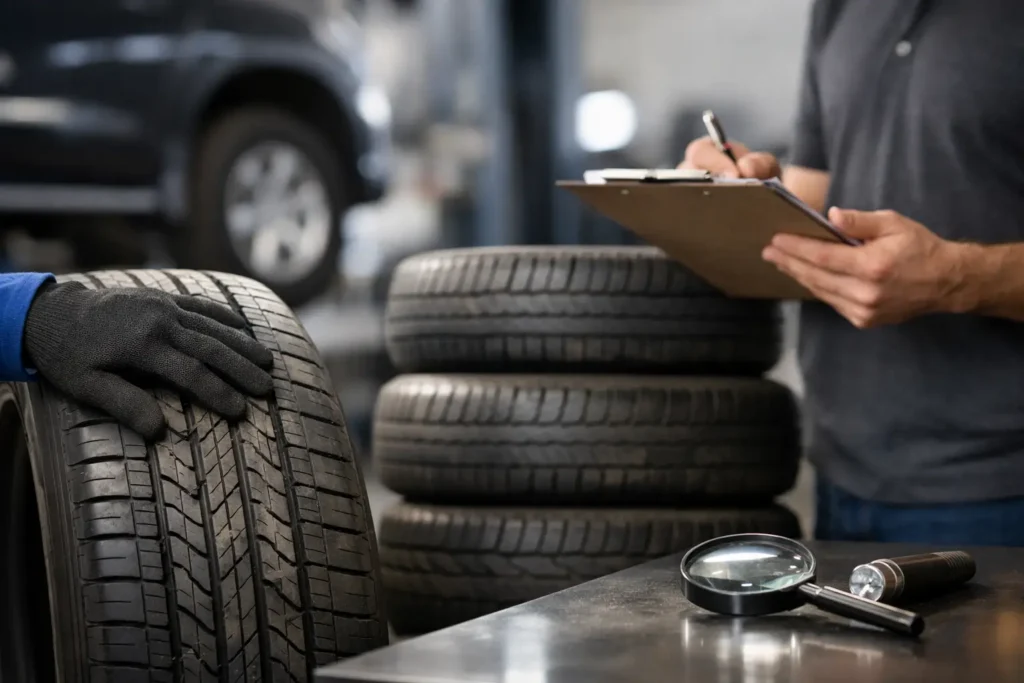
A cheap used tire can save you money today and cost you a tow bill next month. That is the real point of any used tire safety review – figuring out when a lower price is a smart move and when it is just hidden risk.
At Joe’s All Tire, locals often ask the same question in plain terms: are used tires safe or not? The honest answer is that some are, some are not, and the difference comes down to inspection, age, past damage, tread design, and whether the tire actually fits how you drive in Minnesota. If you are trying to sort that out quickly, we can help you make sense of it. Just tap the blue phone call button in the lower left corner – we’re just a call away.
What a used tire safety review should actually look at
A proper review is not just checking whether a tire still has tread. Tread depth matters, but it is only one part of the picture. A tire can look decent at a glance and still have problems that make it a poor choice, especially for highway driving, heavy rain, or the long stretch of snow and ice we deal with each year.
The first thing to look at is overall condition. That means cracks in the sidewall, bulges, plugs or patches, uneven wear, exposed cords, bead damage, and signs the tire was run low on air. Any one of those can turn a bargain into a problem. Sidewall damage is especially serious because that part of the tire flexes constantly and cannot be safely repaired in the way a simple tread puncture sometimes can.
Age matters too. Even if the tread looks usable, rubber hardens over time. That affects grip, ride quality, and the tire’s ability to handle heat and impact. For a daily driver, especially one carrying kids, commuting at highway speed, or running through wet roads and winter slush, old rubber is not where you want to cut corners.
When used tires can make sense
There are situations where used tires are a reasonable option. If you need a temporary replacement after a road hazard, if you are trying to match one tire on an older vehicle, or if the car itself is near the end of its life, a carefully inspected used tire may be the practical answer.
That said, the use case matters. A used tire on a low-mile local vehicle is one thing. A used tire on a truck that sees long commutes, hauling, or winter back roads is another. The more demanding the job, the less room there is for compromise.
This is where honest shop advice matters. A good tire shop should be willing to tell you when a used tire is acceptable and when it is not worth the gamble. If every option somehow leads to the highest ticket, that is not advice. That is upselling.
The biggest risks buyers miss
Most drivers know to avoid bald tires. The bigger issue is the damage you cannot judge in ten seconds from a parking lot photo or a marketplace listing.
A tire may have internal belt damage from hitting potholes, curbs, or debris. It may have been driven underinflated for weeks, which can weaken the structure even if it still holds air today. It may also have irregular wear from bad alignment or worn suspension parts, which means it will ride rough, wear faster, and possibly make your vehicle feel unstable.
Repairs are another area where details matter. A proper repair is done in the right part of the tread area and with the correct method. A tire with a questionable plug, shoulder puncture, or multiple repairs deserves extra caution. In many cases, it should be ruled out completely.
There is also the issue of tire type. Not every used tire is a good fit just because it fits the wheel. Load rating, speed rating, brand quality, tread pattern, and the tire’s intended use all matter. If you drive in heavy rain or winter weather, design matters more than people think.
Why tread pattern matters in Minnesota
Around here, a tire’s tread design is not just a performance detail. It is a safety detail. Minnesota roads give you a mix of summer rain, standing water, slush, packed snow, and ice for a big part of the year. That is one reason we strongly recommend open shoulder tire designs for many cars and trucks.
Open shoulder tires help move water and slush out more effectively, which can improve traction in wet weather and help reduce hydroplaning risk. They also tend to perform better in winter conditions than closed shoulder designs that trap more material in the tread. For local drivers, that makes a real difference in day-to-day control.
This is one of the areas where a used tire safety review should go beyond simple tread depth. Two tires can have the same remaining tread and still perform very differently in rain or snow because of the tread design. If you want to understand more about tread patterns and seasonal tire choices, our tire knowledge center covers those basics in plain language.
How to tell if a used tire is worth considering
Start with the DOT date code. That tells you when the tire was made. A newer used tire with clean, even wear is usually a much safer bet than an older tire with similar tread depth.
Then inspect the full tread face and both sidewalls. If the tire is still mounted, ask for it to be dismounted or at least inspected carefully on the inside before installation. Inner liner damage does not always show from the outside. Look for punctures, patch quality, weather cracking, cupping, feathering, or signs the shoulders are worn more than the center.
Next, consider how much tread is left in terms of real use, not wishful thinking. If a tire only has enough tread for one season, the low purchase price may not be much of a value. You are paying to mount and balance it too, so the full cost matters.
Finally, match the tire to the vehicle and your driving habits. A used tire that works fine on a secondary commuter may be the wrong choice for a family SUV that sees highway travel in all weather.
Used tire safety review vs. new tire value
This is where people sometimes get stuck. They compare the upfront price of a used tire to the upfront price of a new tire and stop there. A better comparison looks at cost per remaining mile, expected traction, warranty coverage, ride quality, and peace of mind.
A quality new tire often gives you better wet grip, more predictable winter performance, and a longer usable life. It may also come with manufacturer backing that used tires do not. In many cases, spending more once is cheaper than buying twice.
Still, not every driver needs the same answer. If your vehicle is older and you need a safe, inspected option to keep it on the road without overspending, a used tire may be the right fit. The key is making that decision with eyes open, not based on a quick deal that ignores safety.
Why professional inspection matters
A trained inspection catches things most drivers are not expected to know. That includes identifying improper repairs, structural concerns, odd wear patterns, and whether the tire should be paired with the others already on the vehicle. On some vehicles, mismatched tire diameters can affect handling, ABS performance, and all-wheel-drive systems.
At a local shop, that conversation should be simple and direct. You should be able to ask, Is this tire safe enough for my family, my commute, and my budget, and get a straight answer. That is the difference between buying a tire and getting real guidance.
At All Tire, the goal is not to push every customer into the most expensive option. It is to recommend what is safe, what fits the vehicle, and what makes sense for the way you actually drive. Sometimes that means a used tire is fine. Sometimes the honest answer is no.
If you are considering used tires, slow down just enough to ask better questions. The cheapest tire is not always the lowest-cost choice once weather, wear, and safety are on the table. A good decision is one that gets you back on the road with confidence, not one that leaves you wondering every time the pavement gets wet.
