

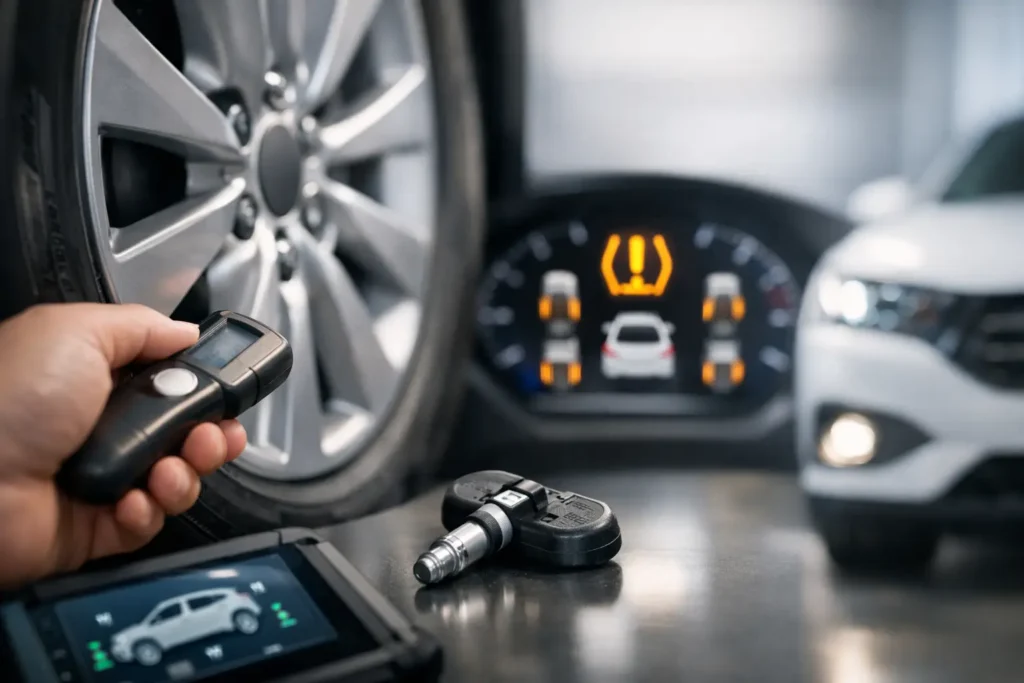
A TPMS light used to be a fairly simple message: one or more tires needed air. On many late-model vehicles, that same little dashboard symbol can involve a sensor battery, a relearn procedure, a wheel position issue, a tire-pressure setting, or a system fault. That’s why keeping up with TPMS trends for newer vehicles matters when you’re buying tires, changing wheels, or trying to figure out why a warning light won’t go away.
For drivers around Elk River, the practical takeaway is simple: don’t ignore the light, but don’t assume it automatically means you need a new sensor either. A good diagnosis saves money and makes sure the vehicle’s safety system is actually working when Minnesota weather turns cold, wet, or icy.
TPMS Is Becoming More Connected to Tire Service
TPMS stands for Tire Pressure Monitoring System. Most newer vehicles use direct TPMS, meaning there’s a small sensor inside each wheel that measures pressure and sends that information to the vehicle. Many systems can now show the pressure at each individual tire instead of giving a general warning.
That added information is useful, especially when temperatures drop overnight. Tire pressure commonly falls about 1 PSI for every 10-degree drop in temperature. A vehicle that was fine during a mild afternoon can show a low-pressure warning after a cold Minnesota morning, even without a puncture.
But newer systems also mean tire work has to be handled carefully. The sensor sits near the valve stem inside the wheel, where it can be damaged if the tire is removed without the right procedure. At Joe’s All Tire, we treat TPMS as part of the tire job, not an afterthought after the tires are already mounted.
If a warning light is on and you’re not sure whether it’s low air, a leak, or a sensor problem, getting it checked before a long commute or weekend drive is the smart move. Mobile visitors can tap the blue call button in the lower left corner to ask questions or schedule an appointment – we’re just a call away.
Sensor Batteries Are Now a Common Service Item
TPMS sensors are battery-powered, and their batteries aren’t designed to be replaced separately. Depending on the vehicle, driving habits, and sensor quality, many last roughly seven to 10 years. As more vehicles stay on the road longer, dead or weak sensor batteries have become one of the most common reasons for a flashing TPMS light.
A flashing light usually tells a different story than a light that comes on steadily. A steady light often means the system sees low tire pressure. A flashing light that later stays on commonly points to a TPMS system malfunction, such as a sensor that isn’t communicating.
That doesn’t mean replacing all four sensors is always the right answer. If one sensor has failed but the others are working well, replacing the failed sensor may make sense. On the other hand, if the vehicle is approaching 10 years old and the tires are already coming off for replacement, replacing aging sensors together can prevent repeat visits and labor later. It depends on the condition of the existing sensors, the vehicle, and what makes the most sense for your budget.
TPMS Trends for Newer Vehicles Include More Relearn Procedures
A sensor can be physically fine and still not communicate correctly with the vehicle after tire service. That’s where relearn procedures come in.
Some vehicles learn the sensor positions automatically after driving. Others need a scan tool to tell the vehicle which sensor belongs at each corner. Some require a specific sequence, while others use a reset option in the vehicle’s menu. The process varies widely by make, model, and year.
This matters after a tire rotation, a sensor replacement, or a switch between summer and winter wheel sets. If the vehicle displays individual tire locations, a missed relearn can mean the dashboard says the left front tire is low when the actual low tire is on a different corner. You still have a warning, but you’ve lost the information that makes the system useful.
Proper service includes checking the sensor, setting tire pressures to the vehicle manufacturer’s recommended cold pressure, and completing the relearn when the vehicle requires it. That’s the difference between clearing a light temporarily and making sure the system is done right.
Winter Wheels Need a TPMS Plan
Drivers who run dedicated winter tires often make the right call for traction and control. However, the second wheel set needs attention too. If those winter wheels don’t have compatible TPMS sensors, the warning light may remain on all season. Some drivers can live with that, but it means the vehicle can’t alert them to a real low-pressure condition in a winter tire.
For vehicles that see snow, slush, rain, and rough spring roads, tire pressure deserves extra attention. Pressure affects handling, braking, fuel economy, and tire wear. It also affects how the tire’s tread works on the road.
At All Tire, we often recommend open shoulder tire designs for cars and trucks when the vehicle’s use supports it. Those open channels help move water and slush away from the contact patch, improving summer rain performance and winter traction. A quality tire with the right tread design still needs correct pressure to do its job. The system and the tire work together.
Universal Sensors Have Improved, but Fitment Still Matters
Many shops use programmable universal TPMS sensors. These are quality replacement sensors that can be configured for many different vehicles. They can be a practical, cost-effective option when the correct sensor is selected, programmed properly, and installed with the right service components.
The trade-off is that programming and relearning can’t be guessed at. Not every universal sensor covers every vehicle, and some newer models have specific communication requirements. A sensor that looks similar may not be compatible at all.
This is one area where cheap parts and rushed service can turn into a repeat problem. A bargain sensor that doesn’t communicate, a damaged valve seal, or an incomplete relearn isn’t a deal if the light comes back next week. This Isn’t Walmart – the goal is a repair that works correctly, with clear advice about what your vehicle actually needs.
EVs and Heavier Vehicles Put More Focus on Pressure Accuracy
Electric vehicles have made TPMS even more relevant. EVs are generally heavier than comparable gas vehicles because of their battery packs, and many produce immediate torque. That weight and torque can wear tires faster when inflation pressure is off or rotations are missed.
The same is true for many newer pickups, SUVs, and light trucks. A pressure difference that seems small can affect tire wear across thousands of miles, particularly when the vehicle carries tools, pulls a trailer, or hauls family gear every day.
The right pressure is the number on the driver’s door-jamb label, not the maximum pressure molded into the tire sidewall. Those are different numbers. The door label is based on the vehicle’s weight, tire size, and intended handling characteristics. Check pressure when tires are cold, preferably before driving or after the vehicle has been parked for several hours.
Don’t Let a TPMS Light Replace a Tire Inspection
TPMS is a valuable warning system, but it doesn’t inspect tread depth, spot uneven wear, identify a vibration, or tell you whether a tire is aging out. It also won’t always catch a tire that is technically inflated but has a damaged sidewall or poor traction for the season.
That’s why we look at the whole picture during tire service: pressure, tread wear, tire age, wheel condition, balance, valve stems, and sensor operation. If a customer comes in with a warning light and also mentions shaking at highway speed, that calls for more than adding air. The vehicle may need a tire inspection and vibration diagnosis at the same visit.
Newer vehicles are giving drivers better information than ever. The best use of that information is simple: act on it early, get a straight answer, and keep the tires underneath your family ready for the road ahead.