

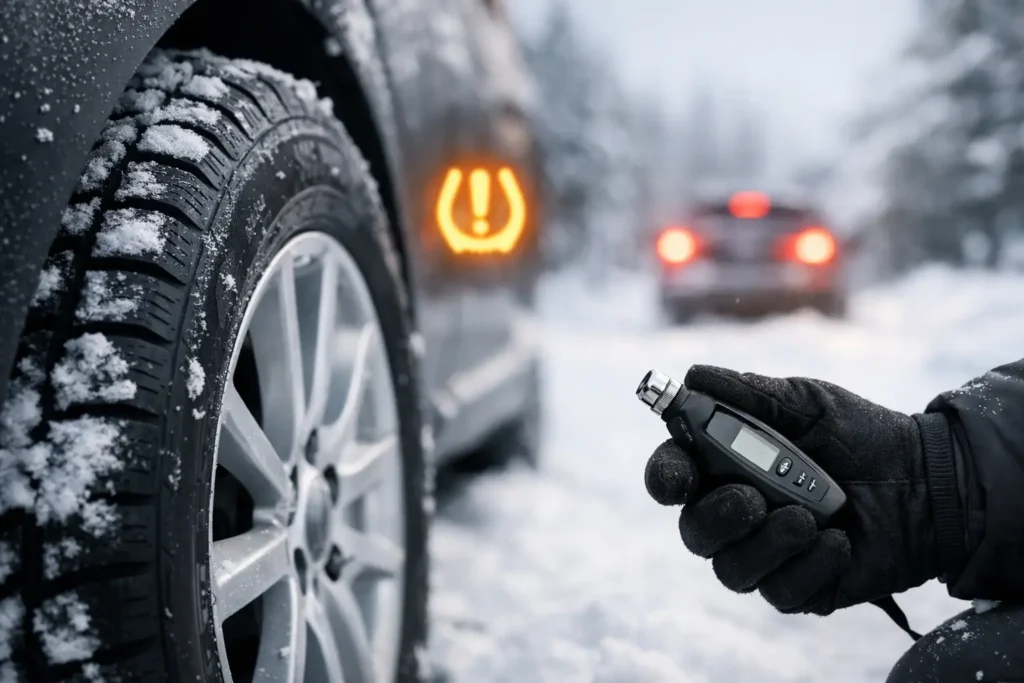
That dashboard light always seems to show up on the coldest morning of the year. You start the car, see the tire pressure warning in winter, and immediately wonder if you’re dealing with a simple temperature drop or a tire that’s actually leaking. Around Minnesota, it can be either one, and guessing wrong isn’t worth it when roads are icy.
Cold weather changes tire pressure fast. A tire that was fine yesterday can look low today after a hard overnight drop in temperature. But that doesn’t mean every warning light is harmless. If you’re trying to decide whether it’s safe to top it off and go or whether you need it checked right away, that’s exactly the kind of problem we help with every day. Just tap the blue phone call button in the lower left corner – we’re just a call away.
Why a tire pressure warning in winter happens so often
Air gets denser in the cold, and your tires lose pressure as temperatures drop. A common rule of thumb is about 1 PSI for every 10 degrees Fahrenheit. So if the weather swings from a mild fall afternoon to a bitter winter morning, your tires can lose enough pressure to trigger the warning even if there’s no puncture.
That’s why these lights pop on so often during the first real cold snap. It doesn’t always mean the tire is damaged. It does mean the pressure has dropped below what your vehicle’s system considers safe enough to flag.
The catch is that winter also makes existing problems more obvious. A slow leak from a nail, a weak valve stem, bead sealing issues, or a TPMS sensor problem may not show itself in warm weather. Then temperatures plunge, pressure drops a little more, and suddenly the warning light comes on.
Low pressure in winter isn’t something to brush off
Driving on underinflated tires causes more trouble than most people realize. The tire flexes more, builds heat differently, and wears unevenly. In snow and slush, low pressure can also affect how the tread contacts the road.
That matters even more here, where winter isn’t a two-week inconvenience. In Minnesota, we deal with months of snow, ice, thaw, refreeze, and cold pavement. Tires need to be doing their job correctly. When pressure is off, traction, braking, and stability can all suffer.
It can also hurt fuel economy and make the vehicle feel sluggish or vague in turns. If one tire is much lower than the others, you may notice pulling, poor handling, or extra wear on that corner. Those are signs not to wait.
What to do first when the light comes on
Start with the basics. Check your tire pressure with a good gauge when the tires are cold, ideally before driving more than a mile or two. Use the pressure listed on the driver’s door sticker, not the max PSI printed on the tire sidewall. Those are not the same thing.
If all four tires are slightly low after a temperature drop, adding air to the proper specification may solve the issue. Once the tires are set correctly, the warning light may go off after a short drive, or it may need a reset depending on the vehicle.
If one tire is much lower than the others, that’s different. That usually points to a leak, damage, or a sealing problem rather than weather alone. In that case, topping it off might get you moving, but it won’t fix the reason it lost air.
When it’s probably more than cold weather
A lot of winter warnings are simple pressure corrections. Some aren’t. If the same tire keeps going low, if you need to add air more than once, or if the light comes back after a day or two, there is likely an actual issue.
Common causes include a puncture in the tread, corrosion around the wheel bead, a leaking valve stem, or a damaged sensor seal. Winter roads don’t help. Potholes, debris, and salt can all contribute to tire and wheel problems that show up as chronic low pressure.
This is where having someone actually look at it matters. At Joe’s All Tire, locals know we’re not trying to turn every warning light into a sales pitch. We’ll tell you whether it needs a repair, a sensor fix, a replacement, or just the correct air pressure and a recheck. This Isn’t Walmart.
The TPMS light isn’t always a tire problem
Sometimes the system itself is the issue. TPMS sensors have batteries, and they don’t last forever. If a sensor is failing, the warning light may blink, stay on inconsistently, or show incorrect readings.
Sensor problems become more common as vehicles age, especially after years of Minnesota temperature swings. If you’ve had seasonal pressure checks and the numbers are right but the light keeps acting up, the sensor may need to be diagnosed or replaced.
That’s not a reason to ignore it. The whole point of the TPMS system is to warn you before low pressure creates a safety issue. If the system isn’t working properly, you’re losing that extra layer of protection.
Winter traction starts with the right pressure, but tire design matters too
Air pressure is only part of the picture. If your tires are marginal for winter to begin with, proper inflation won’t magically make them perform better on snow and slush. Tread design has a big effect on how the vehicle feels when roads are slick.
We strongly recommend open shoulder tire designs for a lot of Minnesota driving because they help move water, slush, and loose snow away from the tread. That’s useful in summer rain, too, but it’s especially helpful during our long winter stretch when conditions change constantly. If your current tires struggle every time the weather turns, the issue may be bigger than the warning light.
We talk more about tire design, tread patterns, and seasonal traction in our knowledge center at www.joesalltire.com/knowledge-center/.
A few mistakes that cause bigger problems
The most common mistake is filling the tire to the number on the sidewall. That’s the tire’s maximum pressure rating, not your vehicle’s recommended operating pressure. Overinflating can affect ride quality, traction, and wear just as surely as underinflating can.
Another mistake is assuming the light can wait because the car still feels normal. A tire can be low enough to matter before it feels obviously different, especially if modern suspension systems smooth out the clues.
Then there’s the quick top-off without checking for patterns. If one tire keeps losing pressure and the others don’t, that’s not random winter behavior. That’s a problem asking for attention.
When you should stop driving and have it checked
If the tire looks visibly low, if the steering feels off, or if the warning comes on along with thumping, vibration, or pulling, don’t push your luck. The same goes if you hear air leaking or see damage in the sidewall. Sidewall damage isn’t something that gets patched safely.
A tire that’s just a few PSI down from a cold snap is one thing. A tire that’s dropping fast is another. That’s where proper inspection matters. A good repair depends on where the damage is, how large it is, and whether the tire has been driven too long while underinflated.
At All Tire, we pay attention to those details because doing it right the first time is the whole point. Not every tire can be repaired safely, and honest advice matters more than a cheap shortcut.
The best winter habit is simple
Check pressure regularly, especially when temperatures swing. Don’t wait for the dash light to be your only reminder. Even a quick monthly check can help you catch a slow leak before it turns into a flat on a freezing morning.
It’s also smart to check pressure whenever the weather suddenly gets much colder, before a longer highway trip, and after hitting a major pothole. Winter driving puts enough stress on your vehicle without adding preventable tire problems.
If your tire pressure warning in winter keeps coming back, treat it like useful information, not an annoyance. Sometimes it just needs air. Sometimes it’s warning you early about a leak, wheel issue, or failing sensor. Either way, getting a real answer beats hoping the light goes away on its own.
When your vehicle is talking to you in January, it’s usually worth listening.
