

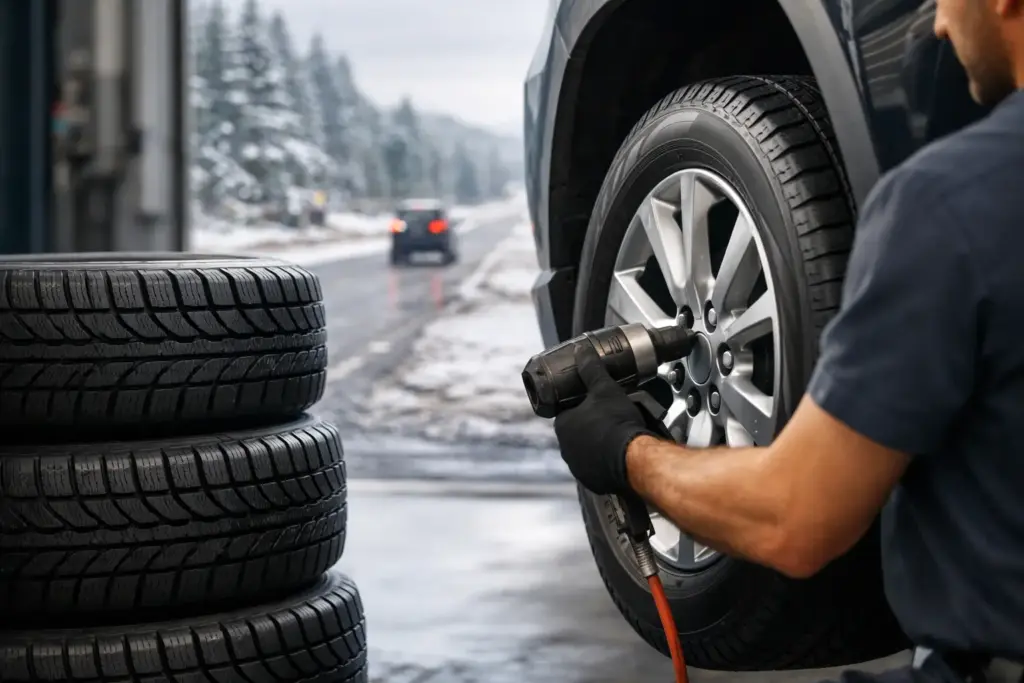
A new set of tires can look perfect in the parking lot and still drive poorly if the installation work is rushed. A steering-wheel shake at highway speed, an air leak a week later, uneven wear by fall – those problems often start with details that should have been handled during tire installation.
For Minnesota drivers, that work matters even more. Your tires need to handle summer rain, potholes, highway miles, and roughly five months of snow and ice. At Joe’s ALL TIRE, Joe works on-site and looks at the whole job, not just whether the tire made it onto the wheel. Locals know us as ALL TIRE because we give straight answers and do the work the way we’d want it done on our own vehicles.
What Proper Tire Installation Actually Includes
Tire installation is more than removing old rubber and bolting on new tires. A proper appointment starts by confirming the tire size, load rating, speed rating, and fitment for your vehicle. Those details affect safety, ride quality, carrying capacity, and how the vehicle responds in an emergency maneuver.
The wheel and tire are then mounted carefully, with attention paid to the bead area and the condition of the wheel. A bent, corroded, or damaged wheel can cause an air leak or vibration even when the tire itself is new. If we see a concern, we’ll explain it clearly before moving ahead.
Balancing is the next critical step. Tires and wheels have small weight differences around their circumference. A balancing machine identifies where weight needs to be added so the assembly spins smoothly. Skipping or rushing this step can leave you with a vibration that shows up around 55 to 75 mph and makes every drive less comfortable.
A complete tire installation should also include:
- Setting tire pressure to the vehicle’s recommended specification, not simply using the maximum pressure printed on the tire sidewall
- Inspecting valve stems and servicing or replacing them when needed
- Checking the TPMS system when the vehicle uses tire-pressure sensors
- Torquing lug nuts to the manufacturer’s specification with the right equipment
- Verifying that the tires rotate freely and that there are no obvious wheel, brake, or suspension concerns
Those aren’t extras designed to pad a ticket. They’re the details that help protect your tires, wheels, and passengers.
The Tire Choice Matters as Much as the Installation
The right tire isn’t always the most expensive one on the rack. It depends on what you drive, how many miles you put on it, whether you tow, and what kind of roads you see most often. A commuter in Elk River may need a quiet, long-wearing all-season tire. A pickup that hauls equipment or pulls a trailer may need a different load capacity and tread design.
One recommendation we make often is an open shoulder tire design for cars and trucks. The open channels around the outer edge of the tread help move water, slush, and snow away from the contact patch. That can improve traction in summer rain and give you a better edge during Minnesota’s long winter season. No tire defeats ice or replaces careful driving, but tread design makes a real difference when the road turns wet, slushy, or packed with snow.
Some drivers choose a tire based only on price, then wonder why it feels noisy, wears quickly, or struggles in the rain. The point behind This Isn’t Walmart is simple: tires and service aren’t all the same just because the size on the sidewall matches. We focus on a tire that fits the vehicle and the way you actually drive, then install it correctly.
If you’re comparing tire options and aren’t sure what suits your vehicle, mileage, and budget, we’ll help you narrow it down without the sales pitch. Mobile visitors can tap the blue call button in the lower left corner to ask questions or schedule an appointment.
Why Balancing and Torque Deserve Attention
Many drivers assume a vibration automatically means a bad tire. Sometimes it does, but the cause can also be a wheel balance issue, a bent wheel, worn suspension parts, or a wheel bearing beginning to fail. The timing of the vibration provides a clue. If it appears at a specific speed and fades above or below it, balancing may be the first thing to inspect. If it changes while turning or gets louder with road speed, a broader diagnosis may be needed.
Lug nut torque is another detail that shouldn’t be treated casually. Over-tightened lug nuts can damage studs, rotors, or wheels. Under-tightened lug nuts can allow a wheel to loosen. Using the vehicle maker’s torque specification helps ensure the wheel is secure without creating a future repair problem.
This is one reason a quality shop doesn’t treat every installation like a race. Fast service is great when you need it, but fast only helps if the work is done right the first time.
When You May Need More Than New Tires
New tires can make a vehicle feel dramatically better, but they can’t correct every underlying issue. Uneven wear patterns may point to alignment trouble, weak suspension components, worn wheel bearings, or a tire-pressure issue. Cupping, for example, can be associated with worn shocks or struts. Heavy wear on one edge can suggest alignment concerns.
We look for these signs because installing new tires on a vehicle with an unresolved problem can shorten the life of the new set. Sometimes the answer is simple, such as a rotation schedule or a pressure adjustment. Other times, a vibration diagnosis, brake inspection, wheel bearing service, or alignment evaluation should happen before the new tires accumulate unnecessary miles.
For trailers, the basics are just as important. Trailer tires age even when they don’t get many miles, and improper pressure or incorrect load capacity can create a serious safety problem. Bring the trailer in with the vehicle if possible so fitment, wheel condition, and tire condition can all be checked together.
How to Protect Your Investment After Installation
Your work doesn’t end when you leave the shop. Check tire pressure monthly when the tires are cold, and inspect them before longer trips. Temperature swings can change pressure quickly in Minnesota, especially when fall turns into winter.
Rotate tires on the schedule recommended for your vehicle and tire type. Regular rotations help distribute wear more evenly, though the correct pattern depends on whether your vehicle is front-wheel drive, rear-wheel drive, all-wheel drive, or uses directional tires. Keep an eye out for a new pull, vibration, noise, or TPMS warning. Addressing those changes early is usually easier and less expensive than waiting.
After any tire installation, it’s also smart to return for a quick check if something doesn’t feel right. A vehicle should track predictably, ride smoothly, and hold air. If it doesn’t, we’ll take it seriously and find out why.
Tire Installation FAQs
How long does tire installation take?
For a typical set of four tires, installation, balancing, and final checks often take about an hour, though timing depends on the vehicle, wheel condition, TPMS needs, and how busy the shop is. A problem such as corrosion, a damaged wheel, or a vibration concern can add time because it deserves a proper inspection.
Do new tires need to be balanced?
Yes. Every new tire should be balanced after mounting. Balancing helps prevent speed-related vibration and supports a smoother ride. It also helps avoid unnecessary stress on suspension and steering components.
Should I replace all four tires at once?
Often, yes, especially on all-wheel-drive vehicles where major differences in tread depth can affect the drivetrain. But it depends on the remaining tread, tire condition, and vehicle requirements. We’ll explain whether replacing one, two, or four tires makes the most sense.
Why is my TPMS light still on after tire installation?
The light may need a sensor relearn procedure, one or more sensors may have a weak battery or fault, or the tire pressures may not be set correctly. TPMS diagnostics can identify the cause instead of guessing.
What tire tread is better for Minnesota weather?
For many local cars and light trucks, an all-season tire with an open shoulder design is a strong choice because it channels water and slush effectively while providing useful traction across changing conditions. Drivers who face frequent unplowed roads or dedicated winter travel may benefit from a more specialized winter setup.
Good tire installation is quiet work when it’s done right. You notice it later, when the vehicle rides smooth on Highway 10, tracks straight in the rain, and gives you a little more confidence when the first snow starts falling.
