

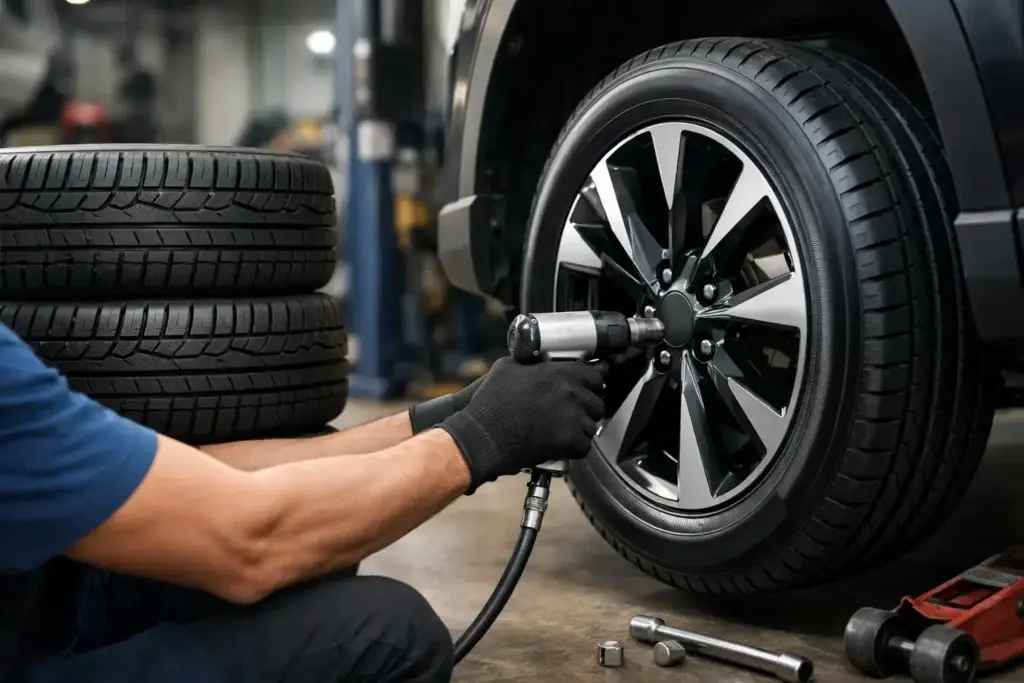
A bad tire install usually doesn’t announce itself right away. It shows up a few days later as a steering wheel shake at 60 mph, a TPMS light that won’t stay off, or uneven wear that shortens the life of a tire you just paid for. That is why a tire installation guide for drivers should focus on more than getting rubber onto wheels. The job needs to be done correctly from start to finish.
For most drivers, tire installation sounds simple. Remove old tires, mount new ones, balance them, and go. In real life, a proper install also means confirming the right tire size and load rating, checking wheel condition, using correct mounting methods, setting air pressure accurately, servicing the TPMS when needed, and torquing the lug nuts to spec. If any of that gets rushed, you can feel it on the road.
What a proper tire installation guide for drivers should cover
The first step is making sure the tire itself is right for the vehicle and the way it is driven. Size matters, but it is not the only thing that matters. Load index, speed rating, tread design, and seasonal use all affect how the vehicle will handle, stop, and wear its tires over time.
Around Minnesota, this is where real-world advice matters. A lot of drivers need a tire that can handle summer rain and a long stretch of snow and ice through the colder months. Open shoulder tire designs are worth serious attention for both cars and light trucks because they do a better job clearing water, slush, and loose snow than more closed-off tread patterns. That can mean better traction in the conditions local drivers actually deal with for much of the year.
Tire choice also depends on the vehicle. A commuter sedan, a family SUV, and a half-ton pickup do not ask the same things from a tire. Some drivers want the quietest ride possible. Others care more about tread life or winter grip. There is usually a trade-off. A longer-wearing tire may not be the strongest performer in heavy snow, and an aggressive tread may create more road noise. Good tire advice should be honest about that.
Before installation starts
A good shop should inspect the wheels before any new tire goes on. Bent wheels, corrosion on the bead seat, damaged valve stems, and old TPMS components can all create problems after installation. Mounting a new tire onto a wheel with a sealing issue is asking for a slow leak.
This is also the time to check the current wear pattern on the old tires. Uneven wear can point to alignment problems, suspension wear, or inflation issues. If a shop skips that conversation, you may end up putting a fresh set of tires onto a vehicle that will wear them out the same way.
Drivers should also expect a clear explanation of whether all four tires should be replaced or whether two will do. Sometimes replacing two is a reasonable option. Sometimes it is not, especially on all-wheel-drive vehicles where overall tire diameter differences can create drivetrain stress. That is one of those situations where the cheapest short-term choice can cost more later.
Mounting tires the right way
Mounting is where technique matters more than most people realize. The tire bead has to be lubricated properly, the wheel has to be handled carefully to avoid cosmetic or structural damage, and the machine has to be used correctly. Low-profile tires and larger wheels leave even less room for error.
A rushed mount can damage the tire bead, scratch the wheel, or create a poor seal. Those problems are not always visible to the driver. What the driver notices is air loss, vibration, or the feeling that the vehicle just does not ride right after the install.
Proper installation also includes replacing or servicing valve components when needed. On vehicles with TPMS, that may mean a rebuild kit, a sensor check, or sensor replacement if one has failed. A TPMS warning light after new tires is not something drivers should just live with. The system is there to warn you when pressure drops, and it should be working correctly when the job is done.
Balancing is not optional
A tire can be brand new and still cause vibration if it is not balanced correctly. Balancing compensates for small weight differences in the tire and wheel assembly so it rolls smoothly at speed. If this part is off, you may feel it in the seat, the floor, or the steering wheel.
Not every vibration means the same thing, though. Sometimes a balance issue is just a balance issue. Sometimes road force variation, wheel damage, or a suspension problem is involved. That is why balancing should be treated as part of the complete installation process, not a quick add-on.
When balancing is done right, the vehicle feels settled on the highway. When it is done poorly, drivers often come back assuming the tire itself is defective. Sometimes it is. Often, the problem is simply that the assembly was not balanced with enough care the first time.
Torque, pressure, and the final checks
After the tires are mounted and balanced, the final details matter. Lug nuts need to be torqued to the vehicle manufacturer’s specification, not hammered on with an impact gun and guessed at. Incorrect torque can lead to warped brake components, damaged studs, or wheels that are too loose or too tight.
Air pressure also needs to be set to the vehicle’s recommended pressure, not whatever number happens to be stamped on the tire sidewall. Those two numbers are not the same. The sidewall shows the tire’s maximum pressure rating, while the vehicle placard tells you what pressure the vehicle is designed to run.
A proper final check should include a look at tread direction if the tire is directional, a confirmation that the TPMS is reading properly, and a road-ready inspection for anything that could affect safety or ride quality. This is where careful workmanship shows.
What drivers should ask before leaving the shop
You do not need to know everything about tire service to ask smart questions. Ask whether the tires were balanced, whether the TPMS was checked, and what air pressure was set. Ask if the old tire wear showed any sign of alignment or suspension trouble. If there is a vibration later, ask what the next diagnostic step would be.
It is also fair to ask what kind of tire was chosen and why. A good answer should sound practical, not scripted. If a tire is recommended because it fits your mileage, budget, ride preference, and local weather, that is useful advice. If it sounds like a hard sell on the most expensive option in the building, that tells you something too.
If you’re trying to sort out what tire makes the most sense for your vehicle and your driving, a quick conversation can save you money and frustration. Just tap the blue button in the lower left corner – we’re just a call away.
Why tire design matters after installation
Even a perfect install cannot make the wrong tire perform like the right one. Tread design plays a big role in braking, wet handling, snow traction, and overall confidence on the road. For drivers dealing with Minnesota weather, open shoulder tires are often the better call because they evacuate water and slush more effectively and keep more usable traction when conditions turn ugly.
That does not mean every driver needs the same tire. It means the recommendation should match the vehicle, the route, and the season. Someone driving mostly highway miles may want a different balance of comfort and traction than someone commuting on untreated back roads. For more on tread patterns and seasonal tire decisions, the tire knowledge center is a helpful place to keep learning.
At Joe’s All Tire, or simply All Tire as many locals know it, that practical match matters more than making a fast sale. The goal is not to push tires. It is to install the right ones, the right way, so the vehicle leaves safer than it came in.
Signs your recent tire installation may need attention
If your vehicle pulls, vibrates, loses air, or turns on the TPMS light after a tire install, do not assume it will work itself out. Some issues are minor and easy to correct. Others point to a mounting problem, balancing issue, wheel damage, or an unrelated suspension or alignment concern that was already there.
A good shop should be willing to check the work and explain what it finds in plain language. That kind of follow-through matters. Tires are not just another purchase. They affect stopping distance, stability, fuel economy, and how confidently your vehicle handles bad roads and bad weather.
The best tire installation is the one you do not have to think about afterward. The vehicle tracks straight, rides smooth, holds air, and feels planted when the road turns wet, rough, or icy. That is what done right looks like.