

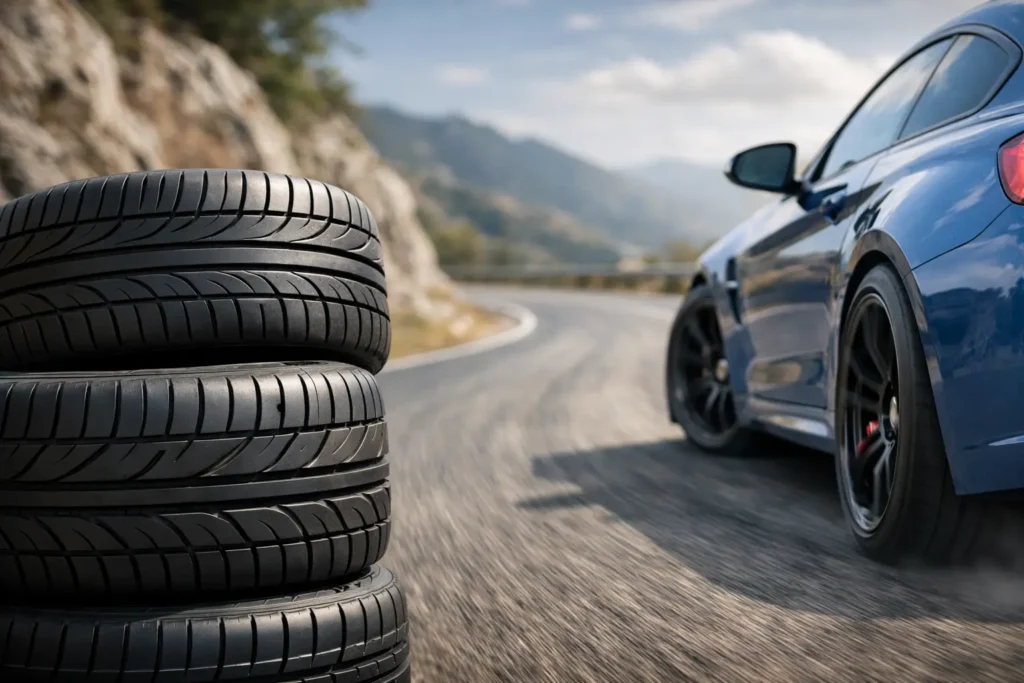
You feel the difference the first time you take a fast on-ramp in a car with true performance tires. Steering gets sharper, the car responds quicker, and the road feels more connected. But that same tire that feels great on dry pavement in July can wear faster, ride firmer, and leave you giving up some confidence when Minnesota weather turns ugly. That’s the real question behind performance tires and handling vs mileage and traction in weather – what matters most for the way you actually drive?
Performance tires and handling vs mileage and traction in weather
There’s no perfect tire for every driver because tire design is always a trade-off. A tire built for strong cornering and short dry braking distances usually uses a softer rubber compound and a tread pattern made to maximize road contact. That helps handling, but it often means the tire wears faster and may not be the best choice when temperatures drop or roads get slushy.
A tire built for long tread life usually has a harder compound and a tread designed to last more miles. That can save money over time, especially for commuters who rack up highway miles. The trade-off is that a mileage-focused tire may not feel as planted in hard cornering, quick lane changes, or panic stops on wet roads.
Then there’s traction in weather, which matters a lot more here than it does in places with mild winters. Around Elk River, drivers deal with rain, standing water, snow, ice, and those in-between days where roads are slick in the morning and wet by afternoon. That’s why at Joe’s All Tire, locals know us as All Tire, we pay close attention to tread design, not just brand names or marketing claims.
What performance tires do well
Performance tires are made for grip and control. They typically have stiffer sidewalls, which help the tire hold its shape during turns. That gives you more precise steering feel and better stability when you’re pushing through curves or reacting quickly in traffic.
They also tend to stop well on dry pavement. If you drive a sport sedan, a performance SUV, or a pickup that you want to feel tighter on the road, that can be a real benefit. Some drivers simply like a vehicle that feels more responsive, and there’s nothing wrong with that.
Where people get tripped up is assuming better handling always means better safety in every condition. It doesn’t. A summer performance tire can be excellent on warm dry roads and still be a poor match for cold weather. Even all-season performance tires vary a lot. Some are tuned more toward sporty handling than year-round traction.
That’s where tread layout matters. Open shoulder tire designs are worth paying attention to because they help move water and slush away from the tire’s contact patch. For both cars and trucks, we strongly recommend open shoulder tires when the goal is dependable summer rain traction and better winter performance. In Minnesota, that isn’t a small detail. It can be the difference between a tire that looks good in a catalog and one that actually works when conditions get messy.
Where mileage tires make sense
If your daily routine is mostly commuting, errands, school drop-offs, and highway miles, a long-wearing all-season tire often makes more sense than a pure performance tire. You’ll usually get a quieter ride, a more comfortable feel over rough pavement, and more miles before replacement.
That matters if you’re driving thousands of miles a year and want to control ownership costs. A tire that lasts significantly longer may be the smarter value, even if it gives up some sharpness in steering response.
Still, not every mileage tire is a smart buy. Some are built to chase tread-life numbers at the expense of real-world wet traction. That’s one reason we don’t believe in selling people on the cheapest thing with a round shape. This Isn’t Walmart. People come to All Tire because they want honest advice and the job done right, not a tire that looks like a bargain until the first heavy rain or early snowfall.
Weather changes the whole conversation
If you lived somewhere warm and dry year-round, this choice would be easier. In Minnesota, weather has to be part of the recommendation from the start.
Cold temperatures change how rubber behaves. A tire that grips well in warm weather can stiffen up when it gets cold, and once that happens, traction drops off. Snow and slush add another layer. You need tread voids that can clear material away instead of packing up. You also need siping and tread edges that can bite into slick surfaces.
That’s why an all-season tire with a smart design often beats a sportier tire that looks more aggressive but isn’t built for weather. Open shoulder designs are especially helpful here because they improve water evacuation in rain and give slush and snow somewhere to go. For many local drivers, that balance is the sweet spot – not the softest, stickiest tire on the rack, and not the hardest, longest-wearing one either.
If you want to learn more about how tread patterns affect real traction and wear, our Knowledge Center at www.joesalltire.com/knowledge-center/ covers the basics in plain English.
How to choose the right balance for your vehicle
The best tire choice starts with how you use the vehicle, not how the tire is advertised. If you drive a performance car and you care about steering feel, braking, and cornering, a performance-oriented all-season may be the right middle ground. You’ll keep much of the sharper response without going all the way to a summer tire that’s a poor fit for Minnesota roads.
If you drive a family SUV, minivan, or commuter sedan, mileage and all-weather confidence are usually more important than sporty feel. In that case, a quality all-season with strong wet traction and an open shoulder design is often the better answer.
Truck owners are a category of their own. Some want a more aggressive look, some tow, and some spend most of their time on pavement. A heavy, blocky tire can look tough and still underperform in rain if the tread doesn’t evacuate water well. Again, design matters more than hype.
If you’re stuck between two options and don’t want to guess, we can help you sort it out based on your actual driving. Just tap the blue phone call button in the lower left corner – we’re just a call away.
Why honest tire advice matters more than specs on paper
A lot of tire shopping online pushes one number or one promise. Better mileage. Better handling. Better value. Real life isn’t that neat.
What matters is how those strengths line up with your roads, your driving habits, and your weather. A tire with a high treadwear rating may still be the wrong tire if wet braking is weak. A tire with sporty reviews may be a poor value if it’s worn out early and leaves you nervous on the first snow.
That’s where a local, owner-led shop has an advantage. We see what works here. We see what wears well on local roads, what handles standing water better, and what keeps drivers happier over the long haul. Joe works on-site daily, and that matters because the recommendation comes from experience, not a sales script.
The right tire is the one that fits your real life
For some drivers, performance is worth the shorter lifespan and firmer ride. For others, longer mileage is the better buy, as long as weather traction stays strong. Most people in this area land somewhere in the middle – they want a tire that lasts well, rides well, and still holds its own in rain, slush, and light snow.
That’s why the answer to performance tires and handling vs mileage and traction in weather usually isn’t extreme. It’s balance. A well-chosen all-season tire with the right tread design, especially an open shoulder layout, often gives everyday drivers the best mix of control, value, and confidence.
When you’re buying tires, you’re not just buying rubber. You’re buying how your vehicle stops, turns, and behaves when the weather doesn’t cooperate. It’s worth getting that choice done right the first time.
