

You usually notice brake trouble at the worst possible moment – creeping toward a red light, coming down an exit ramp, or stopping on a wet Minnesota road with kids in the back seat. If you are wondering how to tell if brakes are bad, the good news is that most vehicles give you warning signs before the problem turns serious. The key is knowing which signs mean “schedule service soon” and which ones mean “don’t keep driving it.”
Brakes rarely fail all at once. Most problems build gradually. A little squeal becomes grinding. A soft pedal turns into longer stopping distances. A light vibration becomes a steering wheel shake every time you slow down. Catching those changes early usually means a simpler, less expensive repair. Waiting too long can damage rotors, calipers, and other parts that were fine at the start.
How to tell if brakes are bad while driving
The clearest sign is that the vehicle does not stop the way it used to. You press the pedal and the car takes longer to slow down, or you need more force than normal to get a firm stop. Good brakes feel predictable. Bad brakes feel different, and that change matters.
If the brake pedal feels soft or spongy, there could be air in the brake lines, a fluid issue, or a hydraulic problem. If the pedal sinks toward the floor, that is more urgent. A low pedal can mean the system is not building pressure the way it should, and that is not something to put off.
Pulling to one side when braking is another common warning. Sometimes it points to uneven brake wear. Sometimes it is a sticking caliper or contaminated brake material. Either way, the vehicle is not braking evenly, which can affect control, especially on slick roads.
Vibration is another clue, but it depends on where and when you feel it. If the steering wheel shakes mostly while braking, warped or unevenly worn rotors are a common cause. If the whole vehicle feels rough, there may be a bigger issue involving the brake system, tires, or suspension. That is why a proper inspection matters – symptoms can overlap.
The sounds that usually mean brake trouble
A light squealing noise is often the first thing drivers notice. Many brake pads are built with wear indicators that make noise when the friction material gets low. That squeal is not there to annoy you. It is there to tell you the pads are nearing the end of their life.
Grinding is more serious. If your brakes grind, there is a good chance the pad material is worn down enough that metal is contacting metal. At that point, you are often beyond a simple pad replacement. Rotors may already be damaged, and continuing to drive it can raise the cost fast.
Clicking or clunking when braking can mean loose hardware or brake components that are no longer sitting correctly. That kind of noise is not as common as squealing or grinding, but it still deserves attention. Brakes are not a system where strange sounds should be ignored and “watched for a while.”
Dashboard lights and what they can mean
If the brake warning light comes on, take it seriously. In some vehicles, it can mean the parking brake is engaged. In others, it may point to low brake fluid or a system issue. If the ABS light is on, your standard braking may still work, but the anti-lock function may not. That becomes a bigger safety concern in rain, snow, or icy conditions.
A warning light by itself does not always tell you the exact failed part. It does tell you the system has noticed something worth checking. Guessing is not the right move here.
What bad brakes look like
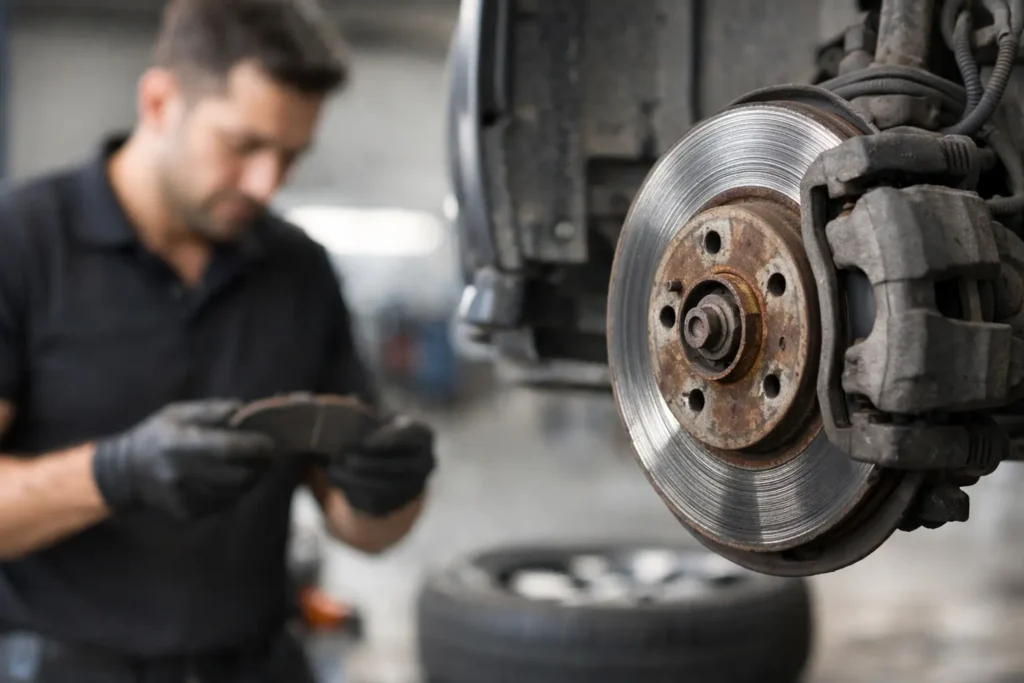
You do not need to be a mechanic to spot a few visual clues. If you can see through the wheel, look at the brake pad thickness. If the pad looks extremely thin, it may be worn out or close to it. Heavy grooves on the rotor surface can also suggest excessive wear.
Brake dust by itself is not always a problem. Some pads create more dust than others. But if one wheel is far dirtier than the others, or if you notice signs of fluid near a wheel, that can point to uneven braking or a leak.
A burning smell after normal driving can also be a warning. A stuck caliper or dragging brake can create excess heat. If one wheel feels much hotter than the others after a short trip, that is a sign to stop and have it checked.
How to tell if brakes are bad or if it is something else
Brake symptoms can mimic other vehicle problems. A vibration under braking might be rotor-related, but it could also be tied to suspension wear or tire issues. Pulling to one side could be a brake caliper, but tire pressure or alignment can play a role too. That is why an honest inspection matters more than a quick guess.
This is especially true for drivers who use their vehicles hard – commuting daily, hauling gear, towing a trailer, or putting on a lot of stop-and-go miles. The extra load changes how brake wear shows up. Two vehicles with the same mileage may have very different brake condition depending on how they are driven.
When you should stop driving right away
Some brake issues give you a little time. Others do not.
If the brake pedal goes nearly to the floor, the car barely slows, you hear grinding metal, or the vehicle pulls hard when braking, it is smart to stop driving and have it looked at right away. The same goes for any visible fluid leak near the wheels or a sudden major change in stopping ability.
If you only hear a light squeal and the brakes still feel normal, you may have time to schedule service before it becomes a bigger repair. But even then, do not sit on it for weeks. Brake problems tend to get more expensive, not less.
Why brake issues matter more in Minnesota
Here in Minnesota, brakes work harder than many drivers realize. Wet roads, slush, salt, temperature swings, and long winters all add stress. In Elk River and surrounding areas, drivers deal with slick intersections, sudden stops, and changing traction for a good chunk of the year. A brake system that feels only “a little off” in dry weather can become a much bigger problem when the road is wet or icy.
That is one reason local drivers are usually better off getting brake symptoms checked early rather than waiting for a clear failure. You want your brakes working right before the next snow, not after a close call.
What a proper brake inspection should include
A real brake check is more than a quick peek through the wheel. The shop should inspect pad thickness, rotor condition, caliper operation, brake fluid level and condition, hardware wear, and any signs of leaks or uneven braking. They should also pay attention to the symptoms you describe, because how the vehicle behaves on the road helps narrow down the actual cause.
Good brake repair is not about selling every part on the car. Sometimes pads are enough. Sometimes rotors and hardware should be done at the same time. Sometimes the problem is hydraulic, not friction-related. It depends on wear, condition, and whether the repair will hold up properly.
That is where honest advice matters. Drivers do not need a sales pitch. They need to know what is worn out, what can wait, and what should be fixed now to keep the vehicle safe.
If you want a local shop to inspect the system and explain it clearly, see the brake service page at www.joesalltire.com/brake-shop-elk-river/.
The most common mistake drivers make
The biggest mistake is getting used to the symptoms. Drivers adjust without realizing it. They start pressing the pedal harder. They leave more space at stoplights. They accept a little noise because the car still stops. That works until it does not.
Brake problems are easier to deal with when they are caught early. Pads replaced on time are routine maintenance. Pads run down to metal can turn into rotors, calipers, and more downtime. That is the difference between a planned repair and a stressful one.
If your brakes feel different, sound different, or take longer to stop than they used to, trust that change. Your vehicle is telling you something, and listening early is usually the cheapest and safest move.
