

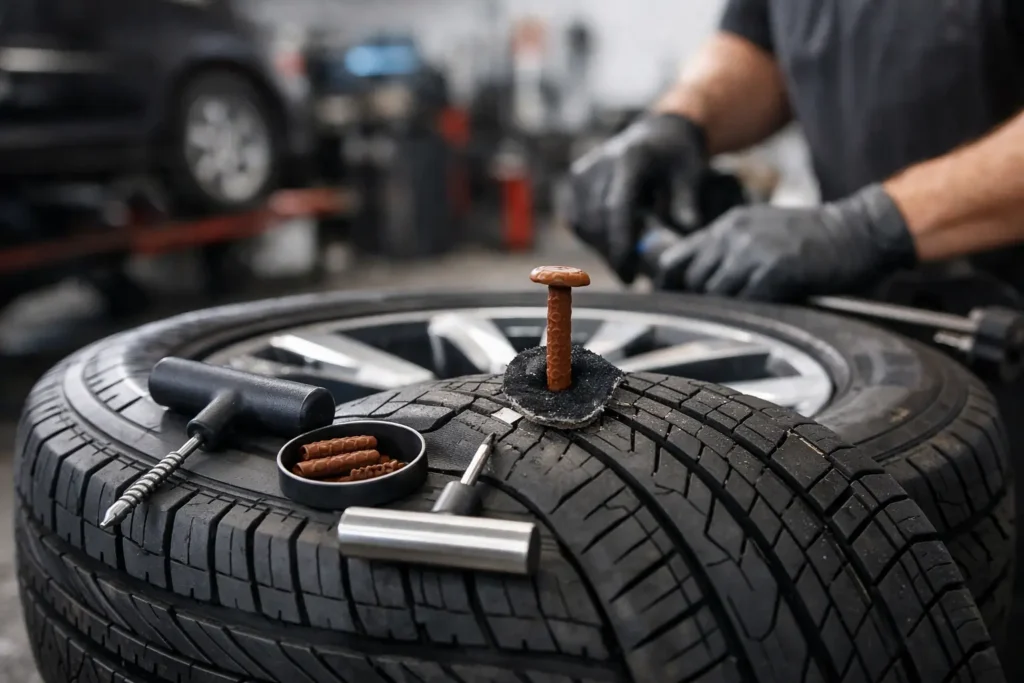
A nail in the tire usually shows up at the worst time – before work, before school pickup, or right before a weekend drive. A good guide to permanent tire puncture repairs should do one thing first: help you tell the difference between a safe repair and a tire that needs to be replaced.
That matters more in Minnesota than people think. We deal with long stretches of wet roads, potholes, cold mornings, and months of snow and ice. A tire that’s “probably fine” isn’t good enough when your family, stopping distance, and highway stability are on the line. At Joe’s All Tire, or All Tire as most locals call us, we look at puncture repairs the same way we look at brakes – if it’s going back on the road, it needs to be done right.
What makes a tire repair permanent?
A permanent tire puncture repair isn’t just about sealing the air leak for now. It’s about restoring the tire in a way that holds up under heat, speed, load, and daily use. Tires flex constantly. They heat up on the highway, cool down overnight, and take abuse from rough pavement. A repair that seems okay in the driveway can fail once the tire is back in real-world service.
That’s why proper inspection matters as much as the repair itself. The tire has to be removed from the wheel and checked from the inside. If the puncture is in a repairable area and the internal structure isn’t damaged, the tire may be a candidate for a lasting fix. If the inside shows signs of run-flat damage, sidewall stress, or separation, the tire shouldn’t go back into service.
This is where chain-store speed can work against you. When a shop is trying to move cars through as fast as possible, the decision can become about volume instead of workmanship. Around here, we take a more practical approach. This isn’t Walmart. You’re not looking for a quick guess. You’re looking for honest advice on whether the tire is truly safe to keep using.
Guide to permanent tire puncture repairs: when a tire can be fixed
Most repairable punctures are small injuries in the tread area, not the shoulder or sidewall. If the damage is centered in the main tread and the tire hasn’t been driven too long while low on air, there’s a decent chance it can be repaired safely.
Size matters, but location matters even more. A small hole near the center of the tread is very different from a similar hole near the outer edge. The closer the puncture gets to the shoulder, the more the tire flexes in that area, and the less reliable a repair becomes. That’s one reason shoulder damage gets ruled out so often.
The tire’s condition also counts. If the tread is already worn down, if the tire is aging out, or if there are multiple old repairs close together, replacement may make more sense than repair. A proper shop should tell you that clearly, even if it’s not the answer you were hoping for.
If you’re staring at a low tire and not sure whether it’s worth repairing or replacing, we can help you sort that out quickly. Just tap the blue phone call button in the lower left corner – we’re just a call away.
When a permanent repair is not the right call
Some punctures shouldn’t be repaired, no matter how inconvenient that is. Sidewall damage is the big one. The sidewall flexes too much, and that part of the tire isn’t designed for a dependable puncture repair. The same goes for damage in the shoulder area where the tread transitions toward the sidewall.
A tire that was driven while nearly flat can also be unsafe even if the hole itself looks minor. When air pressure drops too low, the internal structure can get damaged from heat and excessive flexing. From the outside, the tire may not look terrible. Inside, it can tell a different story.
There are also cases where the puncture is only part of the problem. Sometimes the real issue is a bent wheel, bead leak, valve problem, or TPMS concern. That’s why good diagnosis matters. You don’t want to repair one leak only to find out the tire is still losing air for a different reason.
Why repair location matters so much
To most drivers, a hole is a hole. To a tire technician, the location changes everything.
The center tread area is the most stable part of the tire for repair because it’s built to carry the load and contact the road with less extreme flex than the sidewall and shoulder. Once damage moves outward, the tire sees more stress every time it rolls, turns, and hits bumps. That’s when a repair becomes less dependable over time.
This is also a good place to talk about tread design. At All Tire, we often recommend open shoulder tire designs for cars and trucks because they do a better job managing water in summer rain and improving traction during Minnesota’s snow season. Open shoulders can be a real advantage for wet and winter driving. But that same shoulder area is still not where you want puncture damage. It’s a high-stress zone, and repair limits still apply no matter how good the tread pattern is.
The real value of a professional inspection
A lot of people want a yes or no answer over the phone, and sometimes we can give you a pretty good idea based on where the object is and how long the tire was driven low. But the final answer usually comes after inspection.
A professional inspection looks beyond the obvious leak. It checks for inner liner damage, irregular wear, belt issues, puncture angle, and signs that the tire has been compromised in ways you can’t see from outside. That’s especially important on vehicles that do a lot of highway driving, carry tools or trailers, or spend winter months dealing with ice-packed roads and deep slush.
For everyday drivers, the takeaway is simple: the repair isn’t just about stopping air loss. It’s about whether the tire can still do its job safely after the damage happened.
Cost, safety, and the replacement question
Drivers usually ask the same fair question: if a tire can be repaired, should I repair it, or is replacement smarter?
It depends on the age of the tire, the remaining tread, and what the vehicle is used for. If the tire is relatively newer and the puncture is in a proper repairable area, repair is often the sensible move. If the tire is worn, mismatched, or nearing the end of its life, putting money into it may not be the best value.
For all-wheel-drive vehicles, tread depth matching can also become part of the conversation. Replacing one tire on some AWD systems can create its own problems if the new tire is significantly different in diameter from the others. That’s where local, experienced advice matters. The right answer isn’t always the cheapest answer today. Sometimes it’s the one that prevents a more expensive issue later.
A guide to permanent tire puncture repairs for Minnesota drivers
Minnesota driving changes the stakes. Wet pavement in summer, freeze-thaw cycles, potholes, and long winter months all put more demand on your tires than many drivers realize. A marginal repair has less room for error here.
That’s also why tire choice matters after a replacement. If a puncture leads to a new set discussion, tread design shouldn’t be an afterthought. We strongly recommend open shoulder tires for many cars and trucks because they help clear water better and improve traction in the conditions we actually deal with around here. Better drainage in heavy rain and stronger bite in snow can make a real difference in stopping and control.
What to do after you notice a puncture
If you catch a puncture early, avoid driving on it any farther than necessary. The more a tire runs low, the greater the chance of internal damage. If you have to add air to get to a shop, do it carefully and get it checked as soon as you can.
Pay attention to how fast the tire is losing pressure. A slow leak may still be repairable. A tire that goes flat quickly may have more extensive damage, or the puncture may be larger than it looks. Either way, don’t assume a can of sealant or repeated refills are solving the real problem.
If you’re trying to make the call on whether to repair, replace, or inspect the whole set, that’s exactly the kind of question we help with every day. Just tap the blue phone call button in the lower left corner – we’re just a call away.
The best tire repair is the one that leaves you confident when you’re merging onto the highway in the rain, braking hard at an intersection, or heading out before sunrise on a January morning. If there’s any doubt, get the tire inspected by someone who’s more interested in getting it right than getting you out the door fast.
