

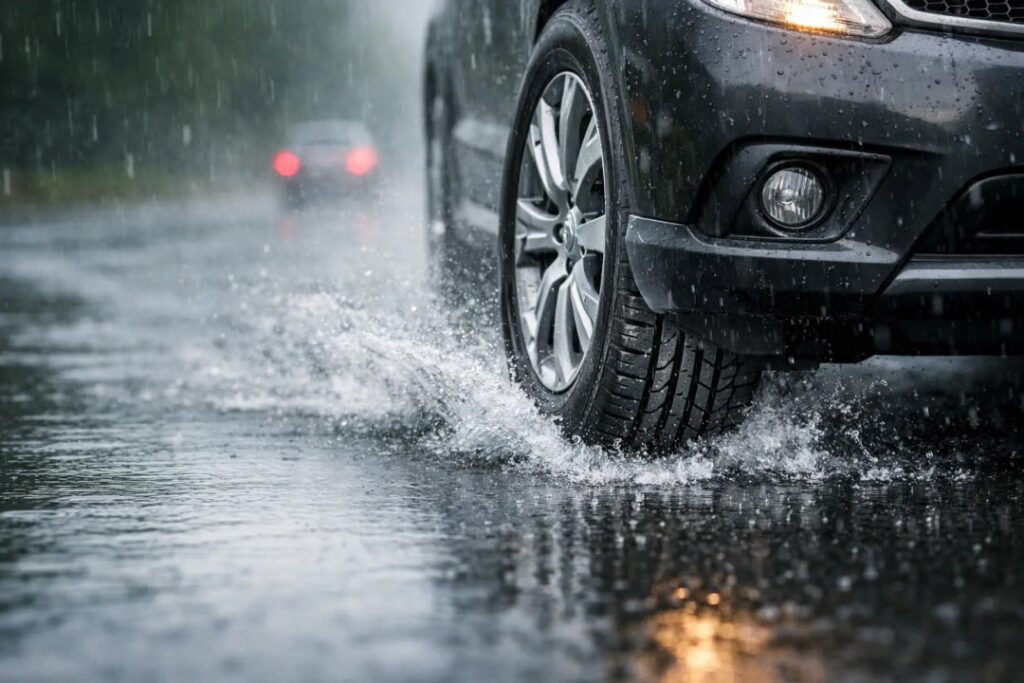
A Goodyear Assurance WeatherReady review of wet braking matters most when the rain is coming down hard on Highway 10, standing water is gathering in the wheel tracks, and you need the car to respond without drama. The Assurance WeatherReady was built as an all-weather tire, not a basic all-season, and its wet-road grip is one of the main reasons Minnesota drivers consider it. But good wet braking depends on more than the name on the sidewall. Tread depth, tire size, vehicle condition, and installation quality all play a real part.
What Wet Braking Feels Like on the WeatherReady
The Assurance WeatherReady is designed to keep more usable tread edges working as conditions change. Its tread has a directional pattern, deep grooves, and plenty of sipes – the small cuts in the tread blocks that help the tire find grip on wet pavement and light snow. In practical terms, that means it generally feels more planted during rain-soaked stops than a worn conventional all-season tire.
The tire’s water channels help move water away from the contact patch, which is the small area where each tire meets the road. When that water has somewhere to go, the rubber can stay in contact with pavement instead of riding on top of the water. That’s the foundation of better wet braking and hydroplaning resistance.
For local drivers, the biggest benefit is predictability. A tire that brakes consistently in cold rain, spring slush, and summer downpours gives you more confidence when traffic slows suddenly. It won’t erase the need for following distance, but it can give your ABS system and brakes a better chance to do their job.
Why Open Shoulder Design Matters in Minnesota Rain
At Joe’s ALL TIRE, we pay close attention to how a tread moves water, not just how aggressive it looks in a catalog photo. Open shoulder tire designs are especially valuable for Minnesota cars, crossovers, and trucks because the channels near the outer edge of the tire give water, slush, and loose snow a path out from under the tread.
The WeatherReady’s shoulder area and circumferential grooves support that goal. A more open design can help reduce the tendency for water to build up at the edge of the contact patch during hard rain. That matters when you’re turning, braking on a curve, or hitting pooled water after a fast-moving storm.
Minnesota gets roughly five months where snow and ice are part of everyday driving. ALL TIRE strongly recommends tires with open shoulder designs whenever the vehicle and driving needs allow it. They can improve both summer rain traction and winter performance, which is a much better fit for our climate than choosing a tire based only on dry-road comfort.
Wet Grip Is Strongest When the Tread Is Fresh
No tire maintains its original wet-braking performance forever. As tread wears down, the grooves become shallower and can’t clear as much water. The WeatherReady may still look acceptable to the eye, but wet stopping distance can begin to suffer well before a tire is completely worn out.
That’s why regular inspections matter. We look at actual tread depth across the tire, uneven wear patterns, tire age, and any signs of alignment or suspension trouble. A tire worn more on one shoulder won’t perform like the same tire with even tread across its full width.
If you’re deciding whether your current tires have another season left, Joe at ALL TIRE can give you a straight answer. Mobile visitors can tap the blue call button in the lower left corner to ask questions or schedule an appointment.
How the WeatherReady Handles Real-World Wet Roads
For a commuter, family vehicle, or light-duty pickup, the WeatherReady is a sensible middle-ground tire. It’s intended for drivers who want stronger wet and winter capability than many all-season tires provide, without running a dedicated winter tire all year.
During normal rain, the tire’s behavior is generally confidence-inspiring: braking feels controlled, steering stays reasonably responsive, and the tread is designed to resist hydroplaning. It can be particularly useful in shoulder seasons, when morning temperatures are cold but afternoon roads are wet and clear.
That said, there are trade-offs. An all-weather tire has to cover a broad range of conditions, so it may not give the same dry-road sharpness as a performance-focused summer tire. It also won’t match a dedicated winter tire on glare ice, deeply packed snow, or the steepest untreated roads. Drivers who travel before plows are out, work overnight shifts, or regularly head north in severe weather may still benefit from a true winter tire setup.
For many Elk River-area drivers, though, the WeatherReady makes sense because it avoids the hassle of seasonal changeovers while giving meaningful help in rain and moderate snow.
Wet Braking Depends on More Than the Tire
A good tire can’t overcome problems elsewhere on the vehicle. If a vehicle pulls under braking, vibrates at highway speed, or has a soft brake pedal, it needs attention before anyone should judge tire performance. Uneven braking force can make a perfectly capable tire feel unstable in wet conditions.
At ALL TIRE, we look at the whole picture when a customer says their vehicle doesn’t feel right in the rain. That may include tire pressure, tread wear, wheel balance, alignment wear clues, brake condition, and wheel bearing issues. A low tire can flex too much and build heat. An overinflated tire can reduce the size of the contact patch. Both can hurt the grip you paid for.
Proper mounting and balancing matter, too. The tire needs to be matched to the correct wheel size, seated correctly, and inflated to the vehicle manufacturer’s recommended pressure. This Isn’t Walmart. The goal isn’t simply to get four tires on the vehicle as quickly as possible. The goal is to make sure they’re right for the vehicle, the driver, and the roads they actually use.
Who Should Consider the Assurance WeatherReady?
The Assurance WeatherReady is worth considering if your priorities include dependable wet braking, all-season convenience, and additional winter confidence. It’s often a strong choice for drivers who put on steady mileage and don’t want to swap tires twice a year.
It may be a particularly practical option for:
- Commuters who drive through rain, slush, and changing temperatures.
- Families who want a more capable year-round tire for a minivan, sedan, or SUV.
- Light truck and crossover owners who need wet-road confidence without an overly aggressive off-road tread.
- Drivers replacing worn all-seasons who have noticed slipping, longer stops, or nervous handling in rain.
It may not be the right answer for every vehicle. If quiet highway comfort is your only concern, another touring tire could fit better. If deep snow and ice are a daily reality, a dedicated winter tire may be the safer call. Honest tire advice starts with your driving habits, not with trying to sell the most expensive option on the rack.
The Bottom Line on WeatherReady Wet Braking
The Goodyear Assurance WeatherReady earns attention for wet braking because its all-weather tread is designed to evacuate water and maintain traction as temperatures swing. Its open, water-managing tread features are a real advantage for drivers dealing with Minnesota rain, slush, and seasonal snow.
Still, the right result comes from choosing the correct size and load rating, keeping the tires properly inflated, and replacing them before wet-weather tread performance falls off. A quality tire is a safety investment, but it has to be fitted and maintained correctly to deliver what it promises.
Frequently Asked Questions
Is the Goodyear Assurance WeatherReady good in heavy rain?
Yes, it’s designed for wet traction and hydroplaning resistance. Its grooves and siped tread help clear water, but safe speeds and adequate tread depth still matter in heavy rain.
Does the WeatherReady stop better in rain than a regular all-season tire?
It can, especially compared with a typical all-season tire that is worn or built mainly for dry-road comfort. Results vary by vehicle, tire size, pressure, road surface, and remaining tread depth.
Is the Assurance WeatherReady a snow tire?
It’s an all-weather tire with winter capability, not a dedicated winter tire. It can be a good year-round choice for many Minnesota drivers, but dedicated winter tires remain stronger on severe ice and deep snow.
How long will WeatherReady tires keep their wet grip?
Wet grip declines as the tread wears. Have the tires inspected regularly, rotate them on schedule, and don’t wait until they’re nearly worn out if you drive often in rain or snow.
Can ALL TIRE check whether my tires are causing poor wet braking?
Yes. ALL TIRE can inspect tread depth, tire pressure, wear patterns, balance concerns, and related brake or suspension issues. A quick inspection can help you find out whether the tires are the problem or part of a larger issue.
If your vehicle feels unsettled when the roads are wet, don’t wait for the next hard stop to find out why. A straightforward tire and brake check can give you a clearer answer and more confidence behind the wheel.
